Not Every Stigma Is a Heckler’s Stigma

angry-mob


No time for a long post, but I need to grab an opportunity to respond to Dan before I lose a whole week. I’m afraid he’s misconstrued my position.

He attributes to me the following position that I do not hold:

a true defense of free speech must necessarily foreclose any argument that it might be imprudent to use one’s right to speak freely in a particular way

I said no such thing.

He also attributes to me this position that I do not hold:

any social stigma you might earn for what you say is an unacceptable attack on the right to speak freely

I said no such thing.

Here is what I said:

Irrational mobs that are attempting to destroy free speech rights must not be permitted to dictate which speech we shall condemn as evil, nor the time, place and manner in which we condemn it.

The distinction does not seem to me to be a very fine one. Not every stigma is a “heckler’s stigma.” I object not to the maintaining of stigmas but to the abuse of the stigmatization process by people whose real agenda is to destroy free speech.

In other words, I am claiming my free speech right to stigmatize only what I think worth stigmatizing, when and where and how I think it worth stigmatizing. I may think Charlie Hebdo is awful, but I refuse to say “Charlie Hebdo is awful” if the time, place and manner of my doing so gives aid and comfort to totalitarians (of either the jihadist or secularist variety).

As if on cue, Mark Steyn posts today about a scientific genius who just had his career destroyed because of one (1) bad remark, for which he apologized to no avail. The remark was indeed a bad one, but I refuse to say so if saying so gives aid and comfort to the totalitarians seeking to destroy him.

There are Nerds, and then there are Bigots

nerd (n.)

1951, U.S. student slang, probably an alteration of 1940s slang nert “stupid or crazy person,” itself an alteration of nut. The word turns up in a Dr. Seuss book from 1950 (“If I Ran the Zoo”), which may have contributed to its rise.

(source: Online Etymology Dictionary)

So it has long been accepted that, whether under the heading “nerd” meaning someone so absorbed in the esoteric that commonplace life makes little sense–the sort of person dozens of wonderful and slightly creepy movies have been made about–or under even less complimentary terms like “geek” or even “dork,” we find many people who (quite like me) are both serious about what we do, serious about good relationships, eager to be of service, and prone to be socially awkward.  

Many nerds have been bullied by the same thoughtlessly cruel sorts we now try to educate for a living, and often we cherish those few relationships that have proved healing as transcendent experiences, categorically unlike the many social collisions that turned out to be hurtful.  And lots of us are good at what we do, care about our friends and colleagues and students, and still say or do awkward things that can cause confusion.  

I’m not talking about actual, correctible errors in understanding–and I’m not talking about deep-seated, systematically pursued hostility against particular people or groups.  Confirmed bigotry merits no hearing, as far as I’m concerned.  But I’m not talking about bigots, yet.

I’m talking about nerds.  

About the social stratum that dominates the faculty lounge (and not the admissions office), a social stratum for whom some few relationships mean the difference between becoming the inventor of Flubber and becoming Quasimodo:
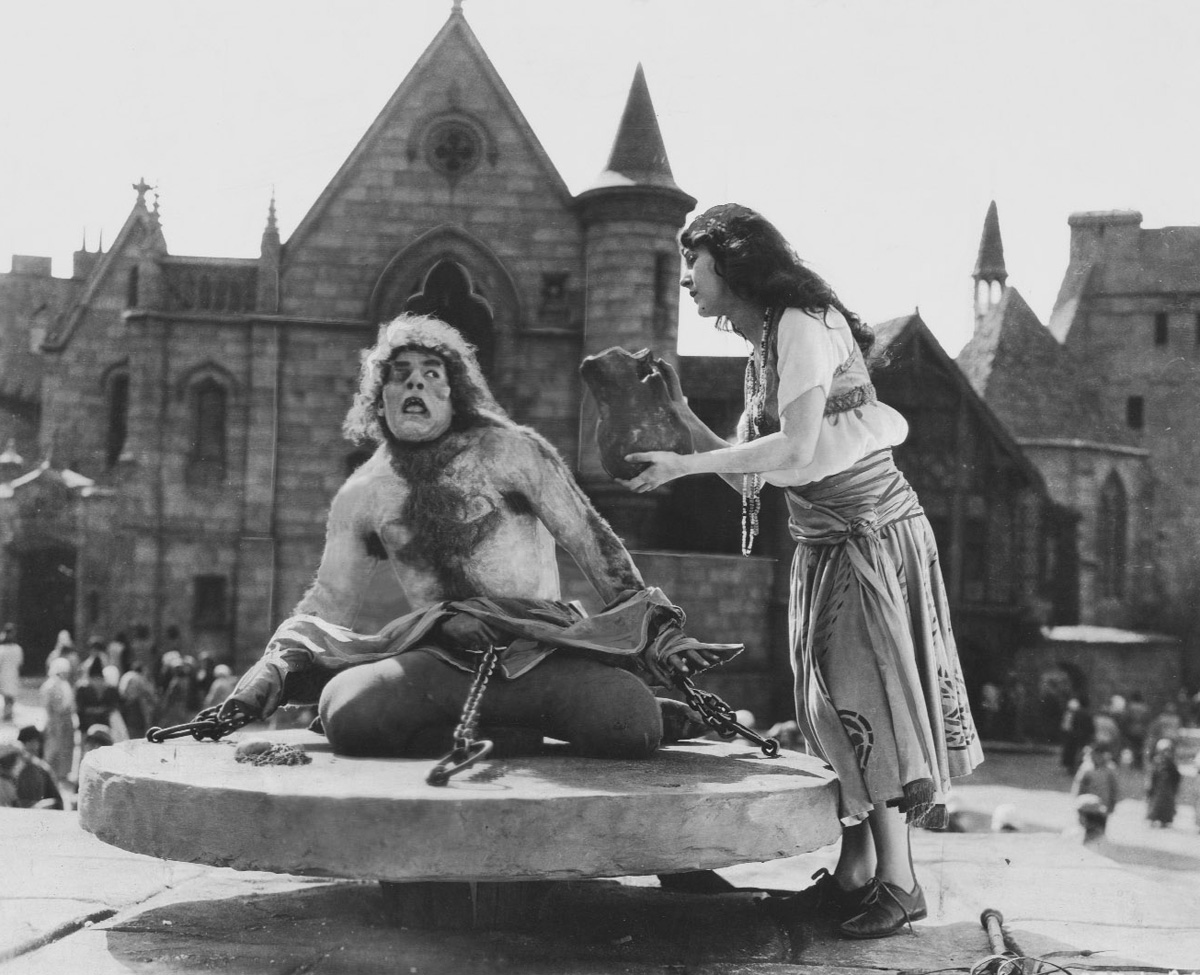
For sometime, now, our society has been receptive to marginal people, has even exalted nerds.

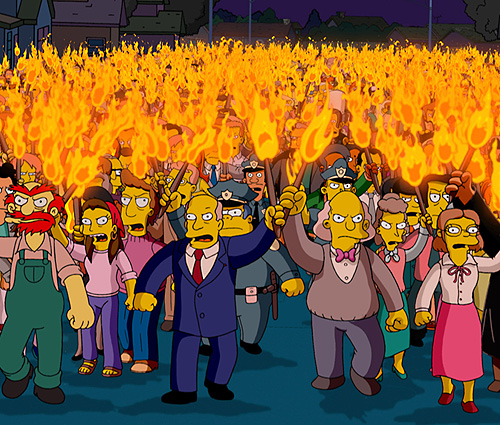
No more, it seems.  The mob will not have it–vox turbae, vox Dei.  Now, it’s taps if a 72-year-old nerd commits a serious faux pas, of the sort plenty of my friends (including the feminist ones, and including the ordained ones) have made at one time or another–the kind that grow more likely the farther out of one’s familiar precincts one is lured.  The torch-and-pitchfork crowds await, and one gets no reasonable opportunity to make amends or seek redress for injustices:

“I stood up and went mad,” he admits. “I was very nervous and a bit confused but, yes, I made those remarks – which were inexcusable – but I made them in a totally jocular, ironic way. There was some polite applause and that was it, I thought. I thought everything was OK. No one accused me of being a sexist pig.”

Collins clutches her head as Hunt talks. “It was an unbelievably stupid thing to say,” she says. “You can see why it could be taken as offensive if you didn’t know Tim. But really it was just part of his upbringing. He went to a single-sex school in the 1960s. Nevertheless he is not sexist. I am a feminist, and I would not have put up with him if he were sexist.”

Hunt may have meant to be humorous, but his words were not taken as a joke by his audience. One or two began tweeting what he had said and within a few hours he had become the focus of a particularly vicious social media campaign. He was described on Twitter as “a clueless, sexist jerk”; “a misogynist dude scientist”; while one tweet demanded that the Royal Society “kick him out”.

(source: Tim Hunt: ‘I’ve been hung out to dry. They haven’t even bothered to ask for my side of affairs’ | Science | The Guardian)

Be prudent.  Keep your feet firmly planted in reality.  The bigots are on the march.
Thawing the Chilling Effect

Some ridiculous ideological cant, well exposed.  Keep working and keep submitting, whoever you are, if you’ve got the goods!

Gabbert has effectively done away with imagination. She has reduced art to dressed-up autobiography. That’s why “colonization” is an omnipresent danger. Since all art is predicated on personal history, a white male in Minneapolis should not write about an Afro-Cuban lesbian in Havana; doing so steals from Afro-Cuban, Havanan lesbians their stories.

But the whole point of imagination is that it is borderless.

Gabbert’s view of art destroys art’s universality — what Aristotle called “general truths,” which are the stuff of the poet, as opposed to the “particular facts” in which the historian traffics. For this reason, said Aristotle, poetry is more philosophical than history.

(source: Elisa Gabbert: Blunt Instrument Column—Advice for White Males)

Families Versus Monsters

romance-black-widow-bruce-banner-hulk

Further thoughts – with bigger spoilers this time! – on the new Avengers movie, adding to my previous thoughts about Romantic individualism and technocracy. I saw the movie again, and this time what stood out was Families Versus Monsters:

In one corner we have Tony Stark, the Romantic individualist. With clear echoes of the Frankenstein myth, he seduces Banner away from loyalty to the group, seduces him into creating a “monster.” He even says to Banner “we’re monsters” and urges him to embrace that identity…

In the other corner we have, not Steve Rogers this time, but Natasha Romanov. She tries to seduce him as well, to seduce him away from loyalty to the group, but in this case toward the creation of a marriage…And the family, of course, is the great foundation of human nature.