
Pain and Work

bf8c976ddbe8cc18ae46bbf17f62f5ad

As long as we’re on painful subjects, on the new faith and work blog The Green Room I’ve started a new series of posts on physical suffering and work.

God loves us and made us for work, so that we could love him and each other through our work. But in a fallen world love is hard. To love God and neighbor in our broken condition is to endure suffering. That we do so willingly, rejoicing in the Lord, and that we are willing to forego work for the Lord as well, is how we know “God’s love has been poured into our hearts through the Holy Spirit.”

New installments in the series will come roughly every two weeks until I can’t stand to write about pain any more. Your thoughts are welcome!

I Resign. What Comes Next?

Honesty_Island

I have been a Republican since I first registered to vote at age 18. They sent me in the mail a little card listing Republican Principles, which I dutifully pinned to my bulletin board of teenage paraphanalia. The statements on the card were a little too watered down and mealy-mouthed for my tastes – in that paleolithic era the term “focus group” was not yet in wide circulation, but the reality was very much with us – but it was indeed a set of principles. I understood that I was signing up for an organization that had at least some non-negotiables.

Today, exactly a quarter century later, I resign from the Republican Party.

I formed a resolution of doing so months ago, but I decided to wait and give the party the last chance to do the right thing to which it was entitled by both law and custom. It chose not to take its last chance to escape entanglement in disgrace, so I am taking mine.

The next question is whether there is any future for “conservatism” under that name or in the historic expression it has recently taken. Many people are already passing around this powerfully affecting testimony from a young conservative that the movement she joined no longer exists. If you are not passing it around yet, you should start.

There is always, of course, some kind of future for the ideas and moral commitments contained within the ill-defined and somewhat incoherent jumble we currently call “conservatism,” just as there is always some kind of future for the ideas and moral commitments contained in the equally ill-defined and somewhat incoherent jumble we currently call “progressivism.” The past that made us who we are and our aspirations to unrealized possibilities; devotion to eternal principles and devotion to tangible, historic realities; these things are perennially attractive.

The quesiton is whether the ideas and commitments will continue to be organized in a way that resembles what we have known. Social conservatism and economic conservatism as we have known them have both been shown to be effectively powerless. Trump has neutered both of these conservative factions by demonstrating that one does not need to give them anything to gain power. The only question facing leaders of both factions is whether they value short-term power (in which case they bend the knee to America’s Mussolini) or long-term integrity (in which case they must admit they do not now have, and have not had for some time, much power at all). The choices we see these leaders making in real time before us reveal much that had been hidden – much good as well as bad.

My guess is that something will happen now that will be neither a repudiation nor a continuation of conservatism as such, but something in between. Jonah Goldberg has been talking about a new Liberty League modeled on the organization that gave anti-statists a home outside the parties during the high tide of American statism. (This is long but I could not stop reading it.) But would that be simply a place to keep the conservative flame lit in exile, or a place to forge a new expression of old ideas and commitments that would not be what we have called “conservatism” but would incorporate some of its elements?

Another model we might look to is Vaclav Havel’s Civic Forum. When the moment of crisis arrived, the Czech dissidents formed an umbrella organization that welcomed any and all opponents of the Stalinist regime, whatever their ideological commitments. Havel provided an expression of shared moral foundations broad enough to show that they all had something in common. The coalition held the nation together during the crisis – held it together in opposition to the Stalinist regime. After the crisis passed, it promptly fell apart and two-party democracy arose in its place – as one would expect to happen, and even welcome. I think we are probably entering a period of history that will bear more in common with Czechoslovakia in 1989 than America in 1934.

I do not resign from conservatism. But my priority is not conserving conservatism. My priority is building moral consensus so that Americans who love what is good, true and beautiful can find a way to hang together. For if we do not hang together, we will surely hang separately.

On Christian Faith and “Self-Evident” Truths

the-most-iconic-parts-from-martin-luther-kings-i-have-a-dream-speech

Christians who wish to proudly hail what America has been, at this last gleaming of its twilight, may ponder how Christian faith relates to other worldviews in its founding. TGC recently carried my reflection on whether Christians and non-Christians can affirm the declarations of the Declaration together:

The stakes in this question are high. If basic human rights really are self-evident, as the Declaration declares, there’s hope for religious freedom. But what then becomes of the necessity of Christ’s revelation? On the other hand, if only biblical revelation is truly self-evident, how is peace with our neighbors possible?

A time of night is coming on, and there will be rockets glaring and bombs bursting. But there will be some kind of dawn’s early light on the other side of this night – and our flag may well still be there, waving over some kind of new world, but a new world that grew in some way out of the old world; one in which people made in God’s image will still hunger for a land of the free and a home of the brave.

Schools, Transcendence and Pluralism

Little-sprouts_-Grow-bean-sprouts-in-your-back-garden

In other news, I’m launching a new series of posts at the Friedman Foundation for Educational Choice on the crisis in the education reform movement. Longstanding tensions are becoming an open rift that threatens to bring down what has become a politically very successful movement.

On the one side are technocrats, who bulid centralized systems of control that reduce education to no more than reading and math scores. On the other side are advocates of choice and decentralization, who typically offer little positive vision for what education is for.

In the introduction, just published, I survey the argument that I will unpack over the course of the series:

  • The technocratic approach will be a disaster, not only because the technocratic system will be undermined by ignorance and corruption (although that, too, is important!) but because technocracy is based on a false, materialistic understanding of the good life for human beings.
  • To effectively counter technocracy, advocates of choice and decentralization must stop thinking that choice (“let a thousand flowers bloom”) gives them a hall pass to get out of talking about the purpose of education – involving potentially divisive questions about the good, the true and the beautiful, and what it means to be human.
  • In a society where we have freedom to disagree about the transcendent, we must not try to make public policy that avoids the transcendent, but ground public policy – above all education policy! – in transcendent commitments that justify our freedom disagree about the transcendent.

The series proper will launch right after Friedman Legacy Day on July 29 and will run once every few weeks through the fall. Watch this space for updates; in the meantime, I welcome your thoughts as always!

At the Twilight’s Last Gleaming

kaye-america-the-beautiful-660-80

The twilight of the past age of America is indeed at the hour of its last gleaming. But let us remember two lessons from our national anthem and two from the song that has inspired my annual Independence Day reflections on hopeful realism here at HT.

From the national anthem:

  • At the twilight’s last gleaming, we proudly hail our country.
  • That which we proudly hailed at the twilight’s last gleaming may be seen again at the early light of the following dawn – even if only by the light of explosions from rockets and bombs.

The point of our national anthem is not that we do not pass through the dark night of terror and bombs. The point is that we can and may survive.

Right after 9/11, Dan Rather broke down on the Letterman show when he reflected that we could no longer say, with one of the later stanzas of the national anthem, “thine alabaster cities gleam, undimmed by human tears.” But I think we can say it. The point was not that there were no tears; who could ever have been so foolish? The point was that the tears did not dim the cities – and so they do not.

The cities can be dimmed, however, by the disgraceful behavior of their citizens, including the citizens’ toleration of disgraceful behavior by their leaders. And so they now are, on both sides of the aisle.

Which brings us to Ray Charles, who sings that America is beautiful and asks that God shed his grace upon her – an observation still true and a prayer still well worth praying.

All the way back in July of last year – can we even remember a time so long ago? – when the presidential candidacy of Donald Trump was still unimaginable to almost all of us, I predicted “a dark five years followed by a new dawn.”

A new dawn from where? As I wrote when my daughter was in surgery, the signs of decline are always right where you look for them, but the signs of renewal never are.

Want a sign of hope? This past Sunday, the following sermon was preached (by video) in my church.

That’s a shortened version. Long version’s available on YouTube.

What’s striking is not only that there’s this much wisdom about the American political order in the American church, but that a pastor who reaches millions and is notorious for his sensitivity to cultural currents is willing to preach it in worship. If Andy Stanley is willing to preach this now, how many will preach something like it next year, when the need will be even more keenly felt?

This is, as I put it in my article a year go predicting five years’ darkness and then the dawn, “neither Falwell nor Benedict, but a new creation.”

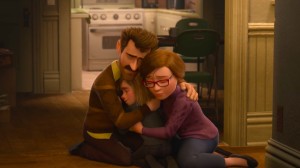
Want another sign of hope? The New Disney Animation continues to turn American culture inside out. As I remarked at some length last year, the main reason our political institutions fail us is because other institutions that have greater cultural power have gone bad. But revolutionary forces are gathering strength in those non-political institutions.
image

We are, indeed, entering in upon what will be years of very dark darkness. In the coming weeks I hope to find the spare time to return to the ins and outs of American politics, including the dismal foolishness that has been revealed lately in social conservative leaders (ecclesiastical and otherwise).

But the signs of a felt need for something greater, of a renewal, are all there. Success is not guaranteed if we try, but failure is guaranteed if we don’t.

And this is not our first national night – not by a long shot.

the-most-iconic-parts-from-martin-luther-kings-i-have-a-dream-speech

I began this series in 2012 when my daughter, then six, encountered her first fireworks and was overjoyed – but I spent the time wondering if there was an America left worth saving for her. In the years since, as I have acknowledged worse and worse signs of decline, I have emphasized hope more and more.

This year, we didn’t get to see fireworks, except from a distance on our balcony. Life intervened, as it has a way of doing. But we did have a wonderful time, going back to where we used to live to see the parade there, and going to the carnival that was in town where we now live. And we got to talk together, as we couldn’t when she was six, about the meaning of America. I even got to tell her that our church was preaching it from the pulpit, which reinforces that it isn’t just her parents saying these things.

As I said last year: Trowel’s waiting. Get to work or get out of the way.