Neither Marx Nor MacIntyre

OKCupid_Plaid-Zebra-750x400

Just put up a long post on First Thoughts arguing against both the conservative hubris of Jeremy Neill, who – seemingly immune to irony – cites Karl Marx in arguing that History will inevitably deliver victory to conservatism, and the seeming despair of Carl Trueman. I argue:

No society can live long without public order, including in matters of sex; but it is equally true that no pagan society could live long with the kind of order we would call conservative and traditional. And here we come to the meaning of “conservative,” “traditional,” and “victory.”

I am a conservative and I value tradition, but I do not think either of those can be the real basis of social order…

What we really want is justice, mercy and love of neighbor. And those things can be built in ways that are not “conservative” or “traditional.” After the collapse of the sexual revolution, the world will have been remade. Carl is right that there will not be much hope for justice, mercy and love of neighbor if achieving those goals depends upon the reconstruction of an older, pre-sexual-revolution social world. But why must that be the case?

Wherever people are people, human beings made in the image of God, there is hope for justice, mercy and love of neighbor.

Your thoughts, as always, are appreciated!
To Love the World

1426812312889

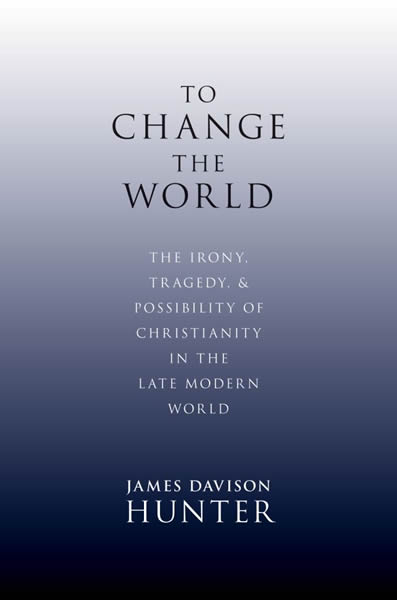
Today, the Gospel Coalition releases a free ebook that takes a look back at James Davison Hunter’s To Change the World five years later. I offer an ambitious essay both praising and critiquing the book:

This book is a unique and astonishing gift to the church. In spite of several tragic flaws that urgently need correction—we’ll get to those later—the book as a whole is not just brilliant but incredibly timely. It came at just the moment when the church most needed it.

I argue that Hunter has “awoken us from our dogmatic slumbers,” particularly from the assumption that to have a moral and coherent culture is something that is natural for human beings. It is not natural; it is supernatural.

We have become too comfortable in the world we are trying to change. We have lost the sense that a strong and moral culture is a miracle. In the presence of this miracle, we should be struck dumb with awe and wonder. In its absence, we should be humble and not demand it as an entitlement, any more than we demand as an entitlement the power to walk on water or raise the dead.


As always, your thoughts, comments, arguments, encouragements, dissents, rotten tomatoes, plaudits and withering scorn are all very welcome!

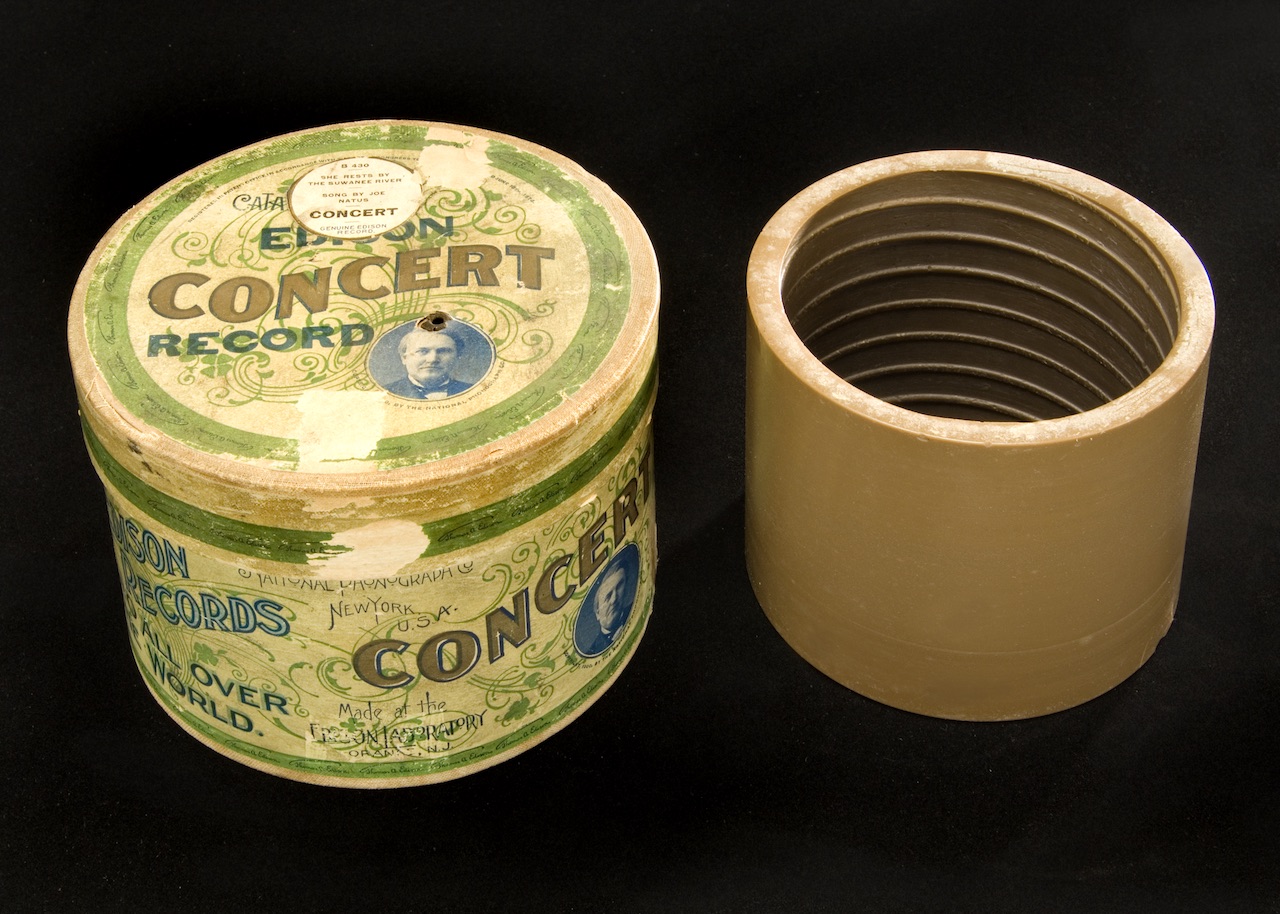
What Beats a Wax Cylinder? 10,000 Wax Cylinders!

image

Sorry posting has been light. New job and moving house.

As compensation, please accept the following awesomeness: UC-Santa Barbara has digitized and uploaded for free use the content of 10,000 wax cylinders, which is how they made recordings before the phonograph. They’ve got pop hits, opera, vaudeville, public speeches and even people’s weird home recordings.

It’s the 19th century internet!

Soldiers, Spacemen, Stone Tables and Saruman

a_hobbit_a_wardbrobe_a_great_war

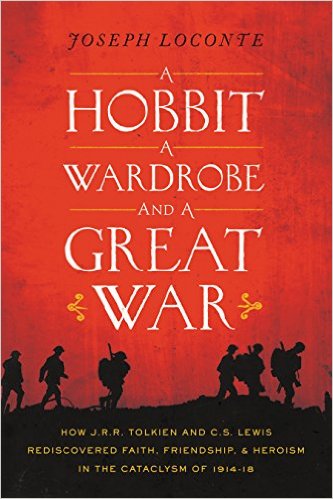
Today, TGC carries my review of Joseph Loconte’s wonderful new book about how the religious/political cataclysm of the Great War and its aftermath shaped the fiction of J.R.R. Tolkien and C.S. Lewis:

Recently I finished reading my daughter The Lion, the Witch and the Wardrobe. It was her first time hearing the story; it was my first time reading it since I read Joseph Loconte’s delightful yet sobering A Hobbit, a Wardrobe, and a Great War...The highest compliment I can think of to give this book is that Loconte…has revealed to me new depths in Narnia, as well as in Middle-Earth and the Space Trilogy.

I’d been aware—who could miss it?—that all three were written in reaction against the de-Christianization of Western culture. The most delightful moment of Loconte’s book for me was this vignette: Lewis wrote the first book of the Space Trilogy in 1938 to confront readers with the biblical doctrine of the fall, and was dumbfounded when he discovered that no one who read the book saw the biblical connection. Rather than give up in despair, he concluded the public was now so theologically ignorant that, as he wrote to a friend, “Any amount of theology can now be smuggled into people’s minds under cover of romance.” The rest is history.

As I write at TGC, while the book is insightful on Tolkien and Lewis, I think its greatest service is to help recover some historical memory of the religious and political significance of the Great War – over the past few years I have become more and more convinced that the early 20th century was the great pivot that created our present historical situation. As always, your comments are welcome!

Decency Sighting, Rick Perry Edition

ap_rick_perry_kb_131109_16x9_608

Ladies and gentlemen of the jury of History, let the record show that Rick Perry was something more than merely the hands-down best governor of his generation:

Early in the Republican presidential primary in 2012, there was a televised debate. The candidates were seated around a table. As the debate unfolded, many of the candidates were furiously writing down notes, to remind themselves of a point they wanted to make. One candidate, former U.S. Sen. Rick Santorum of Pennsylvania, noticed that Perry wasn’t writing very much. Through the course of the debate, Santorum told the story of the tremendous health challenges that his daughter Bella, who suffers from a rare disease, had faced through her life. It was a touching story. As the debate ended, the candidates stood up and shook hands. Santorum walked over to Perry and glanced down at his paper and saw just three words: Pray for Bella.

The article’s written by a former rival of Perry’s in the hotbed of Texas GOP infighting. The whole thing is worth your time.