Last month I gave a talk at the Evangelical Theological Society in which I defended the idea of human rights – not sham Rawlsian rights but real rights, grounded in objective claims about truth, justice and the nature of the human person. That is, rights as correlative to duties – I have a right to religious freedom because (and only because) I have a duty to worship God sincerely rather than insincerely.
I found that I was almost (not quite) the only supporter of rights in the room. I’ve been thinking about the discussion ever since, and I keep coming back to the following thought, which I think shows in a pretty solid way that religious freedom (by which I mean not mere toleration but a real openness to social pluralism) requires rights.
If more than one religion is present in the body politic, it seems to me there are only two options. One is to anoint one religion – either formally or informally – as the official religion of the body politic. Interestingly, this kind of politics is not only demanded by Christians who advocate the Christendom social model; it is also presupposed in reverse by Christians who advocate that the church ought to withdraw from the world’s political order (both the shallow, resentful types who want to withdraw because they lost the culture war, and the more profoundly world-hating fundamentalists of the Stanley Hauerwas variety). Whereas our Christendom friends want Christianity as the official religion of the body politic, the advocates of withdrawal want a non-Christian religion to be the official religion of the body politic. Of course they don’t “want” this in the sense that they agree it would not be so in an ideal world. But they do “want” it in the sense that they will adamantly oppose any effort to do anything against it here and now.
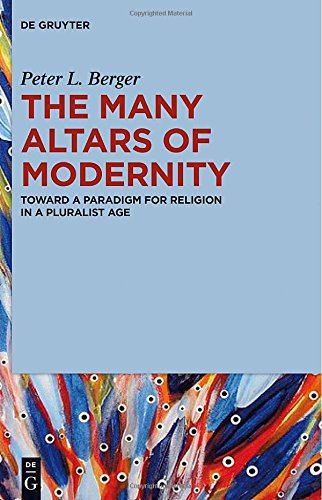
But suppose we don’t want one religion anointed as the official religion of the body politic? If so, we are going to need what Peter Berger calls (in his new book, which you should go read right now) a “formula of peace” – some sort of publicly acknowledged arrangement that regulates the social frontier between religions. The First Amendment is one example of such a formula, though an admittedly imperfect one.
And a publicly acknowledged formula of peace – any publicly acknowledged formula of peace, but I think especially one for regulating the social frontier between religions – implies rights. It must presuppose natural rights and it must create positive rights.
It must presuppose natural rights in the sense used by George Washington in his letter to the Hebrew Congregation at Newport, when he said that oppression of the Jews was not just unloving and bad policy but violated Jews’ natural rights. Without such a presupposition, the publicly acknowledged formula of peace has no moral basis that does not itself presuppose the truth of one religion. And the formula of peace between religions cannot presuppose the truth of one religion, or else it would be just a disguised (and therefore dishonest) way of anointing one religion to rule.
And it must create positive rights in the sense used by, say, Hobby Lobby when it claims to have a First Amendment right not to finance abortion drugs. Almost the only function of a publicly acknowledged formula of peace is to create such rights. We have the First Amendment precisely so Hobby Lobby (and the rest of us, of course, speaking on Hobby Lobby’s behalf) can shove a copy of the First Amendment in the president’s face and say, “wait a minute! You can’t just run roughshod over people and treat them like dirt! People have rights!”
I’d welcome any and all thoughts on this line of reasoning, but it seems pretty solid to me.