The Media and Kermit Gosnell: Culture Can Be Changed

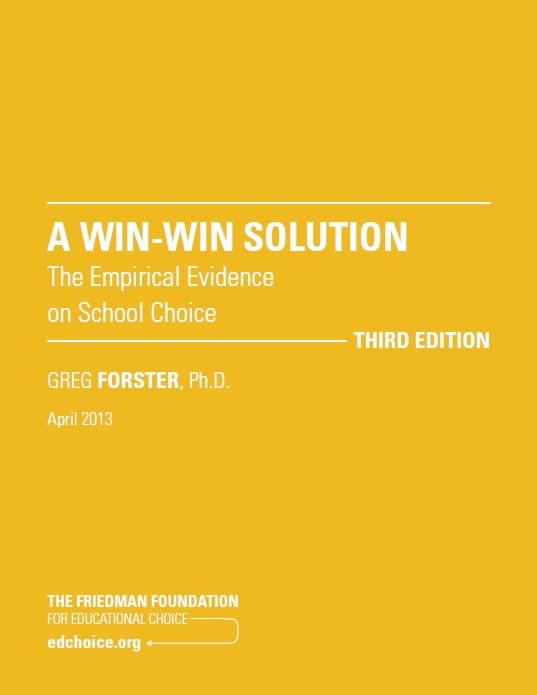
archimedes

One question we’ve come back to several times on HT is how resistant to change are elite cultural institutions? Obviously the answer is “very,” but what we really want to know is whether it’s so much we have little hope of accomplishing a lot of change, or if the levers of culture change available to us are long enough to move the elites. We’ve looked at both positive and negative signs.

Before too much more time passes, I want to make the point that media coverage of the Gosnell trial is a big datum in the “hopeful” category. Pro-life activists forced the dinosaur media to cover the trial. A Washington Post editor even admitted that they were wrong not to cover it sooner. The pro-lifers had no monetary or political pressure points; what they did have was shame. They could point to the ethical standards professed by the journalistic profession and show that the journalists were not living up to them. And the journalists ended up responding to that. Of course the Boston bombing pushed it all off the front page soon after, but still – when we get smart about how cultural influence works, we can have an effect.

In general, I think the new model for how to change culture is being vindicated.

Riddle Me This: What Is Equality?

Riddler target
Nice try, Bat-Dan – YOU MISSED ME!

I’m encouraged to hear that Bat-Dan doesn’t consider himself a libertarian. However, given the arguments he’s making in our exchange over transfer programs, it’s hard for me to make out how that’s the case. I’d be interested to hear how he’d differentiate his position from libertarianism.

Dan argues that my support for “the existence of some transfer-type programs as circumstances permit” violates what he calls “the equality mandate” and therefore also excludes “the foundational concept that there are both prudential and jurisdictional limits on government authority.” He appeals to the Declaration of Independence’s declaration that “all men are created equal” and argues that my view is inconsistent with it.

The first problem with Dan’s argument is that he permits only two possible positions:

  1. Support for “the equality mandate” as he understands it.
  2. Opposition to all limits on government authority.

This seems odd to me, both in theory and empirically. On the theoretical side: Why can’t I support limits on government authority, just not the same ones Dan does? Suppose I believe government has the right to do whatever it wants, except that it must never pass laws against eating bananas, because bananas are sacred to Mongo the Martian Monkey God. Would I not then be rejecting the equality mandate, but supporting limits on government authority? On the empirical side: Does Dan think that the overwhelming majority of Americans who do support the existence of at least some transfer programs in some cases are opposed to all limits on government authority? Dan himself has described support for such programs as a moral consensus in contemporary America, so he must agree that it’s a large majority. Are Americans absolutists?

Come to think of it, none of the great political philosophers before the modern era supported “the equality mandate” as Dan interprets it, yet all of them (without exception) articulated a belief in some limits on government authority. Were they all confused? Deluded? Dishonest?

And so, today’s riddle: What is equality?

Let’s take the Declaration’s meaning of equality as the subject of our discussion. For the founders, is “equality” by itself an ultimate principle for limiting government action? Or do the founders invoke “equality” within a larger philosophical framework, such that the proper standard for limiting government is that larger framework, of which equality makes up only one component?

I think that should be obvious from their language:

We hold these truths to be self-evident, that all men are created equal, that they are endowed by their Creator with certain unalienable Rights, that among these are Life, Liberty and the pursuit of Happiness.–That to secure these rights, Governments are instituted among Men, deriving their just powers from the consent of the governed…

Here we have not just the stark, naked assertion of a single gaseous, abstract noun (“equality”) as the basis of all political philosophy, but numerous principles working together:

  • Political philosophy should begin with “self-evident” truths.
  • One such truth is that all men are created by God.
  • Another is that God has created them equal.
  • Another is that he has endowed them with rights.
  • Another is that these rights (or at least some of them) are inalienable.
  • Another is that one of these inalienable rights is to life.
  • Another is that a second of these inalienable rights is to liberty.
  • Another is that a third of these inalienable rights is to the pursuit of happiness.
  • Another is that governments are instituted.
  • Another is that it is men who institute governments.
  • Another is that securing these inalienable rights is the purpose for which men institute governments.
  • Another is that governments have just powers.
  • Another is that these just powers are derived from consent.
  • Another is that it is the governed whose consent these powers derive from.

It is this larger framework of ideas that gives meaning to the concept of equality. This is the answer to all those facile, shallow people who think they can dismiss the Declaration’s declarations on grounds that “people obviously aren’t equal – some are smarter, some are more virtuous,” etc. The Declaration is not declaring that people are equal in all and every respect. It is declaring that they are equal in one critically important respect. And the larger framework of ideas surrounding “equality” in the Declaration shows us what that respect is.

So what is it? Dan writes, offhandedly: “I don’t think you can derive wealth-transfer programs from the protection of life, liberty, and property (otherwise known as the pursuit of Happiness).” But he does not elaborate. This is odd, because in my original post I argued that the protection of the rights to life and liberty is precisely the ground on which my argument rests.

Government protection of the right to life implies a duty to rescue:

With Locke, I hold that the proper justification for government is the moral imperative (ultimately rooted in the divine ordering of the universe) to preserve human life…The imperative to preserve life implies a positive duty on the part of all people to rescue those in dire need. If we think we have no duty to rescue, we don’t really believe in an imperative to preserve life; we only believe in an imperative not to murder. And the imperative not to murder is insufficient to justify the existence of the state…

Government protection of the right to liberty implies a duty to rescue:

Denying the duty rescue implies absolutism. For if I can use my neighbor’s distress to offer him a choice between submission or starvation, there will be no stopping the introduction of enslavement.

The order in which the rights are mentioned represents a hierarchy of priorities for the founders – the right to life is primary, the right to liberty is derived from the right to life, and the right to property is derived from the right to liberty. So the second must be interpreted in light of the first, and the third must be interpreted in light of the first and second. I think this makes it hard to overcome my interpretation.

Dan has not, so far as I can see, offered any response to my case on these points. So, in essence, this post is really just a very long way of saying Dan has not yet engaged my argument.

Once he does, I think he will see that most of his other concerns are addressed in these points. For example, his argument that there is “no facial difference” between my formulation and that of Karl Marx will be revealed as an absurdity to anyone who sees that my case is grounded in rights-claims and, ultimately, the imago Dei and the divine intent in creation.
My New Report on School Choice Research

Win-Win 3.0 cover

This morning, the Friedman Foundation releases the third edition of my biannual report summarizing the research on school choice. As in previous editions, I survey all the empirical research on the academic effects of school choice programs – both for the students who use school choice and for public schools. Also, new in this edition of the report, I also survey the research on how school choice impacts the democratic polity in three ways: impact on taxpayers, racial segregation and civic values and practices (such as tolerance for the rights of others).

What does the research find? Here, I’ll spoil the surprise for you:

Win-Win 3.0 chart

That unbroken column of zeros on the right side sure is impressive!

Readers of HT may be especially interested in the impact of school choice on civic values and practices. Check out the report for more – but you may also want to peek at Pat Wolf’s classic article Civics Exam.

Check Me Out on Wednesday Afternoon

post-conference-banner

This Wednesday afternoon I’ll be speaking on a panel at the TGC post-conference on faith and work. Tim Keller will kick off the post-conference with a talk at 1:30pm and then at 2:00pm we’ll chew it over on a panel with him, Bob Doll, Katherine Leary Alsdorf, Dave Kiersznowski and your truly.

0035 rotated square

In case you forgot what I look like.

I’m really looking forward to this – I expect we’re going to get past the usual faith and work movement sound bites (“Your work matters to God!”) and really dig into challenging issues.

You can watch it all live here on Wednesday, or if you’re unable (or just too lame) to make the live performance, watch for it to go up on the web at some point following the conference.

Two Verses for Worried Culture Makers

chinese-factory-line

Here’s a follow-up to my recent post on the two great anxieties Christians have about culture making. Drawing on Bavinck, Jordan Ballor appropriates two of the super-short parables in Matthew 13 to depict this tension in terms of “the gospel as leaven that leavens all of life” and “the gospel as pearl of great price.”

Today I put some thought into where in scripture we might find these two imperatives stated more clearly in the form of ethical commands, rather than in parables. Here’s what I came up with.

One of the loci classicus for faith/work integration is Colossians 3:23-24:

Whatever you do, work heartily, as for the Lord and not for men, knowing that from the Lord you will receive the inheritance as your reward. You are serving the Lord Christ.

Here we see the gospel as leaven that leavens all of life. When you show up at work and do your job, you are serving Jesus. You want the gospel to work its way so deeply into the warp and woof of your daily life that as you carry out your cultural tasks, in your mind’s eye you are thinking of Jesus as your boss rather than only your human superiors.

This sheds new light on what I said before about the job of the ordinary factory line worker as meaningful culture-making. It is noteworthy that in this passage, Paul specifically addresses his remarks to slaves. If ancient Greek slaves are serving Christ in their work, then absolutely the so-called “menial” line worker is doing so:

It’s a beautiful thing that he does for God and his neighbor. And if we say otherwise, we’re not only in rebellion against the clear teaching of the Bible, we’re also condemning that Christian to live in a meaningless universe where what he does all day has nothing to do with God. (Not to mention the fact that we’re creating poverty and undermining our community, and also destroying religious freedom.)

On the other side, there is this from Romans 12:2:

Do not be conformed to this world, but be transformed by the renewal of your mind, that by testing you may discern what is the will of God, what is good and acceptable and perfect.

Here is the gospel as pearl of great price. Even as the gospel is worked deeply into the warp and woof of the cultural tasks that make up our daily lives, it also stands dramatically apart from those tasks and from the culture as a whole. It shines a radiant light upon the culture, and in its illumination our participation in the culture and its daily tasks is to be evaluated and “transformed.” Anything too dull to reflect the gospel’s light must be either diligently polished or ruthlessly discarded. Just as the man who found the pearl sold all his possessions to buy it, so we must subject our cultural tasks to the gospel and “sell” whatever does not pass the bar.

This again brings me back to our line worker. Superficially, he seems to have no opportunity to “transform” his daily cultural tasks. He seems powerless. So if we only speak to him about his work with a “leaven” concern and not a “pearl” concern, he’s likely to be conformed rather than transformed. On the other hand, if we think of him not as a cog in a big corporate machine but rather as a human being with stewardship over his circle of influence (however small), we can think creatively about his opportunities for transformation:

He should radiate the gospel in both objective and subjective ways. Objectively, he should not only be a highly virtuous worker, he should go above and beyond the predominant ethical expectations that prevail on his factory floor. Perhaps he will take on more tasks or be a peacemaker when coworkers are in conflict. He may need to constructively challenge unethical practices. Subjectively, his bearing, spirit and demeanor should radiate the gospel. His company should taste different to those around him.

And, of course, Christians with larger domains of stewardship will have greater opportunities for transformation. In fact, in their cases it’s important not to lose sight of the leavening impulse. Pastors often assume that the capacity of a business owner to “transform” cultural activity within his business is limitless. It often becomes necessary to gently remind the pastors that human culture – even within a single company – is a highly complex ecosystem. It can never be very dramatically transformed even by the most powerful individuals. That’s why good Christian business owners pursue transformation as they’re able, but also work diligently to “leaven” a sense of meaningfulness and responsibility into all the work done by all their people, simply as it is.