Reason, Experience and Religion: Steve Rogers and Tony Stark

Romanticism, Enlightenment, Theism

Now that we’ve got that trivial electoral stuff out of the way, we can circle back to what matters. I was challenged by Karen’s and Dan’s responses to my post on the question of how we know human beings have an intrinsic dignity.

To the extent that we know it through “religion,” that might imply that the very foundations of liberal democracy include a force that creates cultural division. We will be constantly fighting over the meaning of human dignity and (consequently) how we honor it in practice, because we will know it differently. I surveyed two web articles seeking a common ground for knowledge of human dignity, one from Hadley Arkes seeking it in reason and one from Peter Berger seeking it in experience.

We must find at least some common ground (we need not find common ground on absolutely everything) and reason and experience seem like the things we share in common. But neither can work if set up on its own. Arkes’ abstract Kantianism and Berger’s appeal to “primal experience” are both implausible to me. The formation of an idea (even an incohate idea that involves no generalization to abstract principle) is a process that involves the interplay of reason and experience. The Kantian philosopher becomes a Kantian philosopher through life experience – thoughtful and reflective experience, to be sure, but the thinking and reflecting are themselves experiences. The pretense of his Kantianism, that he is thinking in categories that transcend experience, is self-deceptive. Meanwhile, it is true that Huck Finn (Berger’s example) has never been exposed to abolitionist propaganda or any other formal system of thought that explicitly taught him to see Jim’s human dignity. But Huck has been exposed to thought – the book is explict that a highly distorted but still recognizeable form of Christianity was an important factor in his world – that presumably prepared him to interpret his experiences in a certain way. More importantly, the act of interpreting his experiences is itself rational thought. Huck forms the thought that if he goes to hell for the sin of freeing Jim, going to hell is the right thing to do. That is not sound theology, but it is clearly theology.

So does “the interplay of reason and experience” get us what we want? I suspect not, because that just takes us back to religion. There are many people for whom religion is much more than just the sum of their reasoning and experience on moral and spiritual things. But there are many for whom it is not. “Religion” to them simply is their reasoning about and experience of transcendence. And even for those whose religion is much more than this, it is still not less than this. Their reasoning and expierence of transcendence are, for them, religious. So if we say we know human dignity through a combination of reason and experience, we are really saying we know it through religion.

Karen’s and Dan’s responses both raise the question, to me at least, of exactly what is “religion.” Karen is treating it narrowly, in terms of the highly developed world religions. But much real religion does not conform to those patterns. This is true not only among those who do not identify with a religion (the “nones”) but even among large numbers of those who do. How many American “Christians” are really practicing a folk religion that has not much to do with classical and historic Christianity beyond its outward forms? Meanwhile, Dan seems to me to reduce religion merely to the will of the believer to believe. That is one classic definition of “faith” (at least the sense of an individual’s “faith”) but not of religion. Religion is also sociological; it is embodied in texts, in mores and laws, in institutions and ways of life.

We may get closer to the problem if we start to classify the religion of the “nones.” I would argue that the overwhelming majority of Americans who are not Christians are Romantic individualists (capital R) and that Romantic individualism is a religion. It’s not an organized or highly developed religion; it’s more of a folk religion, although one with an intellectual history more distinguished than most folk religions.

If we think in those terms, would it make sense to say that half of Americans know human dignity through Christianity while the other half know it through the folk religion of Romantic individualism? If so, what would that imply for our ability to identify common ground in the ways we know that humans have dignity? What role would reason and experience play in the answer?

This summer I published an extended argument that The Avengers is about the culture war. Steve Rogers is the cultural product of historic Christianity; his behavior can be explained in terms of it, and it is even alluded to briefly in the movie. Tony Stark is the cultural product of Romantic individualism. (Bruce Banner represents the Enlightenment.) The great question of the movie is whether Steve Rogers and Tony Stark can pull together:

The conflict between Rogers and Stark, which manifests itself as a conflict over justice, is at bottom a religious conflict. Justice and religion flow in and out of one another in perplexing ways. People of different religions can reach moral agreement – if it weren’t so, we’d all have torn each other to pieces long ago. Yet even when our senses of justice align, the religious difference never quite goes away, never quite stops threatening to break out into a war…

Here’s why this is the movie for our time: the history of modernity is the history of great religions – Christianity, Islam, Marxism, Fascism, Romantic individualism, etc. – struggling for control of the great engines of power unleashed by the Enlightenment and the Industrial Revolution. America was the product of a great alliance between two of these religions, Christianity and Romantic individualism, against the others. It was not merely a temporary pact to share power but a real forging of deep alliances, resting on a robust sense of shared morality between the two. In spite of the differences, there really are deep undercurrents of similarity. Christianity really does celebrate the preciousness and dignity of the individual; we call it the imago Dei, the image of God in every human being. Romantic individualism really does seek to encompass both moral seriousness and an authentic sense of spiritual renewal (to see justice and mercy meet and kiss, as the psalm puts it). Yet in our time the alliance is strained. The differences between religions must always run just a little bit deeper than the similarities; otherwise they wouldn’t be different religions, they’d be different branches of the same religion. And now those differences are rising back up to the surface. The conditions that forged the original alliance have passed. Can it be reforged?

An existential threat submerges the differences and renews the alliance for a while. In the movie, it was an alien invasion. In our time, it has been 9/11. That doesn’t last, however. In the end of the movie, the heroes disperse to go their separate ways.

The closing note of the movie is Nick Fury expressing certainty that if an existential threat ever arises again, the heroes will reunite. Why does he think so? “Because we’ll need them to.” That is the optimistic scenario. I believe (for theological reasons) that there are rational grounds that logically justify a limited amount of optimism about how things go in the world. I am optimistic about renewing the old alliance that defines America. Yet there are limits, and in our time we are testing them.

So let me use that image to put a sharp point on this question. Do Steve Rogers and Tony Stark have enough common ground in reason and experience – or in any other way – to keep the team together?

Brooks and Barone on Two Gridlocked Americas

Washington Post county-by-county election results

Well, one longtime question in the field of political science appears settled. Do campaigns make a difference, or do voters vote pretty much the way they would even if there were no campaigns? As Matt Ladner puts it: “The Obama campaign worked their math problem with masterful precision…The narrow national popular vote majority plus the lopsided electoral college result is a testament to the effectiveness of the Obama campaign.”

Worthwhile reflections from Michael Barone and Arthur Brooks on the election. Barone (written on election day before the results were known):

Bill Bishop highlighted the political consequences of this in his 2008 book “The Big Sort.” He noted that in 1976, only 27 percent of voters lived in counties carried by one presidential candidate by 20 percent or more. In 2004, nearly twice as many, 48 percent, lived in these landslide counties. That percentage may be even higher this year…

Americans have faced this before. This has been a culturally diverse land from its Colonial beginnings. The mid-20th-century cultural cohesiveness was the exception, not the rule.

We used to get along by leaving each other alone. The Founders established a limited government, neutral on religion, allowing states, localities and voluntary associations to do much of society’s work. Even that didn’t always work: We had a Civil War.

An enlarged federal government didn’t divide mid-20th-century Americans, except on civil rights issues. Otherwise there was general agreement about the values government should foster.

Now the Two Americas disagree, sharply. Government decisions enthuse one and enrage the other. The election may be over, but the Two Americas are still not on speaking terms.

Brooks:

With the Legislature divided on party lines and a president holding only a tenuous mandate, we have a recipe for gridlock…

Gridlock today is especially corrosive because of the enormity of the challenges we face—and the urgency of solving our problems…

Getting beyond gridlock, though, will require compromise. To some, this may sound like surrender. It need not be. For instance, pro-growth comprehensive tax reform that is revenue neutral (or even revenue reducing) can help grow the economy while decreasing the Byzantine complexity of America’s tax code. It may mean giving up some of the welfare transfers that the left loves and the deductions that the right loves; but each side will have to give up some sacred cows. It need not mean increasing tax rates of giving the government beast more sustenance.

But compromise on core principles is never acceptable. Ultimately, no compromise is worth making if it undermines free enterprise, allows the continued and unchecked expansion of the state, or furthers the notion that Washington can or should pick economic winners and losers. In other words, we can build on truths shared between parties and ideologies on policy issues. But we cannot have compromise between the majority who support American free enterprise and the minority who wish to see it fail.

Finding common ground on policy while standing firm on principle is the grand political tradition of our republic. Our founders, who were greatly divided on the important policy questions of their day from tariffs to federalism, did not waver in their commitment to limited government and individual liberty. The moral covenant between government and the people established by the Declaration of Independence and reflected in the immortal phrase “life, liberty, and the pursuit of happiness” was not up for negotiation.

Bono Embraces Capitalism & Entrepreneurship for Developing Nations

From red specs to red state? Not quite, but we’ll take it!

Speaking to a conference of tech entrepreneurs and investors in Ireland on Friday, U2 singer Bono – one of the world’s leading advocates of well-intentioned but destructive policies to help the poor in the developing world – announced he had come to the realization that capitalism and innovative entrepreneurship are the only long-term path to success for developing nations. Yes, you read that right.

He even admitted that this was a “humbling” realization for him, saying that he had “got into this as a righteous anger activist with all the cliches.”

Forbes reports:

The Irish singer and co-founder of ONE, a campaigning group that fights poverty and disease in Africa, said it had been “a humbling thing for me” to realize the importance of capitalism and entrepreneurialism in philanthropy, particularly as someone who “got into this as a righteous anger activist with all the cliches.”

“Job creators and innovators are just the key, and aid is just a bridge,” he told an audience of 200 leading technology entrepreneurs and investors at the F.ounders tech conference in Dublin. “We see it as startup money, investment in new countries. A humbling thing was to learn the role of commerce.” [ea]

Ryan Anderson seems encouraged. Joe Sunde is skeptical.

Here’s my thinking. A big change has been slowly percolating for a while in the Christian international aid space. On-the-ground practice has not changed yet. But their social system of legitimization – the network of gatekeepers who anoint what’s good and what’s bad – are increasingly embracing the need for the kinds of changes we want. Bono is only the most recent example.

And it’s getting harder and harder to dismiss this as partisan rhetoric or libertarian ideology as more and more people who self-identify as progressives are getting on the bandwagon. Again, Bono is only the most recent example.

The big aid organizations have responded by adopting the rhetoric of change. I recall seeing promotional materials from World Vision that talked about helping people develop economic independence. Of course they’re not actually doing that, but the fact that they have to say they are is a canary in the coal mine for them.

It’s a little like how Democratic judicial nominees now have to clothe themselves in the rhetoric of judicial restraint in a way they never had to fifteen years ago. Or how the teachers’ unions have had to adopt the rhetoric of teacher performance and even choice. Or how President Obama has had to adopt the rhetoric of free enterprise and even pick up Arthur Brooks’ “earned success” language. As in those fields, so in this one: it’s an early sign that we’re winning. The gap between their words and their deeds will grow, and the pressure for real change is only going to get bigger.

They key for us now, as I see it, is to capitalize on this change without falling into either of two pitfalls. On the one hand, we don’t want to drive away our new friends. Joe Sunde’s skepticism in the post I linked above, while reasonable, needs to be tempered somewhat. We don’t want to punish people for moving in our direction, we want to reward them! (We believe that incentives affect behavior, right?)

Another way we would risk pushing people away is by claiming that only people who call themselves conservatives are welcome at the table. I can see why it would make sense from a certain point of view to label the things Bono said in that talk as “conservative,” but not everyone shares that point of view, and that’s not the hill I think we should die on. If Bono doesn’t see it that way, I’m not going to get in a fight with him about it. The important thing is, we now agree to some extent on what needs to happen; let’s roll up our sleeves and do it together!

On the other hand, Sunde’s skepticism has a sound basis. We need to stay true to our principles and not make unnecessary concessions to Bono in order to capitalize on his support. As Sunde points out, Bono is still legitimizing aid as a “bridge” to capitalistic development. Like Sunde, I fully expect that when push comes to shove Bono is going to be opposed to a lot of the real-world reforms that we need to make.

We have to uphold our whole view and not seek a “grand bargain” in which harmful aid structures are retained in exchange for inadequate pilot projects labeled “reform.” This is a mistake the education reform movement made in the 1990s – something I know a little about since I’m part of that movement. We supported increased spending on the wasteful and harmful status quo in order to pay off the unions to accept token pilot reforms. The token reforms were underwhelming or at best moderately successful, because they were too small and constrained to make a big difference. But the increased spending remains in perpetuity.

Instead, let’s find common ground that’s worth building on. Bono says aid needs to be a bridge to capitalism. Okay, what reforms is he willing to make to the aid programs? That’s the measure of his seriousness. If he shows up at the table supporting serious reform, then we should meet him halfway. If not, we can stick to quoting his statements when we advocate serious reform.

Either way, this is still a win!

George P. Mitchell Wins The Al

Left, my nominee; right, the winner in all his glory

Two weeks ago I introduced HT to the Al Copeland Humanitarian of the Year Award. This year I nominated Alfred Fielding and Marc Chavannes, who invented bubble wrap:

What makes popping bubble wrap so fun? Is it about power – the thrill of destruction? Maybe for some, but I doubt that’s the main attraction. Is it the excitement of steadily building the pressure, not knowing when the threshold will be crossed, until suddenly pop! – essentially a hand-held roller coaster or scary movie. That’s more plausible. But people who don’t care for roller coasters or scary movies – me, for example – seem to get as much out of bubble wrap as everyone else. In the end, I think it’s a mystery. Why do lots of people like chocholate and few people like anchovies? They just do.

So in addition to sheer quality and quantity of enjoyment, there’s another reason bubble wrap embodies The Al. It’s an improvement to the human condition that no central planner or philosopher could ever have dreamed up. It reminds us that at the deepest level, the universe is the way it is simply because it is that way. That doesn’t mean the universe is irrational or amoral at its core; it means that the deepest mind and morality of the universe are what they are independent of whether we understand or approve. And so also with beauty, which is the third of the three classical Aristotelian transcendent experiences (the good, the true and the beautiful) – including the beauty of popping bubble wrap.

But I’m not disappointed to see my nominee lose to George P. Mitchell, who commercialized fracking. From Mitchell’s nomination, submitted by Matt Ladner:

George P. Mitchell’s was both a deliberate and perhaps an inadvertent environmentalist. A philanthropic supporter of environmental causes, Mitchell ironically made a far greater positive impact on the environment through his market activities. More ironic still, many environmentalists somewhere on the ya-hoo to yay-hoo spectrum (a man from Wyoming once tried to explain the difference to me- but it is awfully complex) hate Mitchell’s fantastic environmental triumph….

The United States is going to meet Kyoto carbon emission goals despite the fact that we never signed the treaty. As it turns out, George P. Mitchell took care of things for us….

George P. Mitchell’s influence on the world is set to grow ever larger. With the new technologies for instance, Israel now has recoverable fuel reserves comparable to Saudi Arabia. Foreign Policy attempted to forecast the winners and losers of the new energy abundance and on balance, it is looking very good overall.

Also nominated were street artist Banksy, automotive innovator Ransom Olds (as in “Oldsmobile”), and digital-first-down-line inventor Stan Honey. Congratulations to all!

Happy Reformation Day – Get My Book Free!

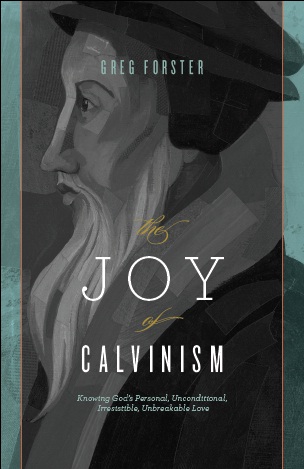
Here’s a treat that you don’t have to knock on doors to get! To celebrate Reformation Day, Crossway is giving away free digital copies of my last book, The Joy of Calvinism. You can download PDF, MOBI (for Kindle) and EPUB (for various other readers). It’s free today only, so click now and discover the joy of God’s miraculous saving love!

I only hope you enjoy reading it as much as I enjoyed writing it. Thanks to my awesome publishers at Crossway for spreading the joy around so generously.