Work Ethic in Christianity Today

95 Theses

In happier news, this morning Christianity Today posted an op-ed of mine on evangelical Protestantism and the work ethic. Brother Martin and his 95 theses make a prominent appearance; in some ways the whole theology of work and economics can be projected very successfully from the foundation he laid in those theses, if you understand the social context and the dehumanizing view of work to which he was responding.

I like the subtitle they picked for the piece: “Forget Weber. We don’t need social science to know that God cares about our work.” And I’m a social scientist!

Catholic Schools Trade Bishops for USDOE

octopus

For a few years now I’ve been among the education experts who oppose the Common Core effort to establish a single national curriculum in all schools. My particular bugbear has been that a national curriculum, in addition to being a bad idea for many other reasons, would reignite the culture wars, as the two sides mobilize to fight for control of what students across the country would learn.

I had no idea how quickly the problem would escalate. In Crisis magazine, Anne Hendershott describes how Catholic schools across the country are overturning their curricula in order to “align” with Common Core. They are doing so in large part because the SAT, ACT and GED are making big noise about how they’re all going to be CC-aligned just as soon as they can figure out what on earth that means.

Herndershott wants to know why the bishops haven’t approved, or even been consulted about, this sweeping overhaul of Catholic education. It would appear that Catholic schools are now more responsive to the USDOE than the bishops. So much for religious freedom!

Grudem and Asmus on Economics

Poverty-of-Nations

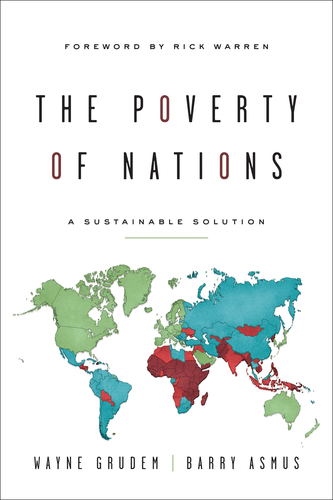
Today TGC runs my review of Wayne Grudem and Barry Asmus’ The Poverty of Nations. I don’t post all my TGC reviews here on HT but I think this one opens up some critically important questions on how the church handles these issues.

I think Grudem and Asmus get the economics right:

Humans are made to be stewards and co-creators with God through productive work. This is all over the Bible from literally the beginning to the end: Humanity was created to cultivate this world through work (Gen. 1:28, 2:15); in the next world, all the peoples of the earth will bring the fruits of their work into the New Jerusalem for blessing (Rev. 21:24). Every human being is made to be a steward. That’s why economic systems that don’t give people stewardship over their own work, households, and property are so fiercely condemned by the prophets and apostles alike. They rob us of our human dignity and encourage greed, sloth, consumerism, self-indulgence, sexual immorality, and almost every other kind of sin.

I also think the book shows some of the places where our theology of economics needs to think more deeply about the cultural nature of economic systems:

The authors are clear that moral concerns trump economic factors, but they tend to define the economic factors in materialistic terms…The authors also presuppose an overly individualistic anthropology in which all economic action can be reduced to the choices of individuals. But before you can choose to create a business you must have an idea of what a “business” is, and that idea will be culturally contingent rather than something you’re free to make up for yourself. And if the world is ordered by God, what constitutes a business will be metaphysically contingent as well as culturally contingent…A relentless focus on policy, money, and individual choices makes it difficult to sustain this sense that our culture has integrity and coherence apart from political power; it increases the plausibility of the assertion that it is really the government that holds us all together.

I’ve been a fan of Grudem’s Business for the Glory of God for a while now, so it was great to see him return to the topic. There are still a lot more frontiers waiting to be discovered.

Argle-bargle and Words of Wisdom from Justice Scalia

Speaking of the f bomb (“including, you know, ladies using it;” see Sinead O’Connor’s admittedly hope-inducing words in Greg’s post below), Justice Scalia has a few choice words about the coarseness of public life he has seen during his tenure in Washington, as well as duck hunting, Seinfeld and, in my favorite section, the reality of the devil. His recent interview with New York Magazine is so very much worth the read. A few highlights:
1) On the State of the Union:

“…it is a childish spectacle. And we are trucked in just to give some dignity to the occasion. I mean, there are all these punch lines, and one side jumps up—­Hooray! And they all cheer, and then another punch line, and the others stand up, Hooray! It is juvenile! And we have to sit there like bumps on a log. We can clap if somebody says, “The United States is the greatest country in the world.” Yay! But anything else, we have to look to the chief justice. Gee, is the chief gonna clap? It didn’t used to be that bad.”

2) How to answer a question that shouldn’t have been asked:

“Yeah. Sure, I use the Internet.”

3) How to respond to an insult in an interview:

“Shame on you! I’m a damn good poker player.”

4) How to respond to a compliment:

Interviewer: “It [Community Nutrition Institute v. Block] was a really good opinion.”

Scalia: “Isn’t that good?”

5) How to become a Scalia clerk:

Interviewer: “How do you choose your clerks?

Scalia: “Very carefully. What I’m looking for is…”

6) How to preach and insult journalistic elites in one fell swoop:

Interviewer: “Isn’t it terribly frightening to believe in the Devil?”

Scalia: “You’re looking at me as though I’m weird. My God! Are you so out of touch with most of America, most of which believes in the Devil? I mean, Jesus Christ believed in the Devil! It’s in the Gospels! You travel in circles that are so, so removed from mainstream America that you are appalled that anybody would believe in the Devil! Most of mankind has believed in the Devil, for all of history. Many more intelligent people than you or me have believed in the Devil.”

7) How to totally get confused about proper versus common nouns:

New York Magazine editors/Interviewer: “Yet today, you’re a conservative icon, and federalist societies abound on ­university campuses…”

(You mean these Federalist Societies?)

8) How to be humble and a Supreme Court Justice

“You know, for all I know, 50 years from now I may be the Justice Sutherland of the late-twentieth and early-21st century, who’s regarded as: “He was on the losing side of everything, an old fogey, the old view.” And I don’t care.”

 

Awesome Hope for Renewal from . . . Sinead O’Connor. Really!

sinead-o-connor

File this in our ongoing conversation about whether or not there is realistic hope that the culture really can be renewed. When I was growing up, Sinead O’Connor was the voice of juvenile rebellion against historic Christianity. And . . . she pretty much still is that. Check out the entry on “religion” in her Wikipedia page – apparently she professes to believe all the core doctrines of Christianity, and pantheism. She professes to be Catholic while declaring that “the office of Pope itself is an anti-Christian office” and says “I believe in Jesus Christ” but then refers to him as “the Christ character,” like the Bible is a novel.

So what does it say that she just wrote an awesome open letter about the recent unpleasantness – you know the one – that lays out humane standards of sexuality in an incredibly powerful way?

Nothing but harm will come in the long run, from allowing yourself to be exploited, and it is absolutely NOT in ANY way an empowerment of yourself or any other young women, for you to send across the message that you are to be valued (even by you) more for your sexual appeal than your obvious talent.

I am happy to hear I am somewhat of a role model for you and I hope that because of that you will pay close attention to what I am telling you.

The music business doesn’t give a sh– about you, or any of us. They will prostitute you for all you are worth, and cleverly make you think its what YOU wanted.. and when you end up in rehab as a result of being prostituted, “they” will be sunning themselves on their yachts in Antigua, which they bought by selling your body and you will find yourself very alone.

None of the men oggling you give a sh– about you either, do not be fooled. Many’s the woman mistook lust for love. If they want you sexually that doesn’t mean they give a f— about you. All the more true when you unwittingly give the impression you don’t give much of a f— about yourself. And when you employ people who give the impression they don’t give much of a f— about you either. No one who cares about you could support your being pimped.. and that includes you yourself.

Yes, I’m suggesting you don’t care for yourself. That has to change. You ought be protected as a precious young lady by anyone in your employ and anyone around you, including you. This is a dangerous world. We don’t encourage our daughters to walk around naked in it because it makes them prey for animals and less than animals, a distressing majority of whom work in the music industry and its associated media.

Et cetera.

What it says is that Christianity can in fact influence those who are not themselves Christian in any important sense, if it can develop a language that makes sense within their cultural world and draws people to it for meaning, dignity and hope.

HT David Mills at FT