Prayer is to Care

In my last post, I stated that I would present a series of posts about how Christians should respond to the poor. This all stems from Dan’s recent post on ‘forced compassion.’ Dan has summed up it well recently when he stated that forced compassion is not true compassion. Instead, forced compassion is a redistribution of wealth. On the other extreme we have ‘free compassion,’ which states that compassion should be truly free from external ‘force.’ Unfortunately, this often results in people rejoicing that they now have extra money in their pockets, tax rates have dropped, and the poor are forgotten. So, howshould we properly respond to the poor.

The first step must be prayer. I’m sure somewhere a large segment of readers are rolling their eyes. Oh no, he’s going spiritual on us! Let me further explain why this is necessary. I care about my neighbor. Just recently, the woman next door lost her job. I care. Her husband is gone for days at a time as a truck driver. I care. I’ve been secretly repairing and repainting things on their house in an effort to help out because I care for my neighbor. However, Milwaukee is fifteen minutes away, I feel bad for the poor in that city, but do I do anything to help them? No. Is this bad? Of course not. I’ve already explained how I care for my neighbor. If I care for my neighbor and you care for your neighbor there will be no poor. Or will there?

Similar arguments are often made concerning racism. My neighbor also happens to be a minority. I care for him, thus I am not a racist. Do I have problems with my neighborhood becoming full of minorities? Of course not because I am not a racist. Will that ever actually happen? Probably not. The problems of racial divide keep the minorities in Milwaukee and those of my race in the burbs. Intentional? No, but it is the reality. Claiming I am not a racist is true, but ineffective in dealing with a systemic problem of racial divide.

Back to the poor. My localized attempts at helping the poor, while kind and noble, will not solve systemic problems of the poor unless I think big picture rather than patting myself on the back for caring for my poor neighbor. The problem, though, is I do not really care about the poor in Milwaukee because I don’t live by them. I care for my neighbor because I have a relationship with them as my neighbor. Those in Milwaukee are nameless faces, statistics on the news, but not my neighbor. Thus, my level of caring is lower or non-existent.

Sadly, though, nothing will take place in Milwaukee until those in the suburbs start caring. And how will people in the suburbs start caring for those they do not live with or even next too? Only the grace of God, thus the call to prayer.

Prayer affects two things. First, it admits the problems of Milwaukee will not begin to be solved until the hearts of the people of Milwaukee are changed, and that is out of my control. Only God can control hearts and change them, so I need to pray for those in Milwaukee. Second, my heart needs to be changed so that I care for those who are distant from me as more than just a number or a ‘project.’ My heart needs to care for the poor in Milwaukee, and I’m no more able to change others hearts than I can my own. Thus, I need to pray. The result of praying for something is that I start to care. My heart is changed, leading to true compassion.

Before we can act, we have to care. If we are honest, I think we will realize that we only care about our own spheres. In order to care for those who are where we are not, our hearts must change. We cannot have free compassion without compassion in the first place. So, let us pray and ask God to change us so that we truly care. Only when we care can we prepare to act.


 

Does religion have added value?

As we can expect, Greg asked a fantastically thought-provoking question in his post the other day: “How can we take equally seriously [as reason and experience] the role of religion itself as a formative anthropological influence” in forming a basis of moral consensus in a liberal society? What we’re after here seems to be both a deep sense of religious freedom as well as the commitment to human dignity that pushes us to actually respect that freedom. Greg recounted Peter Berger’s argument for experience as a basis for a shared sense of human dignity, using the “primal experience” of Huck Finn’s conscience. He also quoted Hadley Arkes’ article that, in part, came out in favor of reason and natural law even (at least sometimes) over religion, as a basis for protecting human dignity.

Presumably we want all three of these factors – reason, experience, and religion – to play a role in defending human dignity. Each of these three factors can and, I think, should help us in our effort to figure out how we know that “every human individual has a claim to moral significance”, which Greg aptly described as the sine qua non of modern liberal society.

But here’s what I’m wondering. Can it be said that of these three, only reason can really aspire to the status of “universal”? Here I’m sympathetic to Hadley, because religion – just religion qua religion – is no longer something that can be assumed. Berger’s candidate, experience, does give rise to some universality; at some level, we do just all know that certain behaviors are cruel or wrong and just shouldn’t be done. But the shared ground there seems to be coincidental, rather than essential. That is, it’s good that Huck Finn’s experience of conscience won the day in keeping him from turning in a slave, but “primal experience” seems simply not that operationalizable when we’re talking about public issues instead of recounting individual tales.

But this brings us back to Greg’s question: how can we use religion itself as a basis for knowing that we have the rights that we believe we do have? I think – and Greg will, I hope, correct me if I’m wrong – that another way of asking the question is, what does religion add to the picture over and above what reason and experience get us?And here, I simply don’t know what to do about pluralism, because the answer, it seems to me, will be very different coming from the Qur’an than from the Bhagavad Gita. (Et al., not just religious texts but religious traditions.)

Can, then, religion actually serve “as a formative anthropological influence” for articulating a basis of moral consensus in a pluralistic society, if that society is (as I think we are, by defending religious freedom) attempting to preserve the right to freedom that entails that very pluralism? Or are we restricted to reason and experience?


Bono Embraces Capitalism & Entrepreneurship for Developing Nations

From red specs to red state? Not quite, but we’ll take it!

Speaking to a conference of tech entrepreneurs and investors in Ireland on Friday, U2 singer Bono – one of the world’s leading advocates of well-intentioned but destructive policies to help the poor in the developing world – announced he had come to the realization that capitalism and innovative entrepreneurship are the only long-term path to success for developing nations. Yes, you read that right.

He even admitted that this was a “humbling” realization for him, saying that he had “got into this as a righteous anger activist with all the cliches.”

Forbes reports:

The Irish singer and co-founder of ONE, a campaigning group that fights poverty and disease in Africa, said it had been “a humbling thing for me” to realize the importance of capitalism and entrepreneurialism in philanthropy, particularly as someone who “got into this as a righteous anger activist with all the cliches.”

“Job creators and innovators are just the key, and aid is just a bridge,” he told an audience of 200 leading technology entrepreneurs and investors at the F.ounders tech conference in Dublin. “We see it as startup money, investment in new countries. A humbling thing was to learn the role of commerce.” [ea]

Ryan Anderson seems encouraged. Joe Sunde is skeptical.

Here’s my thinking. A big change has been slowly percolating for a while in the Christian international aid space. On-the-ground practice has not changed yet. But their social system of legitimization – the network of gatekeepers who anoint what’s good and what’s bad – are increasingly embracing the need for the kinds of changes we want. Bono is only the most recent example.

And it’s getting harder and harder to dismiss this as partisan rhetoric or libertarian ideology as more and more people who self-identify as progressives are getting on the bandwagon. Again, Bono is only the most recent example.

The big aid organizations have responded by adopting the rhetoric of change. I recall seeing promotional materials from World Vision that talked about helping people develop economic independence. Of course they’re not actually doing that, but the fact that they have to say they are is a canary in the coal mine for them.

It’s a little like how Democratic judicial nominees now have to clothe themselves in the rhetoric of judicial restraint in a way they never had to fifteen years ago. Or how the teachers’ unions have had to adopt the rhetoric of teacher performance and even choice. Or how President Obama has had to adopt the rhetoric of free enterprise and even pick up Arthur Brooks’ “earned success” language. As in those fields, so in this one: it’s an early sign that we’re winning. The gap between their words and their deeds will grow, and the pressure for real change is only going to get bigger.

They key for us now, as I see it, is to capitalize on this change without falling into either of two pitfalls. On the one hand, we don’t want to drive away our new friends. Joe Sunde’s skepticism in the post I linked above, while reasonable, needs to be tempered somewhat. We don’t want to punish people for moving in our direction, we want to reward them! (We believe that incentives affect behavior, right?)

Another way we would risk pushing people away is by claiming that only people who call themselves conservatives are welcome at the table. I can see why it would make sense from a certain point of view to label the things Bono said in that talk as “conservative,” but not everyone shares that point of view, and that’s not the hill I think we should die on. If Bono doesn’t see it that way, I’m not going to get in a fight with him about it. The important thing is, we now agree to some extent on what needs to happen; let’s roll up our sleeves and do it together!

On the other hand, Sunde’s skepticism has a sound basis. We need to stay true to our principles and not make unnecessary concessions to Bono in order to capitalize on his support. As Sunde points out, Bono is still legitimizing aid as a “bridge” to capitalistic development. Like Sunde, I fully expect that when push comes to shove Bono is going to be opposed to a lot of the real-world reforms that we need to make.

We have to uphold our whole view and not seek a “grand bargain” in which harmful aid structures are retained in exchange for inadequate pilot projects labeled “reform.” This is a mistake the education reform movement made in the 1990s – something I know a little about since I’m part of that movement. We supported increased spending on the wasteful and harmful status quo in order to pay off the unions to accept token pilot reforms. The token reforms were underwhelming or at best moderately successful, because they were too small and constrained to make a big difference. But the increased spending remains in perpetuity.

Instead, let’s find common ground that’s worth building on. Bono says aid needs to be a bridge to capitalism. Okay, what reforms is he willing to make to the aid programs? That’s the measure of his seriousness. If he shows up at the table supporting serious reform, then we should meet him halfway. If not, we can stick to quoting his statements when we advocate serious reform.

Either way, this is still a win!

George P. Mitchell Wins The Al

Left, my nominee; right, the winner in all his glory

Two weeks ago I introduced HT to the Al Copeland Humanitarian of the Year Award. This year I nominated Alfred Fielding and Marc Chavannes, who invented bubble wrap:

What makes popping bubble wrap so fun? Is it about power – the thrill of destruction? Maybe for some, but I doubt that’s the main attraction. Is it the excitement of steadily building the pressure, not knowing when the threshold will be crossed, until suddenly pop! – essentially a hand-held roller coaster or scary movie. That’s more plausible. But people who don’t care for roller coasters or scary movies – me, for example – seem to get as much out of bubble wrap as everyone else. In the end, I think it’s a mystery. Why do lots of people like chocholate and few people like anchovies? They just do.

So in addition to sheer quality and quantity of enjoyment, there’s another reason bubble wrap embodies The Al. It’s an improvement to the human condition that no central planner or philosopher could ever have dreamed up. It reminds us that at the deepest level, the universe is the way it is simply because it is that way. That doesn’t mean the universe is irrational or amoral at its core; it means that the deepest mind and morality of the universe are what they are independent of whether we understand or approve. And so also with beauty, which is the third of the three classical Aristotelian transcendent experiences (the good, the true and the beautiful) – including the beauty of popping bubble wrap.

But I’m not disappointed to see my nominee lose to George P. Mitchell, who commercialized fracking. From Mitchell’s nomination, submitted by Matt Ladner:

George P. Mitchell’s was both a deliberate and perhaps an inadvertent environmentalist. A philanthropic supporter of environmental causes, Mitchell ironically made a far greater positive impact on the environment through his market activities. More ironic still, many environmentalists somewhere on the ya-hoo to yay-hoo spectrum (a man from Wyoming once tried to explain the difference to me- but it is awfully complex) hate Mitchell’s fantastic environmental triumph….

The United States is going to meet Kyoto carbon emission goals despite the fact that we never signed the treaty. As it turns out, George P. Mitchell took care of things for us….

George P. Mitchell’s influence on the world is set to grow ever larger. With the new technologies for instance, Israel now has recoverable fuel reserves comparable to Saudi Arabia. Foreign Policy attempted to forecast the winners and losers of the new energy abundance and on balance, it is looking very good overall.

Also nominated were street artist Banksy, automotive innovator Ransom Olds (as in “Oldsmobile”), and digital-first-down-line inventor Stan Honey. Congratulations to all!

Happy Reformation Day – Get My Book Free!

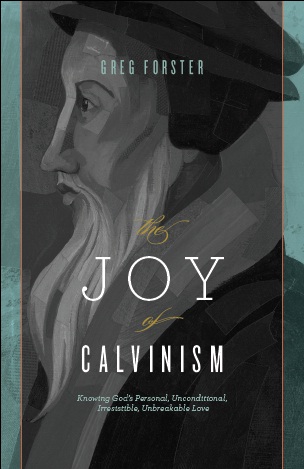
Here’s a treat that you don’t have to knock on doors to get! To celebrate Reformation Day, Crossway is giving away free digital copies of my last book, The Joy of Calvinism. You can download PDF, MOBI (for Kindle) and EPUB (for various other readers). It’s free today only, so click now and discover the joy of God’s miraculous saving love!

I only hope you enjoy reading it as much as I enjoyed writing it. Thanks to my awesome publishers at Crossway for spreading the joy around so generously.