Hard At Work

The point Goldberg makes here sounds obvious to some (and offensive to others, I suppose)–but it is often hard to keep in perspective, even if one is really fully committed to helping students learn.  One can become a bitter “gotcha!” teacher, a burn-out, or more likely a passive, disengaged, rationalizing teacher.

It is difficult to keep finding the bar, raising it where possible, and pushing students to clear it.  But that’s the job.

Goldberg makes the point, today–but Cicero called it long ago.

What may feel like compassion in the classroom is actually cowardice; the teacher is afraid to hurt the feelings of kids who, at some level, may need to have their feelings hurt if that’s the price of a good education. The notion that we help the under-privileged by leveling away distinctions between good grammar and bad grammar — or thuggishness and non-thuggishness — is quite simply an argument for dismantling civilization.

(source: How Civilizations Die (An Ongoing Series))

[posted during a grading break in finals week.  REALLY good classes this term, FWIW]

Two Parts of a Reasonable Response

I suspect that in many details, our visions will not tally–and I suspect there are even bigger structural and attitudinal barriers than Williamson here accounts for–but I quite agree that people who provide goods and services and people who need them have to be allowed to get together and make neighborhoods that really work.  

Trying to keep everyone on a government dole and leash is going to produce precisely the results it always has.  Bad ones.

Quoth M. Williamson:

There are two straightforward ways to improve the material conditions of people living in the poor parts of Baltimore: Move them out or move capital in. There is a little something to be said for moving people out of dysfunctional communities; I have in the past argued for a kind of reverse incarceration for young men convicted of serious crimes in gang cases — i.e., that during probation or parole they could live anywhere in the country they liked, so long as it was more than 200 miles from their home town. But that’s a narrow question. The real issue is moving people, businesses, and resources into poor neighborhoods — which is not going to happen when the locals are assaulting people, burning down businesses, and destroying resources. Lawlessness and violence convert assets into liabilities — all those boarded-up houses that once were homes are attractive nuisances on a massive scale. Somebody, somewhere, wants to sell things in those abandoned Baltimore storefronts, but no one can, because it is not safe.

(source: One Weird Trick That Can Help Make Your City More Prosperous)

A Feast of Unreason

Now, Michael Shermer is not the sort of person one takes seriously, in any case; but this is a good brief description of a very typical tactic:

It seems that Shermer ­seriously believes that rational thought was nonexistent, or at least extremely rare, before the Enlightenment. One would think that an author so insistent on rational evaluation would offer some defense of such a bold assertion, but there is none.

So if science and reason advance moral progress, what place does religion have? None, according to Shermer, who dedicates a whole chapter to defending the thesis that religion not only does not drive moral progress forward, but cannot. While Jesus may have said a few nice things, Christianity (which is the only religion that Shermer treats in this chapter) is fundamentally xenophobic and misogynistic. To defend these claims, Shermer mostly draws on cherry-picked passages[….] Shermer does not consider any such counterarguments; evidently, mere assertion is permissible in post-Enlightenment times, so long as the assertions ­concern religion.

After this, Shermer aims to show that the world is becoming more moral, thanks to the application of Enlightenment philosophy. But of course, for Shermer, “more moral” simply means “in better accord with Enlightenment philosophy.”

(source: An Exercise in Begging the Question)

Like a Roaring Lion

It is not actually all that pleasing to see the tactical nihilism of the Left collapsing back toward the absolute nihilism that has always used ideologues suborned by greed, lust, and the will to power as its catspaw:

Over at Slate, Amanda Marcotte thinks it’s absolutely hilarious that Satanists are challenging abortion restrictions on religious liberty grounds, seeking to expand abortion access. She argues this somehow makes conservative use of religious liberty laws “a little more complicated.” […] I suspect this effort — if it ever gets to court – would stumble on the state’s acknowledged interest in protecting what the Supreme Court has called the “potential life” of even non-viable unborn children. Yet even if the Satanists win, there would be something . . . incredibly appropriate about the pro-abortion Left wrapping its arms around Satan in the quest to preserve abortion on demand.

(source: Of Course the Satanic Temple Embraces Abortion, and Of Course the Left Applauds)

Not pleasing, but hardly surprising.  When a faction cheers the willful destruction of the innocent, you can guess what spirit animates their assemblies.

But this is not a winning choice.

And were this world all devils o’er,
and watching to devour us,
we lay it not to heart so sore;
they cannot overpower us.
And let the prince of ill
look grim as e’er he will,
he harms us not a whit;
for why? his doom is writ;
a word shall quickly slay him.

(source: A safe stronghold our God is still)

Pointing Out Collin Hansen’s Blind Spots

Courage 1Courage 2

I’d like to point out Collin Hansen’s blind spots – er, excuse me, Collin Hansen’s Blind Spots. An excerpt runs on TGC this morning, and it’s well worth your attention:

The fundamentalist/modernist war left a legacy whereby, in some churches, you’re branded a liberal heretic if you take away their hymnals. And in other churches a minister will sooner marry a man and his avatar than allow you to cite Ephesians 5 at a wedding.

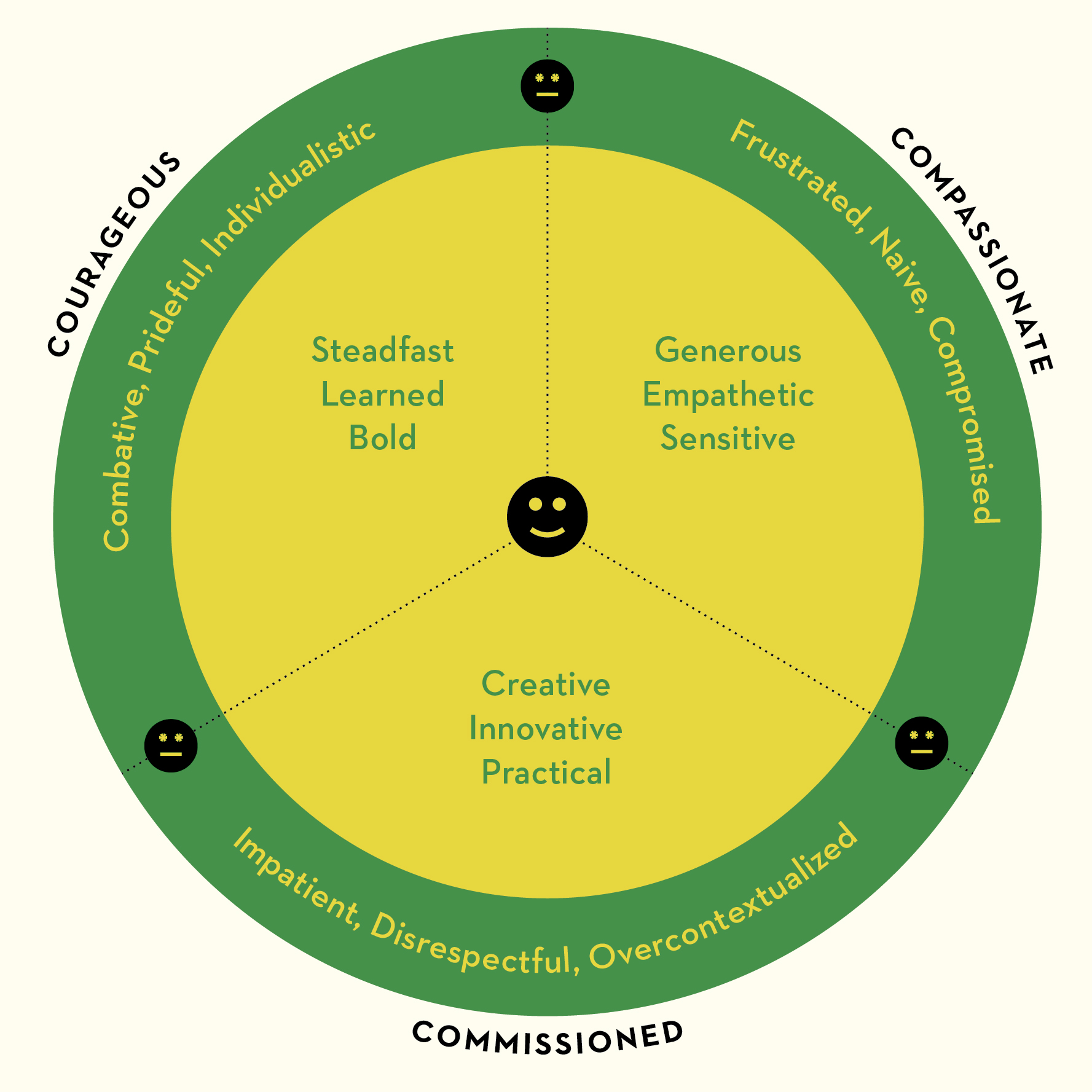
Collin urges us to become aware of our particular gifts and areas where we need to grow in being simultaneously courageous, compassionate and commissioned. And this process is primarily social rather than individual. We must recognize our natural tendency to push other Christians away because their gifts and areas of need in this area don’t match ours; if we learn to embrace one another instead, we will not only add strength to the church by meeting one another’s needs, we will ourselves grow in the areas where we need to. We need each other.

blind-spots-chart-07

It’s a short, smart, practical book. Check it out.