Lost Jobs, Found Church

Office Space Bobs

Today, TGC carries my article on how churches can help those who lose their jobs to technological change:

The march of technology is relentless, and it is always both creating and destroying jobs. It brings many blessings—spiritual and material—but also great costs. For example, seven of Fast Company’s “Ten Most Endangered Jobs of 2014” are classic blue-collar jobs—mail carriers, meter readers, drill press operators, and so on. I’m surprised they left out restaurant workers, who will soon be facing widespread replacement by touch-screen ordering and kitchen automation…

Over and over in Scripture, we are admonished to pursue and treasure wisdom. Consider Proverbs, or Job’s discourse on wisdom, or the admonitions to growth and maturity in the epistles. When people come into the pastor’s office after losing their jobs, a few canned bullet points on theology of work are not enough. People want to know: Why is this happening? Is God at work in this mysterious and seemingly chaotic process of technological change? What am I supposed to do?

I offer five ideas about what the church can be for those who lose their jobs, including:

The church can be a place where people find healing. In the modern world, public institutions are becoming more and more specialized. Each organization—business, school, government, and so on—exists only to serve its particular function. If you have a problem that isn’t directly related to their function, they won’t help you. Where can people turn to find a place where the whole human being is cared for? In God’s plan, that’s primarily the home and the church. As public institutions become increasingly specialized, the home and the church will need to step up even more as centers of general caregiving. Since the home is not exactly in great shape right now, that’s all the more need for churches to be places of care and healing for the distressed…

The church can be a place of cultural entrepreneurship. Helping people one at a time is essential, but we can do more. According to Genesis 1 and Revelation 22, human beings are made to be social, cultural creatures. The gospel cannot transform every aspect of our lives if the church doesn’t have something to say, and something to do, in every domain of culture. We shouldn’t march out and try to take control of the levers of worldly power, but we can find opportunities to do things in our own God-given spheres of influence that manifest our faith…


Academic Freedom, Schmacademic Freedom

063-tolerate-tolerance-650x363

My former professor, John McAdams, has been under attack for the past several months and is now to be fired from his tenured position at Marquette University. His crime is a blog post in which he brought attention to an undergraduate’s experience in and after a philosophy course in which the teaching assistant refused the student the chance to discuss his position against gay marriage.

So to reiterate: McAdams’ offense was to call attention to a student who was denied the opportunity to give voice to the official position of the Catholic Church at a Catholic university. This was because, in the teaching assistant’s (recorded) words, “homophobic comments…will not be tolerated.”

What happened from there is an interesting story, and a letter from the Foundation for Individual Rights in Education provides a pretty decent account of it. The only other material facts, though I think they’re actually distractions, are that the teaching assistant started to receive intimidating messages in the aftermath of the blog post. To be clear, that’s terrible and intolerable. But to blame it on McAdams’ blog post, as if calling attention to the student’s experience was so incendiary that people simply had to react with threats and intimidation, is ludicrous and tremendously threatening to academic freedom and, in a broader sense, free speech.

I’m searching online accounts of this story to try to find the other side, something that will complicate what appears to be really an outrageous offense against academic freedom. While I can see that the intimidations and threats against the TA were indefensible and intolerable, I cannot possibly see the logic of blaming McAdams for them.

In a world in which we feel compelled to identify with the grossly offensive Charlie Hebdo in the name of free speech, why can’t we identify with a professor or a student who voices unpopular views?

The More You Know….?

In the course of this mildly interesting article (related to this absolutely fascinating area of research), I find a reference to the following:

[T]he constellation of challenges created by population growth […] have contributed to a rebirth of the profoundly misguided philosophy espoused by Thomas Malthus, an English priest and economist who lived during the late 18th Century. In 1798, Malthus argued that human population always grows more rapidly than the human food supply until war, disease or famine reduces the number of people. He was wrong – and spectacularly so.

(source: Thomas Malthus: Wrong Yesterday, Right Today? – Forbes)

And I stay with this topic a moment, because it seems worthwhile to notice that Malthus, as an Anglican cleric and man of his times, could be critiqued on other grounds, too.  Continue reading

Important Clarifications

I referred to the controversy over what seemed to be tainted vaccines in Kenya in a comment, and have been thinking ever since that I wished I had waited for one more round of clarification, first. Well, retrospectively, let’s clarify.

Acton’s report of the original controversy is well-sourced and clear:

In Kenya, the United Nations has been working to eradicate tetanus. That’s a noble effort. Unfortunately, they seem to have taken it a step further. The Kenya Catholic Doctors Association released a statement this week saying they have found an antigen that can cause miscarriages and sterilization3 in women and girls.

(source: United Nations Charged With Birth Control Subterfuge In Kenya | Acton PowerBlog)

However, the laboratory results the Bishops and doctors relied on in voicing their concerns appear to have been flawed.  The record has been amended by multiple groups that can be expected to share the principles that led the Bishops to speak out on the matter (i.e., concern for women whose ability to bear children is too often treated as a pathology, concern for babies too often killed or mutilated by those who refuse to treat them as objects of moral concern, and concern for those who the elite classes of the global West have too often used as guinea pigs).  The reports seem credible, and I hope that these studies–and the outcry against a lack of transparency and local accountability that spurred the crisis–will lead to more constructive efforts in the future:

While the tests of the vaccine the Bishops had done at four separate laboratories were marred and showed false positive results for the infertility hormone, Matercare Internaitonal also said “the best solution is for the Kenyan authorities to communicate directly with the WHO in Geneva to offer support and encouragement to expeditiously test samples supervised by both parties in independent, reputable and competent laboratories.”

“Once the absence of hCG [hormone] is unequivocally confirmed,” Matercare said,  “a public statement and campaign of support for the immunization programme will be necessary to minimize the potential for further damage.”

(source: Worldwide Catholic Health Group: Tests for Birth-Control Drug in Kenya Tetanus Vaccine Were False Positive | CNS News)

“In brief, the results of the [October] tests of the Kenyan tetanus vaccine which caused concern were false positives, due to the cross reactivity of some of the components of the vaccine, and the fact that the testing ordered was invalid,” said the [American Association of Pro-Life Obstetricians and Gynecologists].

(source: Worldwide Catholic Health Group: Tests for Birth-Control Drug in Kenya Tetanus Vaccine Were False Positive | CNS News)

The article also cites some useful background.  The fear that these tests were happening proved to be unfounded, and (as is also pointed out in the same statement) upon examination are also unlikely to be true on the scale they would have to be.  Continue reading

“Critical Thinking” Is Not Enough, Part 65,536

A fresh article in the Chronicle of Higher Education has a few home truths all ’round.  I quite agree that the bifurcation of research from teaching as goals of the university has produced bad results, though I also agree that almost every radical reform of that system has introduced far worse evils in the place of the ones we now have.

[My solution, tentatively, is to keep teaching for all I’m worth, ratcheting up the intellectual demands I make on students while directing them to research better understandings and solutions, and hope for better days.  Unfortunately, government finance and government meddling combine to make reading, writing, and teaching much harder than it needs to be–and to divert time and effort into compliance with memos and forms dear only to educrats and administration, those self-replicating evils of the (education) SYSTEM to which we are indentured.]

Khans and Christians

One source of my frustration is the blinkered understanding of education espoused by politicians right and left, which amounts to a substitution of the goals of single-axis-of-value political economics for the goals of educators:

On his website, McCrory speaks of the need to “align higher education with changing market needs.” […] To a certain extent, the Obama administration, with its blurry vision of rating colleges according to “labor-market outcomes,” shares this rationale. […]

It’s a deceptively difficult argument to neutralize. Scholars generally push back by uttering something about “critical-thinking skills.” We’ve been reflexively mouthing that line for decades. As we say it, however, our thoughts are actually concentrated on making next week’s deadline for a research grant. What we really need to argue, or, better yet, prove, is that the college classroom and its personnel transmit lessons and intangibles that are invaluable to the nation’s well-being.

(source: Teach or Perish – The Chronicle Review – The Chronicle of Higher Education)

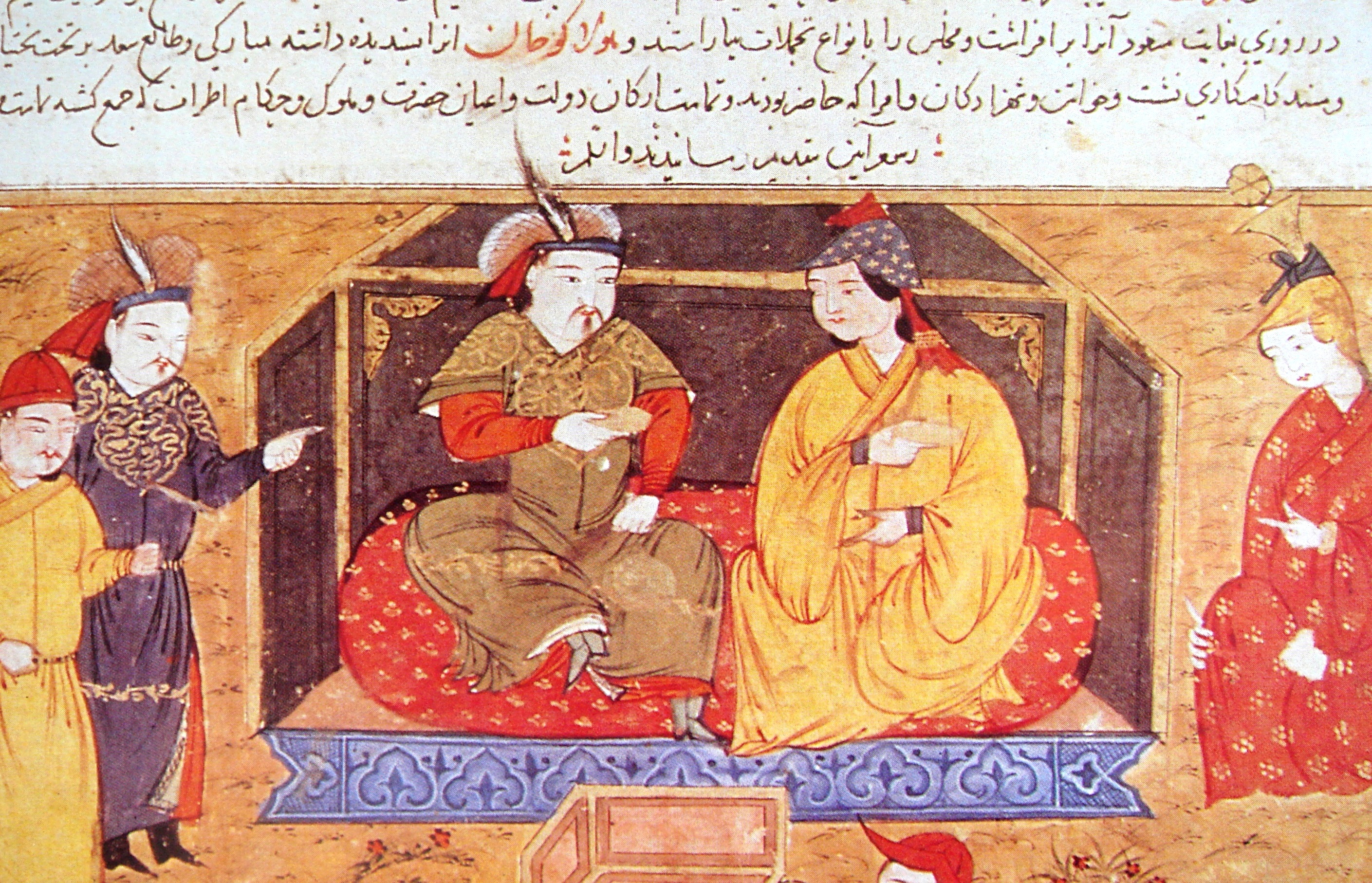
Agreed.  But there is a cultural feedback loop problem, here; how does one demonstrate the worth of textiles in a culture where salt and arable land, rather than wearable clothes and cattle, are the marks of wealth?  How does one justify Socrates to Athens, or Locke to Genghis Khan Continue reading