A More Realistic July Fourth

kaye-america-the-beautiful-660-80

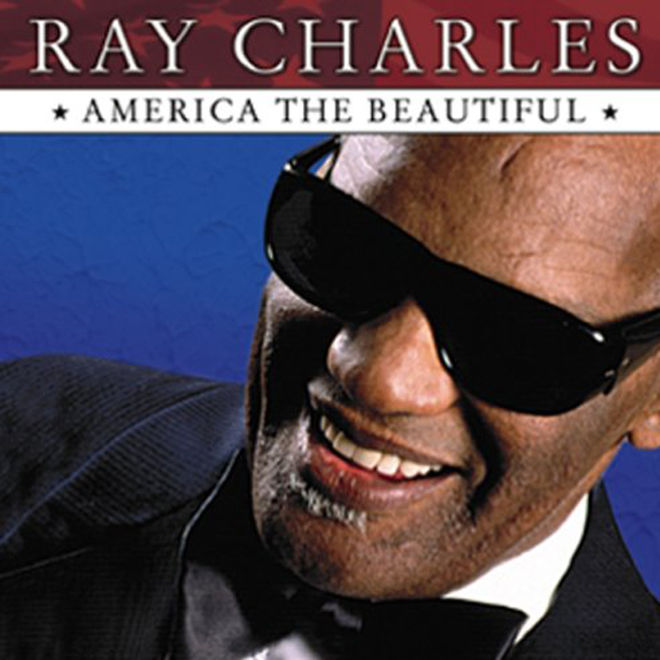
We were home for the July 4 holiday this year, and the parade and fireworks show in my town offered less immediate and obvious material for a renewal of hope than did the hotel fireworks where we stayed the last two years. True, the American Legion band played Stars & Stripes Forever. But there was no Ray Charles singing America the Beautiful and nothing analogous to it – there was nothing that gave meaning to the holiday. The most memorable “music” of the parade, if you could call it that, was a local rock band, dressed in what could be interpreted with equal plausibility as flimsy surfer-style shorts or underwear, blasting out a song whose most memorable line was – I kid you not – “let’s do whatever we want!”

The traditional theme of my July 4 columns here on HT has been the renewal of hope. But hope must be tempered with realism – “hopeful realism” being a very useful phrase coined by Tom Nelson. I’m still holding up the lamp of hope this Independence Day. But after two successive years of pushing for more hope, this year it looks like I’m going to make concessions to the realists.

And yet, the opportunity for hope is there for those who have the spiritual eyes to see it. The second most memorable music from the parade was a ragtag group of about eight guys from a local Baptist church playing what I can only describe as awesome funky jazz music. Neighbors of mine who articulate no Christian faith commitments stood up and danced enthusiastically to it. The same people turned up their noses at the rock band.

I’ve never seen the Baptists in a parade in my town before. Apparently the parade is more or less open to anyone who can entertain the crowd. So suppose the Christians – that church or some other one – decided that the Independence Day parade was an opportunity to do more than pass out leaflets advertising VBS (which is what the Baptists were doing as their band played). Suppose they decided they would be the ones whose parade entry would exegete the meaning of the holiday. They would pretty much win the “battle” for cultural influence in that sphere by default. What if they had a culture war and nobody showed up?

It would be easy to do this full time. In the July 4 parade you do a float about religious liberty. In the Memorial Day parade, by contrast, a lack of meaning is not the problem; but there is still an absence of the transcendent. So the Christians show up and hand out leaflets that say “greater love has no man than this.” In the Thanksgiving parade you prompt people to be grateful – and maybe think about whom it is they’re grateful to. In the Christmas parade, Jesus is already present, but it’s all rote and ritualized. So you add the joy element by leading the crowd in singing boisterous carols.

And it would be worth it to do this. In a small city like ours, everyone shows up to the parade. And it’s really the only authoritative platform of cultural formation. It’s the only thing our whole city does together to define shared meaning in our lives.

True, things are not going well in America right now. Apparently there are only four votes on the Supreme Court for even the most rudimentary protection of religious liberty. But earlier today I had a conversation about this that brought me back to this point from last year – even when law and government go wrong, they can take a long, long time to break down the deeper structures of culture. When I wrote that post last year, I was somewhat skeptical about it – as I said at the time, the reach of the law is much longer today than it was in earlier ages. But at the same time, the love of country and neighbor is deep in this country, and it doesn’t take that much to bring it out of people.

You just have to know which chords to play.

Two Joyful New Interviews

JFTW

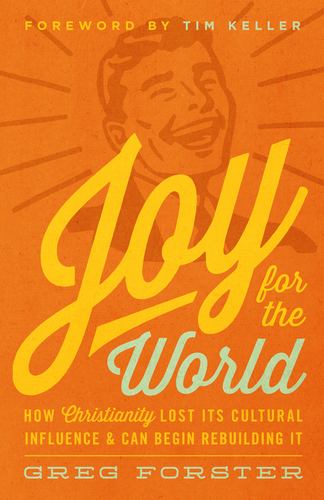
Recently I was delighted to sit down with Justin Taylor for a video interview on my new book, Joy for the World. Check out the opening if you want to see me sitting there looking really weird for a few seconds. I don’t know why, but I think I look awful on camera whenever I’m not talking!

I also did a really fun podcast with the gang at Christ and Pop Culture. Among much else, a certain delightfully subversive Disney movie is discussed. Apparently if you join CAPC (membership $5) you can read my book for free – thanks, guys!

In Defense of the Phrase “Faith and Work”

Bridge

Image HT

Recently I’ve heard several major leaders in the faith and work movement criticizing the fact that we call it the “faith and work” movement. I rise in defense of the phrase.

The most persuasive version of the concern that I have heard would run something like this: The phrase “faith and work” implies that faith and work are, by nature, separate things, and our task is to integrate them. In fact, the argument goes, they are always bound up together. We have to challenge the assumption that separateness is their natural or normal state, and it is somehow up to us to find a way to make them fit. Rather, they are integral by nature.

Now, so long as we stick to the word “separate” there is some truth here. Faith and work are not, by nature, separate things with no connection. They are indeed integral – made to be together.

However, my concern is that we not lose sight of the fact that faith and work are different things. They are not separate, but they are different. Faith is not work. Faithfulness is work (to a large extent). But faith is not faithfulness.

It is a theme that runs through all good systematic theology from beginning to end that we can and must distinguish things without separating them. We must distinguish the three persons of the godhead without separating them. We must distinguish the human and divine natures of Christ without separating them. Etc.

We must distinguish faith from faithfulness, and hence faith from work, without separating them. This is just a new version of a very old problem. Paul stresses the distinction between faith and faithfulness/work while James stresses that faith and faithfulness/work are connected, not separate. There is no contradiction here if we remember that the two can be distinct without being separate.

The stakes are high. If we do not keep both the distinction and the connection, we cannot keep the classical Protestant understanding of justification. And although it happens to be out of fashion at the moment, the classical Protestant understanding of justification really is the theology with the best and deepest biblical warrant.

Obviously the faith and work leaders who are starting to challenge the phrase “faith and work” do not intend by this to move us away from the classical Protestant understanding of justification. They are probably not even conscious that their concerns might have implications for justification. That is what troubles me.

I would not make an issue out of this if it were merely a matter of debate points. (Well, okay, let me revise that – I hope that I would not make an issue out of this if it were merely a matter of debate points.) The suggestion that we consider tearing down what has been, to date, a very successful banner over our movement suggests to me that some may be so eager to emphasize the connection between faith and work that they are in danger of neglecting the distinction.

In fact, to the extent that there is some ambiguity and tension inherent in the phrase “faith and work,” I see that as a feature, not a bug. By the very fact that we have built a movement called “faith and work,” we testify that the two can never be separate; they must always be connected. But the name simultaneously maintains the distinction. It forces us to confront the difficulties of being faithful while not resting in our faithfulness for our favor with God.

Let the phrase stand, not only because it appears to do a very good job of communicating what our movement is about in a way that makes sense to people, but also as a reminder that connecting faith to work is not reducing faith to works.