Left & Right Come Together – When It Pays

Money Handshake

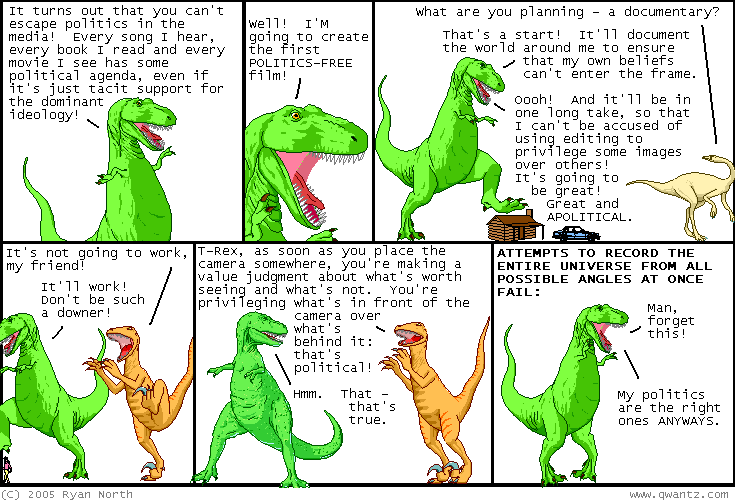
Great news! Political scientists have discovered that Americans of the left and right don’t disagree nearly as much as they seem to, and are able to come together around the facts even when the stakes are high in partisan disputes.

All you have to do is pay them!

That is to say, people think carefully about the truth and are willing to admit the facts even when the facts make the other side looks good – when accurate reporting of the facts brings them an immediate reward.

As Dylan Matthews reports (hat tip to Jim Geraghty’s newsletter), it has been well established for some time that people who identify with the left and right have different perceptions of the facts. Ask whether the deficit went up under Clinton (it didn’t) and Republicans will say yes; ask whether inflation went up under Reagan (ditto) and Democrats will say yes.

The great fear, of course is that this makes a common civic life impossible, as we all end up living in separate worlds. Defending the despised and hated (but innocent) British troops in the Boston Massacre murder trial, John Adams famously said that we are entitled to our own opinions but not our own facts. What happens if we end up living in a country where we don’t have a common set of facts?

Well, count on good old grubby human nature to come to the rescue. A team of political scientists reports that if you offer people a relatively modest reward (Amazon gift cards, in this experiment) if they get the questions right, suddenly the Democrats remember that hey, Reagan kicked inflation’s tail up and down the national mall, and Republicans remember that Clinton did likewise with the federal deficit.

Now there are two caveats to the good news here. One is that it’s tough to see how we hand out Amazon gift cards to all the voters – especially when the politicians in both parties have goodies of their own to reward bad memories rather than good ones. The other is that even when you can do it, this kind of immediate “carrot and stick” incentive is at best a short term solution.

What we need is a revolution in education – in homes and schools – that teaches people from early childhood that getting the facts right is worthwhile even when it sometimes rewards your political adversaries. We’re rolling a heavy stone up a steep hill here. But it can be done.
Goldberg & Williamson on Politics

leviathan

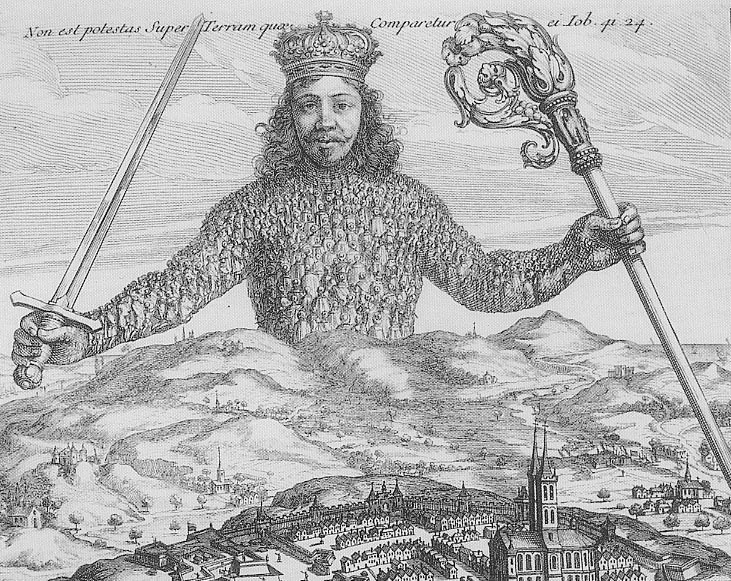
I’m a big fan of Kevin Williamson and have been operating on the assumption that at some point I’ll read and love his new book, The End Is Near and It’s Going to Be Awesome. Paradoxically, I just read and loved Jonah Goldberg’s rave review of the book on NRO, and as a result, now I’m not so sure I’ll buy the book. It sounds like the merits of the book are largely a replication of what you can already read for free in Williamson’s work on NRO (Goldberg: “the ‘end’ growing near has to do with the huge debt crisis threatening the U.S. and the world. He runs the reader through all of that with an (apparent) ease that should arouse envy in any writer and shame in nearly every economist”). On that score, I expect Williamson himself would be the first to affirm the wisdom in the old adage: Why buy the loaf when you can get free slices? Meanwhile, what’s unique to the book sounds like a pretty simplistic libertarian diatribe against “politics” per se. The market can learn and improve (get “less wrong”) over time, but the state can’t, etc.

Goldberg offers a fine defense of politics, including:

First, in a very obvious sense, politics can get less wrong. The American Founding is argument-settling proof of that. By recognizing our in­alienable rights, the folly of hereditary titles, the evil of arbitrary power, the value of property, the need for checks and balances, etc., the Founders created a system to keep politics — or what Nock would call the State — at bay as much as possible. Indeed, one of the problems with Wil­liamson’s use of the term “poli­tics” is that it is too capacious. Many times when he is talking about the ethical deficiencies of politics, what he is really talking about are the deficiencies of what Hayek and others would call (state) “planning.” In that context, Wil­liamson is quite convincing. But he loses me when he says that politics in and of itself cannot be “ethical.” Even taking into account the obligatory caveats about slavery under the Constitution, the Founders’ system was indisputably less wrong than all that came before it. I doubt that Williamson would disagree with that.

Read it – the review, that is. Maybe I’ll still pick up the book, but I’m less likely than I was.

TGC Faith and Work Panel Now Live

post-conference-banner

TGC has posted free videos of all the presentations from their national conference last month, including the faith-and-work after-conference I participated in. Check it out! Here’s a taste (starting at 22:00):

And I would add [regarding] being made in God’s image: Remember, God is three persons in one being, and work is made for community. We work with other people. To work is to be engaged in not only serving others but interacting with others as we give and receive through our work. And through the economy we become coworkers with millions of people because our work interacts with their work, and so forth. Now in the Trinity, why do the three persons work together – and work together so much that they have only one will? It’s because they love each other, and they have a common being, a common root. Now, human beings are not God, obviously, but there is an imaging of the Trinity in the way we work. Humanity has an organic wholeness that we live out through our work, because work is relational. And yet, every individual still matters and has intrinsic dignity, and the distinctiveness of the person is just as important for us as it is in the Trinity.

Marriage Compromise: A New Institution?

istewaj001p1

When I said that the marriage movement needed entrepreneurial thinking, this is what I was talking about: Charles Capps proposes to make space for a stable compromise on marriage by inventing a new social institution. It’s a bright idea. I comment on it over on First Thoughts this morning:

Capps argues that we should develop separate social institutions to handle two things which heretofore have both been handled by marriage: the social needs of the natural family, and the social needs of groups (whether in a sexual relationship or not) who cohabit and share assets. We seem to be entering a period of history where, in contrast to the previous period, significant numbers of people will cohabit and share assets without forming natural families. Mere justice, Capps argues, demands that we develop social institutions to serve the legitimate needs of these non-familial cohabiters (that’s my term, not Capps’; let’s call them NFCs for lack of something better).

I see three issues that will need to be tackled for this to become a viable way forward…

It’s not going to resolve the debate in the immediate future, but if the issues I address on FT are tackled, I think it’s a seed that could grow into a new approach that could offer a long-term compromise and something like social/political equilibrium.

In other words, moral consensus.