Questions for Dan

20130220-072218.jpg

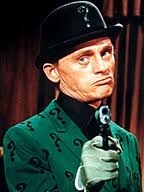
Since I don’t want to be mistaken for a supporter of involuntary servitude, I’ll depart from the example of my boyhood idol (pictured above) and refrain from holding Dan at gunpoint. But I will follow his example by posing a few riddles:

1) If it’s really involuntary, why does everyone vote to continue if?

2) Locke said it was a contradiction in terms to say people consent to be ruled by an absolute authority, because it amounted to saying you consented to be ruled against your will. Isn’t your claim liable to a similar charge? Isn’t it the point of HT that governance by moral consensus is the alternative to involuntary servitude?

3) If we are broadly Lockean and/or Jeffersonian in our political philosophy, does your position imply the U.S. government is a tyranny?

These may seem to some to be three different ways of asking the same question but they’re not; they’re distinct but related questions.

4) Bonus question: Suppose Social Security was converted to a mandatory private savings program, where everyone is required to save a government-determined amount of money until old age, but you still own your own money. Would it still be involuntary servitude?

While we wait for answers, a note to appease the fans: yes, I know that’s not really a gun he’s holding. It’s fake. He used it to trick Batman into arresting him when he’d done nothing wrong, so he could charge Batman with false arrest and require him to appear in court and reveal his identity. Happy?

Pastors and Culture: Getting It Right

Tim Keller

Good stuff this morning from Tim Keller on right and wrong ways – and right and wrong reasons – for pastors to exegete culture:

I think it may be possible to say that every sermon should have three aspects or purposes. First, you need to preach the text in its scriptural context; second, you need to preach Christ and the gospel every time; and finally, you need to preach to the heart….In that schema, where does “cultural engagement” come into my sermons? Most people would say that it does not fit into the scheme—preach the text, preach Christ, and preach to the heart. They might be tempted to add a fourth category. But that might suggest that cultural references are principally there to give the preacher some personal credibility. That would be a mistake.

Go see where he says it fits into the three-part schema – the answer surprised me. Here’s the comment I left:

Excellent point! I would add that exegeting culture is also essential to the first element, staying faithful to scripture. The meaning of scriptural texts is dependent upon their cultural context, so our ability to grasp that meaning is equally dependent on our ability to get our heads out of the box of our own cultural context and into theirs (for hermeneutical purposes). To do this we must understand our own culture. If we don’t understand our own culture we’ll read into the text all kinds of assumptions that aren’t there.

Keller gets bonus points for this sentence: “In many parts of the world, citing Kierkegaard is not all that unusual.” Makes me think we need a new conversation – not just about contextualizing the gospel to culture, but about contextualizing the gospel to lack of culture. As long as Karen’s already got us talking about Tolerance Camp!

JLA and American Identity

20130213-215043.jpg

Since I always do what Dan Kelly tells me to do, here’s a revised and expanded version of my proposed opening for a Justice League movie.

My concept here is a setup that would allow the script to build a story about American identity. The last Superman movie tried to run away from Superman’s essential Americanness (“Does he still stand for truth, justice . . . all that stuff?”). The comics have done the same in recent years (not long ago they had Superman appear at the U.N. and renounce his citizenship). That’ll never work. Take away America and you take away the rich, textured cultural background in the American heartland that stand behind “truth and justice” part. Everyone’s for truth and justice in theory; big deal. Without the American way, what do you really have with Superman?

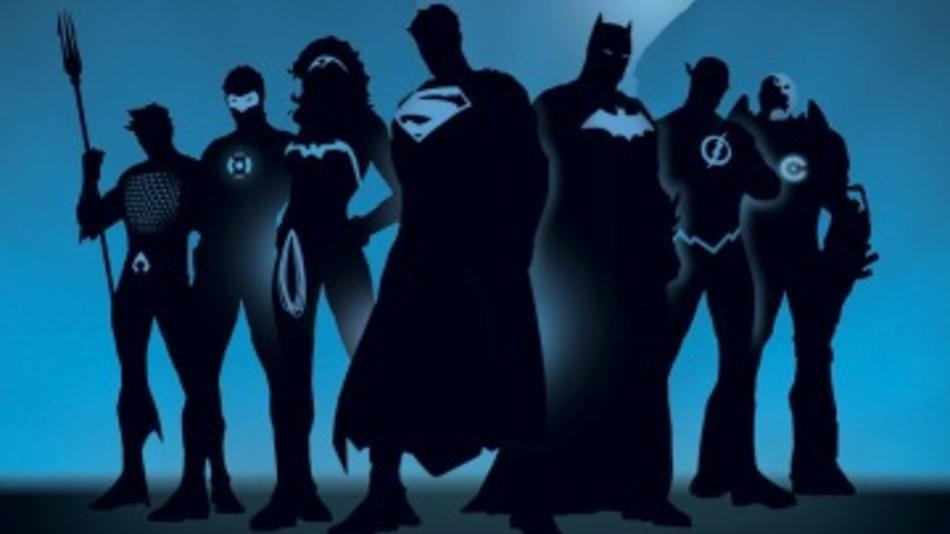
As I pointed out in my previous post, Superman and Batman represent the two most basic sources of cultural strength in America – the moral backbone of the heartland and the cosmopolitan commercial drive of the coastal cities. Wonder Woman is the unassimilated European immigrant – a classic element of the American story. The Flash’s traditional role as comic relief makes him suitable to play a sort of Ben Franklin role – in my story, he would be the moderate (both in views and in temperament) who facilitates compromise between powerful, strong-willed allies who might otherwise be torn apart by their differences. And in a selection that the comics fans will either love or hate, I’m plugging in Black Orchid, a human/plant genetic hybrid who was grown in a lab and has nature powers; she’ll provide opportunities to explore the role of technology and our increasing mastery over nature – a perennial American preoccupation. (Detailed notes for the comics fans appear below the script.)

So I’m calling this a “Justice League of America” script rather than merely “Justice League.” Let me know what you think. Encouragement to write the whole script and encouragement to stop embarrassing myself by posting screenplays would be about equally welcomed. I have ideas for what comes next, which I might share if encouraged.
Continue reading

How to Make a Justice League Movie

20130210-145639.jpg

Oh, Hollywood, Hollywood, Hollywood. What are we going to do with you?

DC apparently just had to scrap its “terrible” script for the Justice League movie. Mark Millar, a consultant on some Marvel properties, crows that the film can’t be made. The characters are too old, they’re irrelevant, and their godlike powers (as opposed to the more moderately powered Marvel heroes) make them logistically impossible to portray on screen.

Yeah, that’s right, a Justice League movie can’t be made – unless you have an ounce of talent.

Look, you have here a team consisting of:

1) A virtuous hero raised by decent ordinary folk on a farm in Midwest corn country;

2) A self-made billionaire genius whose parents were slaughtered in front of him in a big east coast city;

3) A beautiful, fascinating noblewoman from an advanced but bizarre civilization who doesn’t believe in our ways but is stuck here and is trying her best to make our home hers; and

4) A couple other less important characters (choose any two from dozens of DC universe possibilities).

In other words, you have:

1) The moral backbone of America;

2) The cosmopolitan entrepreneurial genius of America;

3) The exotic immigrant from aristocratic Europe; and

4) Comic relief.

If you can’t make that movie, get out of the storytelling business.

Here’s how I would do it. Open on a shot of a burned-down barn. Voice over of an older male voice:

We always knew you were different, son, but we never realized how much.

Images of destroyed tractors, dead farm animals.

We didn’t realize what kind of power you had. It’s not your fault. But now that we know, things have to change. I’m afraid you just don’t have the luxury of being a boy any longer. I’m sorry to say it, but in this life we don’t get to choose what happens to us. We have to live the life God gives us as best he shows us how. So you’re going to have to become a man – starting now.

You have to decide now what kind of man you’re going to be. With your power, the kind of man you choose to be might matter more than anything else that happens in the world during your lifetime. Your mother and I have been talking about it and – well, to us it all seems to boil down to three things.

You need to make up your mind that you’re going to be an honest man. But that’s not enough. If you’re strong, you can’t just leave the weak and the helpless to fend for themselves. So you need to be a man who stands up for everyone. And there’s one more thing. If you do stand up for folks, some of those folks are going to want you to just go ahead and take over, and run the whole show. To rule them. No one could stop you if you did. But that’s not how we do things in this country. People have to be free to live their own lives, to stand or fall in their own ways.

Truth. Justice. The American way. I want you to make up your mind right now that you’re going to be the kind of man who stands for those things. What do you say, Clark?

We see a boy. He’s about eight. Without hesitation he says:

Absolutely.

Cut to a police station. We see a sergeant talking to someone but we can’t see whom:

Listen, I know you don’t want to hear this right now. That’s okay. For right now you don’t have to do anything. Just listen and remember it. Believe me, soon you’ll be glad to know it.

I’ve seen a lot of people killed. Shot, stabbed, hit by cars, you name it. One time I saw a guy’s chest blown clean open by a shotgun at point blank range. I’ve seen a lot of death. And when you see death, well . . . it makes you wonder what it all means. If anything’s worth doing. If it isn’t all just a waste.

Right now you’re in shock. You probably don’t feel much at all, except like crap. Am I right? Well, pretty soon the shock’s going to go away. And then there’ll be grief, and anger. And then that will fade, too. And your parents are still going to be dead. And sooner or later you’re going to wonder whether anything means anything.

I want you to remember that it does. Life is worth it. But you have to make it mean something. You have to make it count. You have to leave your mark. That’s what I do. Every time I put a bad guy away, every time I break up a fight or get a woman to a shelter – hell, every time I fill out one of those friggin’ reports, I’m leaving a mark. “Jim Gordon was here.”

You hear what I’m saying, kid? You leave your mark. You focus everything on that, and I promise you, you won’t wonder whether it’s worth it. You’ll know.

We see a boy. He’s about eight. He’s staring into the distance. We hear the cop’s voice:

Oh, hey. One other thing and I’ll leave you alone. This isn’t the last time you’re going to meet bad guys. It sucks, but take it from me, bad guys are everywhere. Don’t you run from them. You fight back tooth and nail. And don’t go soft on them afterwards, either. When people go rotten, the best thing you can do for them is break those bastards, break them as hard as you can. You hear me?

He turns, looks at the sergeant.

Absolutely.

This is not hard. Come on, Hollywood, do your job.
The Moral Case . . . for What?

G__K__Chesterton

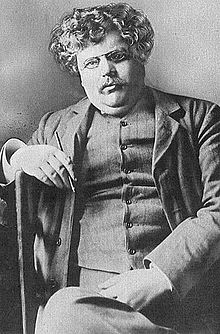
Is this the face of a “conservative”?

On NRO, Lee Habeeb and Mike Leven offer what they call a “moral case for conservatism.” They invoke the great debate a century ago between George Bernard Shaw and G.K. Chesterton:

Shaw, sounding like a modern progressive, said this about wealth and equality:

The moment I made up my mind that the present distribution of wealth was wrong, the peculiar constitution of my brain obliged me to find out exactly how far it was wrong and what is the right distribution. I went through all the proposals ever made and through the arguments used in justification of the existing distribution; and I found they were utterly insensate and grotesque. Eventually I was convinced that we ought to be tolerant of any sort of crime except unequal distribution of income.

In came Chesterton:

We say there ought to be in the world a great mass of scattered powers, privileges, limits, points of resistance, so that the mass of the people may resist tyranny. And we say that there is a permanent possibility of that central direction, however much it may have been appointed to distribute money equally, becoming a tyranny.

Chesterton added, “Mr. Shaw proposes to distribute wealth. We propose to distribute power.”

All great stuff, to be sure. But there are two problems with this approach.

1) Chesterton’s concerns about the centralization of power, simply as such, are no longer easily identified as “conservative” in the current use of the term. Today, unlike a century ago, hostility to centralized power is as much invoked in support of progressive policy as conservative. This is not simply a matter of the old trick by which politicians centralize power by posing as opponents of centralized power. There is still plenty of that, of course. The new factor is the existence of a substantial intellectual movement that sees capitalism and socialism as equally tools of oppression by the powerful and responds by rejecting the modern economy entirely. And this was more or less Chesterton’s position as well. Chesterton is one of the fathers of the naive and unworkable idea of “distributism,” in which private property and freedom of exchange are respected (as in capitalism) but large accumulations of weath, and large corporations primarily owned by a small investor class, are not permitted to arise (by what means is never specified). The idea seems to be that we can get back to the Shire if we all just wish hard enough.

This is a challenge for Habeeb and Leven’s case because the traditional moral, metaphyiscal and religious justifications for a free economy as against socialism are no longer unambiguously deployed only in favor of capitalism. Chesterton was one of the originators of this movement; now it has reached sufficient maturity to remove the necessary social preconditions for the kind of argument Habeeb and Leven want to make. Those who reject the modern economy simply as such must be accounted for.

The starting point for that accounting is to explore why those who say they reject both capitalism and socialism always, without exception, end up empowering socialism. There are good reasons for that. But that’s a line of thought to develop another day.

2) Suppose we succeeded in establishing that what Chesterton means by the “distribution of power” – that is, the primacy of the dignity of the human person over the claims of the state to serve as Platonic guardian – requires that we support broadly capitalistic economic policies (with allowances for reasonable regulation, a moderate safety net, etc.). Can that agenda succeed if it is identified with “conservatism,” which is one side in a deep ideological rift – and not the more powerful one culturally?

In fact, doesn’t the identification of this agenda with conservatism ensure its failure? Because if we establish that conservatives are for the dignity of the human person as against the claims of the state to serve as Platonic guardian, we equally establish that those who are not conservatives are not for that. Thus we reduce what ought to be, and what once actually were, robust moral commitments that ran deeper than party and ideological lines to a mere contested poilcy preference.

Robert Sirico has said that “the only society worthy of the human person is a society that embraces freedom and responsibility as its two indispensable pillars.” I would add that the only society capable of embracing them as indispensable pillars, rather than as the transient policy preferences of one party, is a society in which those pillars are accepted as trans-partisan moral commitments, rooted in the deep bedrock of a shared national culture.