Circumcision in Germany: New Information and Lessons for America

Berlin Rabbi Yehuda Teichtal and Ashkenazi Chief Rabbi of Israel Yona Metzger(source)

You may have heard about the report that a rabbi in Germany (of all places!) is being criminally charged for practicing circumcision. But over the long weekend, word came through from a local source to Ed Whelan that the story has been misinterpreted:

I understand that you are just conveying a report that appeared elsewhere in the press, but as far as I know, that report is not accurate. Prosecutors have not brought criminal charges against the rabbi in question, at least not in the sense you probably intended.


What’s happened is this: An anti-circumcision activist filed a written criminal complaint with the police in Bavaria, based on the fact that the rabbi advertises himself as a ritual circumciser (mohel). Under German law (as far as I understand it) the prosecutors are obligated to investigate the complaint. The precise form of that investigation (within legal boundaries of course) is completely up to them and the police, but they have abundant discretion, as in the U.S. I note that the rabbi, David Goldberg, says he hasn’t even received official notice of any charge.


In short, a citizen has charged another one with a crime, but the state has not charged anyone yet; an “investigation” is ongoing, and not a terribly aggressive one by the looks of it. This report, from Die Welt, strongly implies that the prosecutor is going to take his sweet time, thank God.


Meanwhile, a similar accusation in Berlin ended with the state prosecutor declining to bring a case, saying there was no evidence of a crime.


It is profoundly troubling for a lot of reasons that these people are making criminal complaints against rabbis for practicing their faith at all. I am glad that you are helping to call attention to the situation — but as bad as things are, they are fortunately not quite as bad as you portrayed them.

Whelan describes the source as “a well-informed reader whose judgment I respect.”

This certainly changes the narrative about what’s going on in Germany, and I think it offers some important new lessons as we wrestle with religious freedom in the U.S.

One lesson is that the law and the constitutional order matter. Germany has this problem because, like most of Europe, its legal system is still too much shaped by premodern assumptions about the nature of political authority and its relationship to the social order. Try explaining to the average American that Germany has a system where you can file a criminal complaint about your neighbor and prosecutors are obligated to investigate it. We should be thankful – while we still have it – for our system of the rule of law, personal liberties and checks and balances, which allows us to hold coercive power at arm’s length.

Another is that the real legal and political issues are deeper than “religious liberty” narrowly understood. The problem in Germany is not that it has the wrong policy on circumcision. The problem is the legal and constitutional order at a much deeper level. When you have a system that assumes every act is subject to a sort of presumptive societal review, you can have religious toleration (we, society, decide to permit you to practice your religioun) but not freedom of religion – a social order in which the primacy of the conscience is taken for granted as the bedrock social commitment.

A third is that extralegal norms matter just as much as the law. There is no system that will always prevent cases arising that threaten to do gross injustice and call into question the security of our most basic liberties. When that happens, our liberties depend on some anonymous Herr Schmidt deep in the bureaucracy saying to himself, “here’s a case where the rule was made to be bent,” or even broken. God bless those German prosecutors for knowing when a “mandatory” investigation needs to fall between the cracks and sit there for a while.

Speaking of which, a fourth lesson is that one of the most important sources of extralegal norms is professional mission, ethics and pride. It’s important to tell people that they should be ready to stand up for anyone’s rights, any time. But what’s really going to save us is if everyone has a strong sense of the mission of his or her profession (such as being a prosecutor), the moral responsibilities imparted by that mission, and the sense that our personal dignity depends in part on our willingness to prioritize that mission and those ethics above the short-term imperatives of our organizations and our personal interests. You can bet that Herr Schmidt, whoever he is, is thinking a lot right now about the purpose of his office.

Let’s hope he’s not the only one.
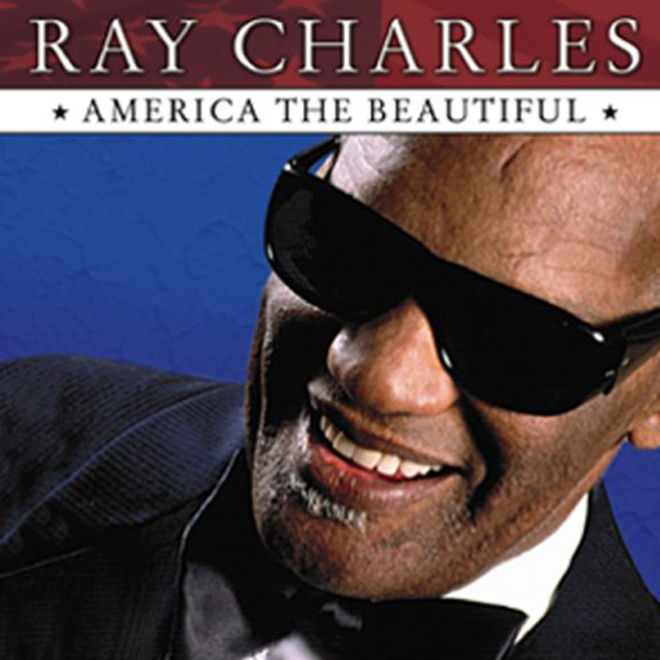
Ray Charles Just Did July 4 on Labor Day, and Man, It Really Worked

Over the Labor Day weekend I took my family on vacation to the Wisconsin Dells and we got an unexpected treat: Back in July they had been forced to cancel the town’s fireworks display due to dry weather. So the whole town had July 4 on Labor Day, with patriotic decorations all over town, and the huge fireworks show that night – becuase why not?

It was my six-year-old daughter’s first real fireworks. And she loved it to within an inch of its life. Beautiful moment.

Things didn’t start out too well, though, because when the fireworks began, our hotel began blasting “Born in the U.S.A.” As everyone knows, that’s a song about how evil America is because we fought in Vietnam. (Tell it to the survivors of the genocide that followed after we gave up the fight – if you can find one.) Then they played “R-O-C-K in the U-S-A,” which, while at least not explicitly anti-American, does not exactly inspire confidence in the continuing strength of America’s cultural reserves.

So I’m sitting there, and while my six-year-old is dazzled by the fireworks, I’m starting to get really worried about whether there’s still an America worth saving for her. Sure, I can tell her what the fireworks are really about, but if she only hears it from me, it’s not a real national identity. If the hotel doesn’t play it, it’s not a culture.

The next song to come on was “God Bless the U.S.A.,” which is sappy and not impressive musically, but at least explicitly appeals to the fact that Amercia is aboutsomething. And thankfully, every song after that did the same – it was something with an explicit appeal to what America is all about.

However, almsot all the songs were relatively recent (“Red, White and Blue”; “American Soldier”), all bearing the heavy stamp of their origin as products of culture war and cultural anxiety. These are the songs a culture makes when it’s weak. And they’re not much better musically than “God Bless the U.S.A.”

The national anthem was played, but in instrumental only – no scanning of difficult 19th century poetry for us! Worse, they didn’t even play the whole frikkin’ song. They started it halfway through.

So things weren’t getting a whole lot better in terms of confidence building. Is this enough to sustain a culture?

But about halfway through this, there was one song that, by itself, gave me all the confidence I needed and more. It was a song that convinced me America has as good a shot at sustaining its culture in the coming century as any country on the planet.

That was Ray Charles covering “America the Beautiful.” Why? After all, unlike the more recent jingoistic country stuff, “America the Beautiful” doesn’t even describe what this country is all about. It just says, hey, America is a beautiful place, and may God show grace to it. Why does that give me confidence that if you have to bet on a country, America is the country to place your chips on?

Ladies and gentlemen of the jury, I submit to you that in the game of life, Ray Charles was dealt just about as bad a hand as it’s possible to get. He was born into the worst sort of poverty America had to offer in 1930; the son of sharecroppers in rural Georgia. He was a black man in the deep south; enough said. He started losing his sight at age five due to glaucoma, and was completely blind at age seven.

Ladies and gentlemen of the jury, I defy you to show me any nation in the whole history of this world where that blind, black son of sharecroppers grows up to be Ray Charles. He was a superstar so huge that I can’t even begin to convey to you how huge he was without just copying and pasting his whole (impressively long) list of accomplishments on Wikipedia. If you’ve never seen it, pop on over and take a look. This is not just about selling millions of records – although God bless the man for selling millions of records! But this is about a true creative master, a man who left an indelible stamp on every genre of music. (Every genre? Sure. Try and tell me with a straight face that today’s country music wasn’t influenced by the soul sound Ray Charles and his peers invented in midcentury.)

From the long list, I’ll just put this one sample out there: Frank Sinatra – Frank Sinatra! – called Ray Charles “the only true genius in show business.”

The old songs – even the national anthem – may well be past saving as central cultural products. But we can always make new cultural products. And we clearly have deep resources upon which to draw. If it’s the good, true and beautiful you’re looking for, a country in which Ray Charles can grow up to be Ray Charles has a lot to offer.

Ladies and gentlemen of the jury, America has Ray Charles.

The defense rests.