A Lack of Specificity

Several weeks ago, Greg posted an article that stated that stated that Christians should be better workers. This is too important of an issue to allow Greg’s article to silently fade back into the archives of Hang Together. As I reflected upon his article again and upon my own preaching, it occurred to me that there is often a lack of specificity in preaching and teaching when it comes to the difference that faith makes in our work.

The underlying assumption of the connection between faith and work is not that Christians WILL be better workers but that they SHOULD be better workers. But why aren’t they? One reason is that we are sinful, fallen creatures and the reality that even after we are redeemed we continue to fall into sin. We do not live perfectly after coming to faith in Jesus Christ and we do not suddenly become super workers. The second reason, in many cases, is a lack of understanding of what it looks like to be “better.” People are told they should be ‘better’ but fail to grasp what that means.

This lack of comprehension often comes when preachers and teachers fall into generalities. When on average there are sixty or so adults sitting in one’s congregation, the temptation is to make broad applications of a given topic or scripture that will apply to as many people as possible. Thus, a pastor might say from the pulpit something like Greg’s article “Christians should be better workers.” But this general statement falls short because it fails to defines itself or offer specifics. Case in point, examine the comments section and push back following Greg’s article. Not everyone fully grasped what Greg was trying to say.

The main question revolves around what it means to be ‘better.’ Does ‘better’ baseball player mean higher batting average (or on base percentage for you followers of sabermetrics!) Does ‘better’ mean that a worker makes more money, signs more contracts, or sells more product? The answer to these questions is ‘not necessarily.’ A baseball player may have higher statistical averages once they understand the connection between their faith and their work, but this does not have to be the case. Instead, ‘better’ means that the overall qualities of that person as a player improve. They become less self-centered and more team oriented, they are more respectful of coaches and fellow players and officials, their play is more ethical, they try their hardest, give above and beyond their best effort, and they are known for moral behavior off the field as well as on. These changes in a player may very well affect batting average, but regardless, the Christian ballplayer is a ‘better’ player.

As one might notice, it took an entire paragraph to explain what a ‘better’ baseball player might look like, and many of those qualities do not apply to lawyers, doctors, bus drivers, or garbage collectors. Out of fear of being specific to only one group and not having time to address all the others, many teachers and preachers settle for being general. Yet, as I have noticed in my own preaching, generalities are not particularly helpful, especially if there is a lack of agreement on what that generality means. To simply say “better’ is not as effective as specific applications. But is there time for specific applications to all different types of people?

The solution to this dilema is to realize that specific application is actually a further illustration. For instance, one might include a specific application to an auto mechanic in a sermon, but this specific application is actually an illustration of what ‘better’ looks like, not simply an exhaustive check list of what must be done to be ‘better.’ As the Christian auto mechanic hears the specific application, he or she further understands what it means to be a ‘better’ mechanic and can apply this application to other areas of their job as. Likewise, as the lawyer hears they examples of what ‘better’ looks like for auto mechanics and secretaries, the lawyer better understand what ‘better’ means and is challenged to think of what ‘better’ looks like for lawyers. The specific examples have served to further define ‘better’ so that everyone can grasp the concept.

Preaching, teachers, and yes, even bloggers, need to take the time to find specific examples and applications when talking about faith and work so that workers know exactly what they are being called to by their creator. This makes more work for the teacher, but they are called to be ‘better’ teachers as well.

 

Goldberg & Williamson on Politics

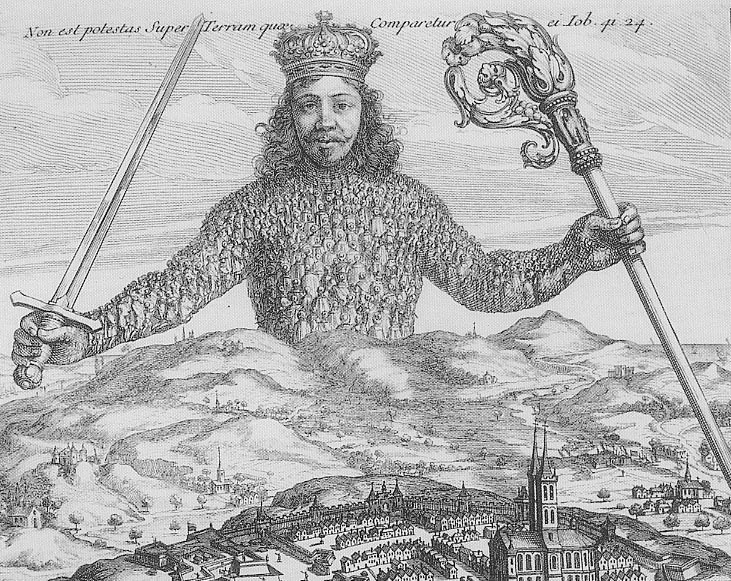
leviathan

I’m a big fan of Kevin Williamson and have been operating on the assumption that at some point I’ll read and love his new book, The End Is Near and It’s Going to Be Awesome. Paradoxically, I just read and loved Jonah Goldberg’s rave review of the book on NRO, and as a result, now I’m not so sure I’ll buy the book. It sounds like the merits of the book are largely a replication of what you can already read for free in Williamson’s work on NRO (Goldberg: “the ‘end’ growing near has to do with the huge debt crisis threatening the U.S. and the world. He runs the reader through all of that with an (apparent) ease that should arouse envy in any writer and shame in nearly every economist”). On that score, I expect Williamson himself would be the first to affirm the wisdom in the old adage: Why buy the loaf when you can get free slices? Meanwhile, what’s unique to the book sounds like a pretty simplistic libertarian diatribe against “politics” per se. The market can learn and improve (get “less wrong”) over time, but the state can’t, etc.

Goldberg offers a fine defense of politics, including:

First, in a very obvious sense, politics can get less wrong. The American Founding is argument-settling proof of that. By recognizing our in­alienable rights, the folly of hereditary titles, the evil of arbitrary power, the value of property, the need for checks and balances, etc., the Founders created a system to keep politics — or what Nock would call the State — at bay as much as possible. Indeed, one of the problems with Wil­liamson’s use of the term “poli­tics” is that it is too capacious. Many times when he is talking about the ethical deficiencies of politics, what he is really talking about are the deficiencies of what Hayek and others would call (state) “planning.” In that context, Wil­liamson is quite convincing. But he loses me when he says that politics in and of itself cannot be “ethical.” Even taking into account the obligatory caveats about slavery under the Constitution, the Founders’ system was indisputably less wrong than all that came before it. I doubt that Williamson would disagree with that.

Read it – the review, that is. Maybe I’ll still pick up the book, but I’m less likely than I was.

The Truth Will Set You Free

Yesterday was Memorial Day, a day set aside to commemorate those who have given the ultimate sacrifice in preserving this country’s freedom. If there is one word that sums up America more than any other, it is liberty. We have the Statue of Liberty, Liberty Bell, and ‘liberty’ printed on our money. We enjoy the liberty of ideas, liberty from foreign oppression, and liberty of religion. And yet, despite an overwhelming emphasis upon liberty, it recently occurred to me as I was reading a book by the late Rev. D. James Kennedy, there is one area of our society where liberty is not appreciated. In fact, it is not only ‘not appreciated,’ but the mere suggestion that liberty exists is met with enraged outcry. “Liberty” seems to have very little place within human sexuality.

Of course, those who practice aberrant sexuality claim to want and desire liberty, most often meaning the liberty to live as they wish and do what they want without any type of moral authority attempting to tell them otherwise. But on the other hand, it would seem that the defense most often given by those who are engaged in alternate sexuality is that they were ‘born this way.’ Consider Lady Gaga’s song “Born this Way” where she states No matter gay, straight or bi  /  Lesbian, transgendered life / I’m on the right track, baby / I was born to survive. / I’m beautiful in my way’ / Cause God makes no mistakes / I’m on the right track, baby / I was born this way. Yet, in the midst of so-called sexual liberation, one has to ask if there is true freedom and liberation if being born a certain way means an inability to change? Lady Gaga states in the same song “Ooh, there ain’t no other way, baby, I was born this way!” It would appear that those championing the thought of ‘born this way’ are actually celebrating a loss of liberty since they apparently are not ‘free’ to change!

On the one hand, I would fully agree. Those who choose immoral sexual practices are spiritually trapped in their sin without the grace of God. On the other hand, it seems almost anti-American to suggest that a group of people do not have the freedom to change. This flies in the face of every rags-to-riches story ever told or the American dream of how if you simply put your mind to it you can do anything. Apparently, change is possible, even demanded, even used as a political slogan we can all believe in, but is not possible when it comes to human sexuality. Instead, those who are in less than popular sexual lifestyles are trapped there without any hope because they were ‘born this way.’

Of course, those within these particular sexual lifestyles in question would certainly deny they are trapped. But to borrow the age old expression “you can’t have your cake and eat it too.” Either they are indeed trapped or they are free to change. And if they are free to change, then their decision to stay a particular way is just that, a decision. Sadly, there is a growing trend in our country to deny decision and instead blame everything on external forces. Just recently, I passed a sign in Wisconsin which read “Obesity is not a decision, it is a disease.” Again, these poor overweight people seem trapped. They did not decide to be this way, they simple are.

Which leaves the Christian with two possible responses. The first is to point out, as the title above suggests, this idea of being trapped does not have to be true. Instead, freedom is a possibility and can be a reality because people can change through the working of God in their heart. We as Christians continue to uphold the American traditions of liberty and freedom, believing that liberation from these lifestyles is a possibility, not necessarily easy, but possible by the grace of God. And we as Christians are standing by to help.

The second possible response is to point out that while homosexuals and others claim they cannot change, they have painted themselves into a corner. EIther they truly cannot change, in which case we can offer them liberation in Christ, or they can change but simply do not want to give up their lifestyle. The rhetoric which uses “I was born this way” as an explanation or defense is tragically and logically flawed. There are those who may suggest they are ‘being true to themselves’ from an existential perspective, but this would imply that all change is being “untrue to oneself,” such as losing weight, coloring one’s hair, etc. The “I was born this way” excuse has become just that, an excuse. But rather than simply allowing the excuse to stand, Christians have the opportunity to point out the logical inconsistencies of the statement and either offer liberation or at least demonstrate that aberrant lifestyles are a choice.

TGC Faith and Work Panel Now Live

post-conference-banner

TGC has posted free videos of all the presentations from their national conference last month, including the faith-and-work after-conference I participated in. Check it out! Here’s a taste (starting at 22:00):

And I would add [regarding] being made in God’s image: Remember, God is three persons in one being, and work is made for community. We work with other people. To work is to be engaged in not only serving others but interacting with others as we give and receive through our work. And through the economy we become coworkers with millions of people because our work interacts with their work, and so forth. Now in the Trinity, why do the three persons work together – and work together so much that they have only one will? It’s because they love each other, and they have a common being, a common root. Now, human beings are not God, obviously, but there is an imaging of the Trinity in the way we work. Humanity has an organic wholeness that we live out through our work, because work is relational. And yet, every individual still matters and has intrinsic dignity, and the distinctiveness of the person is just as important for us as it is in the Trinity.

Lest We Forget

Just a few days ago I sat watching a Quentin Tarantino film dealing with a freed slave turned bounty hunter. The movie was quite entertaining (in a Tarantino kind of way), but as the movie went on I tried to think of all the slavery movies I have either seen or know about. There is, of course, Roots, Amistad, and although not entirely about slavery, The Color Purple. Beyond those films, there seem to be very few movies about the history of slavery, which is a bit of puzzle to me. There is a plethora of films about just about every major and minor event in American history, from the good to the bad to the ugly. Which is why it seems odd that very few movies have been made about slavery. On the one hand, this lack of decent films on the topic may be because cinema exists primarily to entertain, and being reminded about the millions of slaves who died in this country or en route to this country is somewhat of a downer. On the other hand, Hollywood enjoys reminding its viewers about parts of American history that make us uncomfortable.  So why the few movies about slavery?


I would propose that there are two explanations. First, Hollywood makes “historical” movies primarily about recent history, where at least some of the viewers watching the film can recall the time frame of the film or know someone who can. For instance, compare the number of World War 2 movies made recently with the number of films about World War 1. Consider how many movies have been made in the last ten to fifteen years about George Washington? To my knowledge, none. There have been only three movies made recently about Abraham Lincoln, and one of those involved vampires! A survey of historic movies would probably reveal more movies made in the last decade about British history than American history. The most recent movie about slavery, Amazing Grace, was not about American slavery but British! Hollywood makes historical movies that Americans want to see and what America wants to see is movies about times they recall, like Argo and the Iranian hostage crisis. When Hollywood wants to remind America about a difficult time in our nation’s history, they normally choose a recent event, like Vietnam or racial desegregation, times that people who watch movies can remember. Obviously, very few alive today remember anyone who owned slaves.


This pattern of filming more recent history is not a new pattern in American cinema. There was a time when Hollywood made many films about World War 1, such as The Fighting Sixty Ninth, All Quiet on the Western Front, and many others. When World War 2 ended, Hollywood began making World War 2 movies like The Longest Day and World War 1 films slowly disappeared. Thus, if there were films made about slavery, one would expect them in the early part of the last century in the years closest to slavery. But racism as a national phenomenon was an issue well into recent years, so the last thing that a predominately white movie going culture wanted to see in the first half of the last century was movies about slavery. Which is why there seems to be very few movies about slavery, with the exception of the ones mentioned above. Slavery is not recent, and when it was, people did not want to see films about it.


None of which should be a surprise. Hollywood is not really trying to educate our society but entertain it. Even when they do wish to educate, movie makers will choose recent events like the Holocaust over 19th century slavery. The lack of movies reminding Americans about the heinousness of slavery is not due to modern racism, but due to the racism of the first half of the 20th century when it was not a topic anyone wanted to see a film about. On the other hand, Hollywood has not done a great job of filling in this gap, which means that there are still no movies being made currently about slavery. As our culture continues to grow more and more visual and remembers its history primarily from film, one wonders if Americans will simply forget over time about the horrific history of slavery, a time that probably deserves more films than any other.