Read Chris Brauns’ Bound Together

boundtogethercover1

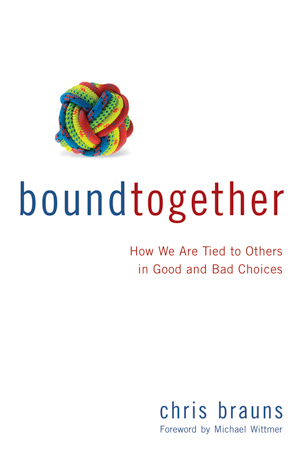
This morning, TGC runs my review of the new book Bound Together by Chris Brauns. I think readers of HT will find the book highly valuable on wrestling with the issues of national and political identity theologically:

One of the strengths of Bound Together is the way it draws together scriptural passages, wisdom from great Christian thinkers, and the latest scholarly analyses of the issues. Brauns reads much like C. S. Lewis in that he’s widely versed in all these sources and modest enough not to have much desire to be original. He masterfully pulls together the right quotes and passages in just the right way to help others come into a knowledge of these issues…

Beginners will find this an invaluable introduction, and those who have already studied this topic will surely discover new insight.

The chapter on political and civic problems stemming from our failure to understand the human person as a social creature is quite good. It’s aimed at a lay audience, but even an old hand like myself found it beneficial.

Part 2 of the New Fight for Marriage at TGC

20130313-082045.jpg

Part 2 of my article on a new fight for marriage is up at TGC this morning:

We need to stop imagining real marriage is like the Apple of 2013—assuming we are the dominant entity and our opponents are upstarts trying to displace us from our position at the top. We need to realize that today, real marriage is the Apple of 1984—we’re trying to break into a market completely dominated by our rivals and offer a radically different kind of product…

We know the truth about sexuality and can therefore describe it accurately. We can tell stories that make people say, “Yes, that’s the truth about life.” We cannot deliver the short-term comfort and pleasure they provide, but we can deliver the deep satisfaction and functional life that they cannot.

We must speak the truth about sexuality and romance in the language of sexuality and romance. This can’t be a special, private sexual language for Christians that others will need to learn. It must be a language that speaks to people in terms of their everyday experiences and doesn’t presuppose that you need to be Christian before you can have a humane understanding of sexuality.

There are so many more questions I didn’t have space to get to – like, “how do we actually make this transition?” – that I hope to return to the subject soon. Commentary, questions and challenges are very welcome as prods to better thinking, so open fire!

Theological Sexuality

Recent arguments in the ongoing marriage debate have revealed that theology is not the best way to convince our society that the Biblical concept of marriage is the correct one. I eagerly await Greg’s future posts on TGC concerning strategies for dealing with this difficult problem. Yet, what I find deeply ironic in this whole debate over homosexuality is not the frequent appeals to theology to win a secular argument, but the absence of theological arguments in the church when discussing the same issues! It should not be surprising that theological arguments fall flat when speaking to a group of people with no theological perspective. But why does the church fail to use theological arguments when dealing with its own members? The result is large swaths of the American church that cannot even adequately defend the institution of marriage when Biblical arguments are called for!

There seem be several key reasons for this sad pattern. The first is a misunderstanding of what is ‘theological.’ Many of the so-called ‘theological’ rationales concerning sexuality are not truly ‘theological’ but what I would prefer to call ‘nomological,’ using the Greek word nomos, meaning law. Because we say God gave a particular law, and God is the Theos, law must be theological. Which is true, to a degree but the thought process fails to progress much beyond that point. Teenagers are told to be sexually pure because it God’s Law. Homosexuality is wrong because it is against God’s Law. All of which is certainly true, but then all one has to do is present arguments about why those laws were cultural laws intended only for Israel or appeal to the law of love which seems to trump laws prohibiting certain behaviors. This has been done by many “Christian” churches and suddenly these supposedly theological arguments from God’s Law become muddled.

God’s Law is certainly theological, but it is so because the various laws in the Law are not arbitrary decisions by God but instead a reflection of His perfectly good and holy nature. The Law is part of God revealing Himself and how we should be like Him. When we understand who God is, we understand better why He would make particular Laws. ‘Do not kill’ makes sense when we understand that God is Love and God is Life. ‘Honor your Father and Mother ‘ takes on a deeper context when we understand that God is our Father and ultimate authority and has placed other human authorities over us as his vice-regents.

The same is true of human sexuality. From a truly theological perspective, sexuality flows from the nature of God the Father and Jesus Christ’s relationship with His bride, the church. Human sexuality, or union, is a reflection of our mystical spiritual union in the body of Christ. Theologically speaking, sexuality also flows from the understanding of God as a single God but plural persons. In the same way, there are single species, but two genders. Gender issues themselves are wrapped up in the image of God and human beings as His image bearers.

Yet, these are arguments that are rarely presented even in the church setting. Instead, natural law or the naturalness of sexuality is used to argue against homosexuality, even in the church. It’s wrong because that wasn’t how God made Adam and Eve in the garden, which is true, but why were they made that way? Teens are told not to have sex because it is against God’s Law without ever being told to think of why it is in God’s Law. Or, the most common argument I see in the church is that having sex outside of the way God planned it leads to an unhappy life, such as illegitimate children. But all of these arguments are insufficient to keep even the members of the church convinced that the Biblical ideals of sexuality are relevant today. Studies show that nearly as many Christian teens are sexually involved as non-Christian. Could this be because we are trying to use theological arguments in the marketplace and natural law and psychological arguments in the church?

Yes, theological arguments for Biblical marriage will struggle to the non-theological unbeliever in the tenets of the Bible. But we should be willing, in fact view it as our calling, to make sure that the theological arguments for Biblical sexuality are taught in our churches and to our children. Without such a firm theological foundation, Biblical morals are simply dismissed as being out of date.
A New Fight for Marriage at TGC

Conjugal union

Today, TGC runs part 1 of my two-part article on A New Fight for Marriage. Part 1 lays out the reasons I think the fight for marriage is currently on a losing track:

As Koppelman explains, all of Gergis’s talk about “conjugal union,” “coitus,” “reproduction,” and “the common good” comes across as obscure, irrelevant, and alienating. Koppelman shrewdly devotes chunks of his time to reading passages from Gergis’s book; he knows its descriptions of sexuality and marriage come across to the audience as bizarre. Even though the arguments are true—indeed, they are ironclad and unanswerable to anyone who accepts their initial premise—they are nonetheless driving people away from Gergis’s position rather than towards it.

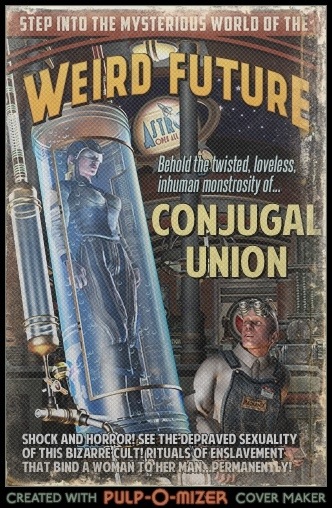
To me, “conjugal union” sounds like some kind of cosmic phenomenon from Star Trek: “When the positronic wave signatures of the isotropic energy fields are aligned, they achieve a state of conjugal union.” “Spock, I’m a doctor, not a particle physicist!” Every time the leading advocates of marriage use this alien terminology, another young American goes over to the other side.

In part 2 I’ll lay out the first steps to what I think would be a winning strategy.

The HHS Mandate Is Like a Treasure, Hidden in an Obamacare Field…

Matt13_44

Joe Knippenberg finds a particularly valuable treasure hidden in an otherwise very unpromising field:

I’m reading NFIB v. Sebelius (the Obamacare decision) in preparation for teaching the case to my constitutional law students and came across the following most interesting passage in in Justice Ginsburg’s opinion: “A mandate to purchase a particular product would be unconstitutional if, for example, the edict impermissibly abridged the freedom of speech, interfered with the free exercise of religion, or infringed on a liberty interest protected by the Due Process Clause.”

Has anyone cited this passage in briefs challenging the contraceptive/abortifacient mandate?

FTW!