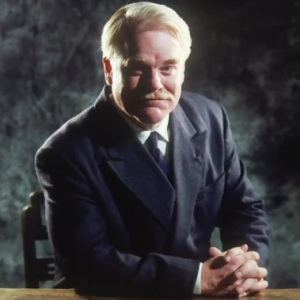
Measuring the Impact of This Painting on Education

In the course of describing a fascinating empirical study he’s spearheading on how field trips to art museums affect educational outcomes, Jay Greene eloquently argues that we need to widen our views of the purpose of education. Or rather, that the professional class of education policy people needs to widen its views:

The problem is that a good number of  policymakers, pundits, and others who control the education system seem to think that the almost-exclusive purpose of education is to impart economically useful skills.  Math and reading seem to these folks to be directly connected to economic utility, while art seems at best a frill.  If resources are tight or students are struggling, they are inclined to cut the arts and focus more on math and reading because those subjects are really useful while art is not.

This economic utility view of education is mistaken in almost every way.  Most of what students learn in math and reading also has no economic utility.  Relatively few students will ever use algebra, let alone calculus, in their jobs.  Even fewer students will use literature or poetry in the workplace.  When will students “use” history?  We don’t teach those subjects because they provide work-related skills.  We teach algebra, calculus, literature, poetry, and history for the same reasons we should be teaching art — they help us understand ourselves, our cultural heritage, and the world we live in.  We teach them because they are beautiful and important in and of themselves.  We teach them because civilized people should know them.

I’m with him on the main point, but I’m planning to cause some trouble in the comments. I’m not sure it’s true that math and reading aren’t as fundamentally economic as art. At a more basic level, I don’t think you can separate economic from “civilizing” motives that easily. As I wrote a while back:

These days, if a child asks why he should care about doing well in school, what kind of answer does he get? He gets the same answer from every source: from parents, teachers, and school administrators; from movies and TV shows; from public service announcements, social service programs, and do-gooder philanthropies; from celebrities, athletes, and actors; from supporters and opponents of education reform; from everybody.

The answer is always some version of: you need to do well in school in order to have prosperity later in life.

Well, if you scrape away the sanctimony, what is this but a “bribe” on a colossal scale? …

Now, as it happens, I would prefer that the cash motive not be the only reason we offer kids to do well in school. I think our culture has been remiss in emphasizing education as an opportunity to become a better person, both morally (through character formation, a concern that the government school system seems to have largely dropped or subordinated, though private schools make it a top concern) and developmentally (because those who learn more and develop their capacities more fully have richer, more blessed lives).

But I also think that denying the presence of a strong financial motive in education is a fool’s errand. Kids will always care about how their education impacts their material well-being. And so they should — looking after one’s own material well-being is a good and natural concern.

Moreover, kids aren’t fully able to appreciate the moral and developmental motives for education until well after their education is complete. The 30-year-old, looking back, may well say, “If I hadn’t worked hard in school and had such great teachers, my personal character and my capacity for a fully human life would have been infinitely poorer.” But try explaining that to a ten-year-old.

To train students at all, you need to motivate them primarily with something that they understand. That means either “bribes” or punishments for failure. Bribes are the more humane option.

What do you think?

Persevere (Or Keep On Keeping On!)

Prayer, Presence, Personalizing, Partnering, (yes, Greg, the Pastor in me got carried away with the P’s.) In reality, though, while these form the foundation for caring for the poor, true caring does not continue to take place for two reasons. The first is that we as human beings are by nature selfish and would rather talk about caring for the poor than actually doing it. In response, I refer you back to step one: Prayer. We all need to examine our hearts for those selfish attitudes, repent of them, and pray that God would change our hearts and give us a compassion for the poor.

There is a second reason–It’s hard. One of my favorite books is by Steve Fikkert, When Helping Hurts. In that book he reveals that often the good that we think we are doing is actually harmful to those we desire to help, which makes the job of helping even harder. Even when we think we are helpful we may be harmful! And, to complicate issues even more, there is no simple answer to helping the poor. Sometimes when we try to help someone we realize that they do not want our help, may not need our help, or simply throw our help back in our face! Helping the poor is not an overnight process but an ongoing, frustratingly painful process. Hmm, almost sounds like the Christian life and the process of sanctification.

We do not expect perfection in ourselves overnight, but we often expect the poor to be helped in a few hours. This is not realistic or Biblical. Helping the poor is a lifelong endeavor. As Jesus said, you will always have the poor. That’s the reality. There will always be poor people in need of helping. But, rather than throwing our hands up in the air after a week, we need to realize that Christ continues to work in us, and with that grace in mind we must persevere in our efforts to help the helpless. Does this guarantee results? No. But it does mean that we are continuing to  seek out those who need help. Perseverance means continuing despite set backs, despite frustration and wanting to quit. Perseverance understands the reality of working with people…sinful, messy broken people. People who have problems. Just like us. It may not get any easier, any simpler, and more successful, but our calling to help the poor will keep on keeping on in that endeavor all the same.


Congratulations Karen!

“Welcome to the club!” – The Gang

Hearty congratulations to HT’s own Karen Rupprecht, who has just “high passed” her comps and is now over the bar for her master’s degree. As you can see, I’m rounding up all the masters for the victory celebration. (If you want to see who’ll be attending the party when she gets her doctorate, the list starts here.) Well done!

Conscience, Religion and the Capax Dei (Or, why don’t we have more Latin phrases on this blog?)

Ryan Anderson and our own Greg Forster and have lately called our attention to an important trend governing debates over religious freedom. Ryan’s review of Bryan Leiter’s book on the matter gives us a good summary of one position: “there is no reason that religion should be protected above and beyond any claim of conscience.” Leiter is not alone in his argument, unfortunately. Noah Feldman at Harvard has a similar position; we don’t need freedom of religion, just freedom of individuals’ consciences. (An excellent debate on this matter between Feldman and Stanford’s Michael McConnell can be found here.) A few years ago, Winnifred Sullivan wrote in The Impossibility of Religious Freedom that “Without an explicit protection for religion, guarantees of freedom of speech, of the press, and of association would continue to protect most of those institutions, including religious ones, usually thought necessary for a free democratic society.”

Yikes. Greg and Ryan agree that this position—viz., that no explicit protection for religious freedom is desirable or necessary—is wrong, but they articulate the point differently: Greg points to the fact that “religion has an institutional dimension that conscience lacks,” and reminds us that “Christianity cannot be what it is if the total primacy of God’s claim on our lives and the mission he has given us in the world is not permitted to achieve institutional expression in all areas of life, rather than simply in churches narrowly defined.” Ryan, likewise, seems to hold that the state can wrongly interfere with religious liberty even when it directs its acts against “the inner workings of religious organizations, their hiring decisions, their determinations of ministers and doctrine, and so on.”

Combined, I think these positions provide one possible—and very persuasive—answer to Feldman, Sullivan, Leiter et al.: Religion needs to be preserved over and above conscience because religions’ institutional dimensions elicit expressions—and even demands—on people’s lives that may or may not overlap with expressions and demands of individuals’ conscience. Maybe an individual Catholic doesn’t personally have a problem with providing contraception to her employees, but she does have a problem with disobeying the teachings of the Church. It’s not only her conscience but also the institution’s ‘conscience’ that matters.

The question of why we must have freedom of religion rather than just freedom of conscience has another possible answer, though, one grounded in man’s nature. There’s an old and oft-neglected doctrine of St. Augustine referred to as the capax dei, the capacity for God. As an implication of our status as creatures made in God’s image, we have a natural capacity to receive God, which has a corresponding desire for Him. Brother André Marie explains the doctrine well:

Man’s being capax Dei. In placing man’s desire for God in the intellect, St. Thomas has given us the faculty in man which is ordered to God… “‘The natural desire is an inclination: the ordering of potency [in this case, the intellect] to its act, to its object, a tendency.’ Every potency has a natural desire of its act.” It should be noted that this is not an appetitive motion or an “act” of the intellect. The intellect “desires” heavenly beatitude as a rock “desires” the ground when lifted above it.”

This is important for the question at hand, because a natural capacity and desire for God means that we as humans must be free to pursue not only our consciences’ demands, but God Himself. This is a subtle but very important distinction, for if we need only obey our own consciences, we can probably stop with philosophy, which helps us understand the nature of the good. But if we have natural desires and capacities to know God, we must also have religion — and, consequently, freedom of religion. (Unless the state is prepared to either a) take on Augustine, or b) argue that knowing God has nothing to do with institutional religion. In either case, well…good luck?)

I’m not sure which of these approaches is better, or if there is a different approach altogether, for protecting the freedom of religion over and above that of conscience (which, I hope it goes without saying, we must also protect – and as I wrote in an earlier blog, that can get tricky when we’re balancing libertas personae with libertas ecclesiae). But it’s an important question, and I’d be grateful for anyone’s thoughts on the matter.

*Corrigendum: In the original post, I had quoted Ryan Anderson as saying “Christianity cannot be what it is if the total primacy of God’s claim on our lives and the mission he has given us in the world is not permitted to achieve institutional expression in all areas of life, rather than simply in churches narrowly defined.” It was in fact Greg’s quote, and the post has been corrected to reflect this.

Freedom of Conscience v. Freedom of Religion

Here’s an interesting addendum to the discussion of religious institutions and modern society. Last week, Ryan Anderson posted a review of a new book (Why Tolerate Religion? by Brian Leiter) that claims the concept of religious freedom is unnecessary. Once we protect “freedom of conscience,” freedom of religion is superfluous. You couldn’t ask for a more clear illustration of the point I made in my last post:

The nones disallow the claims of our institutions to be what they are, not out of hostility but out of an inability to grasp that something important is at stake in those claims. They have no frame of reference even to understand the nature of our claim, much less to make that claim plausible.

Ryan spends most of his review taking apart Leiter’s naive and uninformed presuppositions about what religion is and what the typical religious believer thinks and does, as well as exposing his failure to consider some important counterarguments.

However, at the end of the review Ryan briefly attempts to offer a capsule version (one paragraph) of the constructive case for why we need both freedom of religion and freedom of conscience. That’s a tall order, and I don’t want to sound too critical, but I have to say I think he’s on the wrong track. Here’s what he says:

Both liberty of conscience and religious liberty ought to be protected. But conflating the right to religious liberty with a more general right of conscience fails to take into account the distinctive good involved with religion, and the ways it can be violated even when conscience is not. Many Catholics do not feel bound by conscience to attend Mass on weekdays. But a law that prevented them from attending, while not violating their rights of conscience, would violate their religious liberty rights. So, too, with the inner workings of religious organizations, their hiring decisions, their determinations of ministers and doctrine, and so on.

The problem with this approach is that the hypothetical law in question, banning attendance at Mass, does in fact violate the freedom of conscience of all people, even those whose consciences don’t tell them to attend Mass. If the law requires you not to attend Mass, your conscience is no longer free on that matter, even if your conscience doesn’t happen to require you to do what the law forbids. Thus Ryan’s example doesn’t really take us to the distinction between freedom of concience and freedom of religion. Ryan himself, earlier in the review, points out that the whole case for freedom of religion is that belief in religious truth is only valuable if it is uncoerced; the same is true for freedom of conscience.

Ryan does, however, start to open up the real heart of the distinction between freedom of concience and freedom of religion at the end of the paragraph, when he brings in religious institutions. As I wrote in my last post:

In the lawsuits over Obamacare, the administration has asserted the theory that a profit-making business or a hospital or a school cannot be said to exist primiarly for a religious purpose or mission. If the courts endorse this claim, Christianity has been made illegal. Christianity cannot be what it is if the total primacy of God’s claim on our lives and the mission he has given us in the world is not permitted to achieve institutional expression in all areas of life, rather than simply in churches narrowly defined. This is not to say that all Christians must attend distinctively Christian schools or work in distinctively Christian businesses; far from it. However, if the formation of such institutions is illegal, Christianity is illegal.

Looking forward to hearing what the rest of the HT team thinks!