A Consistent Administration

I can’t pretend to be shocked, anymore:

Every member of an Iraqi delegation of minority groups, including representatives of the Yazidi and Turkmen Shia religious communities, has been granted visas to come for official meetings in Washington — save one. The single delegate whose visitor visa was denied happens to be the group’s only Christian from Iraq.

[…] to her face, consular officer Christopher Patch told her she was denied because she is an “IDP” or Internally Displaced Person. “That really hurt,” she said. Essentially, the State Department was calling her a deceiver.

[…]

In reality, Sister Diana wanted to visit for one week in mid-May. She has meetings set up with the Senate and House foreign-relations committees, the State Department, USAID, and various NGOs. In support of her application, Sister Diana had multiple documents vouching for her and the temporary nature of her visit. She submitted a letter from her prioress, Sister Maria Hana. It attested that the nun has been gainfully employed since last February with the Babel College of Philosophy and Theology in Erbil, Kurdistan, and is contracted to teach there in the 2015–16 academic year.

(source: With Malice Toward Nun | National Review Online)

This administration’s trend toward choosing winners and losers, and especially its idiosyncratic approach that manages to be both morally and strategically objectionable, all at once, is pretty obvious by now.  “Winners” include state sponsors of terrorism, an industry devoted to killing babies for convenience, and corrupt insurance companies.  “Losers” include nuns who help the poor, peoples displaced by “jayvee” religious conquerors, diplomats whose rescue would involve admitting to a poor security situation exacerbated by systematic neglect, and people who want to earn a living and provide a service in a manner which reflects their cultural and religious commitment to the common good.

“Winners” get treated like this: Continue reading
Our Kids in TGC


our-kids-9781476769899_hr

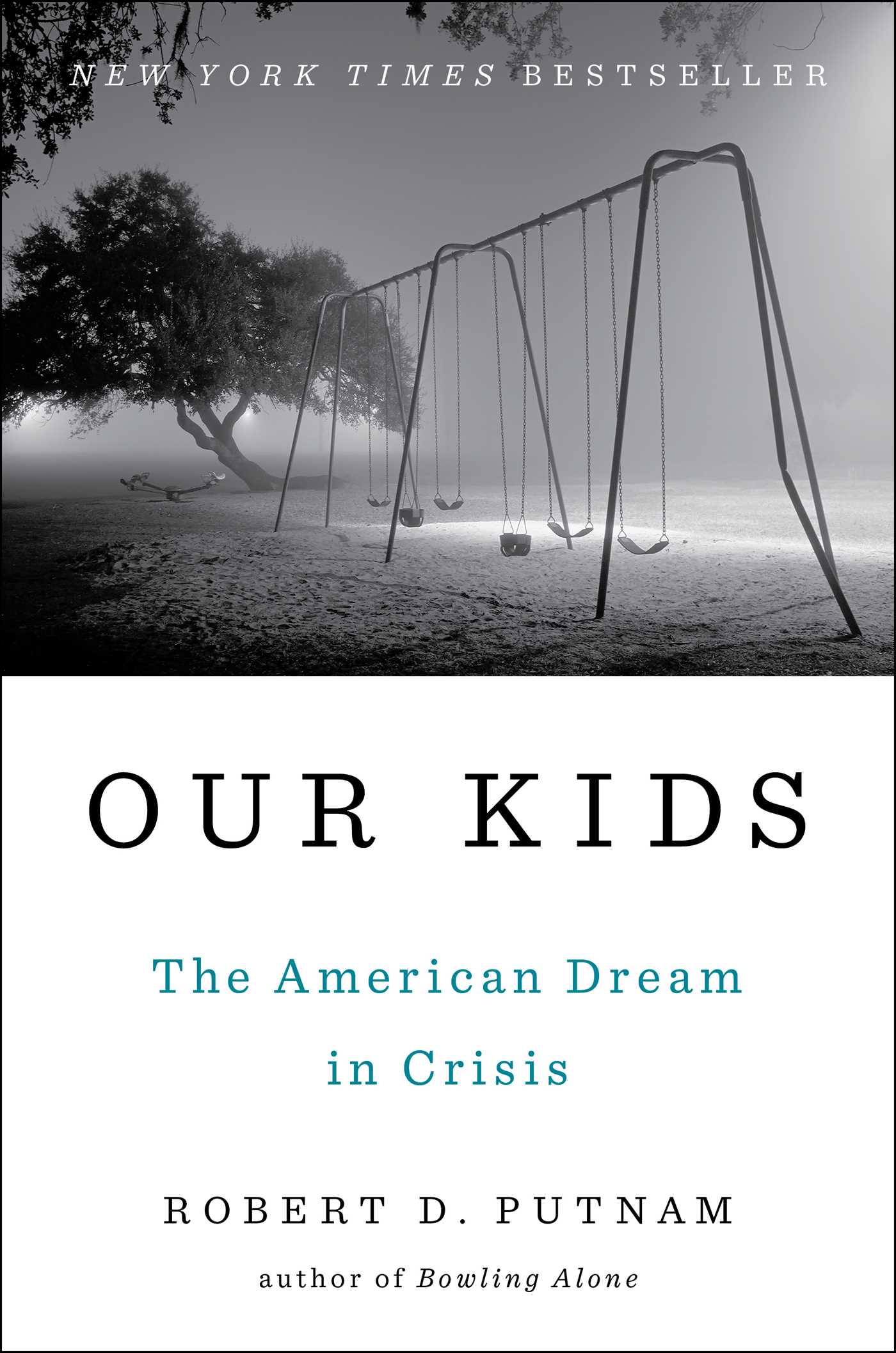
My review of the Robert Putnam phenomenon Our Kids runs on TGC this morning. Oh, and in addition to the phenomenon, I also review the book:

The content of the book is less important to these discussions than the symbolic importance of the fact that one of the major intellectual heroes of the American Left is arguing that the breakdown of the family destroys the poor. I wish I could write two reviews: one of Our Kids the book—the actual words printed on the pages—and another of Our Kids the public phenomenon. The latter is much better than the former.

See here and here for the past debate on HT over whether the core institutions of American society are waking up to these problems. Our Kids the phenomenon reinforces my belief that they are. Our Kids the book shows how far they are from being able to understand the nature of the problem and the needed solutions:

Putnam’s list of solutions is full of magical thinking. Vocational education must be radically expanded, but without creating a two-tier education system; day care for children must be radically expanded, but without displacing the role of parents in children’s lives. He even urges us not to champion marriage. Instead we should hand out an endless river of condoms, and pour enormous amounts of money into the exact same welfare and educational programs that have failed consistently for 50 years. School choice is of course out of the question, even though Putnam’s own data show it works; no doubt this is because it increases the power of the family against the state.

Although Putnam emphasizes that family and community structures are more effective than government programs, because of his economic determinism virtually all his proposed solutions involve expanding government programs. The possibility that these programs are becoming a substitute for family and community structures, so expanding them will make the problem worse, is not raised—not even when (as with day care) it seems blindingly obvious. For Putnam, that thought would be unspeakable blasphemy.

There’s also a fascinating mini-case-study in the tension between the Left’s economic determinism and its desire to fight racial injustice. Check it out and let me know what you think!

Yes, let’s do that!

Two responses are needed to the point Douthat raises here:

the modern liberal mind is trained to ask for spreadsheet-ready projections and clearly defined harms, and the links that social conservatives think exist aren’t amenable to that kind of precise measurement or definition. How do you run a regression analysis on a culture’s marital iconography? How do you trace the downstream influence of a change in that iconography on future generations’ values and ideas and choices? How do you measure highly-diffuse potential harms from some cultural shift, let alone compare them to the concrete benefits being delivered by a proposed reform or alteration? How do you quantify, assess and predict the precise impact of a public philosophy of marriage — whatever that even means — on manners and morals and behavior? Especially when there are so many confounding socioeconomic variables involved —

(source: The Wild Ideas of Social Conservatives – NYTimes.com)

  1. How do we go about training people better than this?  It is simply not the case that humans can or should live by the measuring of quantifiable aggregations alone, not least because the overview of the data will never be available to most of them in any kind of reasonable decision-frame, nor can the training be made available to all humans at a quality and cost that will make it worthwhile, nor can the most important things actually be placed on that scale.  Who, given one clear look at the alternative, would choose to live in the foretaste of eternal Hell that we experience in this kind of world?  A world where there can be no devotion of sacred objects which removes them wholly from the economy, no quality of human flesh or fleshy connections which converts them wholly to what cannot yet be foreseen, rather than attempting to recapture them in a metric of the putatively known; a world where the specious present is legally and psychologically compelled to serve as the cash-out of the wholly personal, wholly devoted, and wholly eternal which nonetheless never can at all be privatized, hoarded, or immaterial?
  2. And how do we demonstrate the concrete, visible, manifest consequences of our commitment to what is real, rather than what is willfully pretended?  Continue reading

Reminding the Courts They Must Answer to Reality


(source: Don’t Silence 50 Million Who Voted for Man-Woman Marriage)

Quite right, and reminds me of a favorite moment in this conversation.  From a speech at the rally:

Some of you came a long way to stand for marriage here in our nation’s capital—from as far as California and Michigan and South Carolina. Many of you made sacrifices to be here.

You know that standing for marriage can come with a cost.

Aaron and Melissa Klein know it too. Just yesterday Aaron and Melissa learned that for them, the cost of standing for marriage may add up to $135,000 in fines.

Why? Simply because they declined to create a wedding cake for a same-sex ceremony. And that fine is on top of having already lost their bakery because of the backlash against their decision to stand by their convictions.

For Barronelle Stutzman, a 70-year-old grandmother in Washington state, the cost of standing for marriage may be the loss of everything she owns. She’s being sued personally and professionally for declining to design the floral arrangements for a same-sex wedding.

For Kelvin Cochran, the cost of standing for marriage was the loss of his job as the fire chief of the city of Atlanta.

This is not right. And your presence here today tells our nation’s leaders that it is not right.

Marriage existed before this government, and before any government. Marriage brings together the two halves of humanity, for the future of humanity.

No Court can undo that.

(source: Don’t Silence 50 Million Who Voted for Man-Woman Marriage)

In fact, I loved that moment of blazing episcopal brilliance so much I’ll repeat it, with emphasis:

January 16, 2014 – This week, a federal district judge ruled Oklahoma’s definition of marriage as being between “one man and one woman” was unconstitutional. This decision changes nothing

(source: Statement from Bishop Slattery on Federal District Judge Ruling Oklahoma’s Definition of Marriage Amendment Unconstitutional :: The Roman Catholic Diocese of Tulsa (Tulsa, OK))

The Problem of Nihilism in Public Places, Illustrated Edition

I wonder how many folks who choose to give in to their worse nature, to give over reason and even honest passion and simply institutionalize violence, realize that they make enemies of some of their friends in the process.

Most libertarian-to-conservative types are pretty suspicious of state power, and pretty ready to question or even challenge its abuses.  They only need recruiting and a hope for real change to be strong supporters of reforms.

Instead, the lawless and violent hijack these moments, and leave us to choose between the possibly abusive authorities and the obviously violent, lawless mob.

There used to be a bright, easy-to-spot boundary to legitimate, peaceful protest: namely, when it stopped being peaceful. No longer, apparently. Instead, the “wish to destroy” public and private property, commit assault in broad daylight, etc., is an act of self-expression best met with “safe spaces.” You can wreak havoc; just let us zone for it first.

(source: ‘Space’ to Riot: Baltimore’s Mayor Writes a License for Lawlessness)

This is, of course, not an accident in the end (though few who simply give in to criminal and animal passions can be expected to know it).  The constantly enforced dilemma between the violence of mobs and the totalitarianism of the regime is the essential strategic idea of the Left, throughout its history.

“The worse, the better.”

“The worse, the better.”

“The worse, the better.”

Never forget this.