Two Joyful New Interviews

JFTW

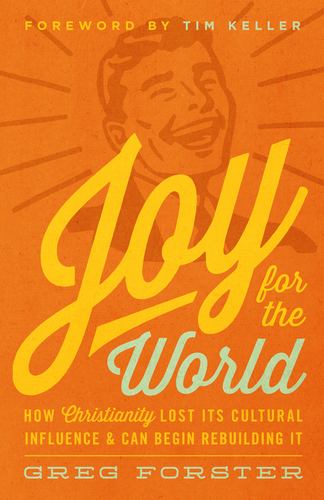
Recently I was delighted to sit down with Justin Taylor for a video interview on my new book, Joy for the World. Check out the opening if you want to see me sitting there looking really weird for a few seconds. I don’t know why, but I think I look awful on camera whenever I’m not talking!

I also did a really fun podcast with the gang at Christ and Pop Culture. Among much else, a certain delightfully subversive Disney movie is discussed. Apparently if you join CAPC (membership $5) you can read my book for free – thanks, guys!

In Praise of Failure

Humans do like failure; they do not like being told that they are not good enough or not qualified. The only problem is, failure is part of life. Every fails, or to put it differently, no one is perfect. This reality of failure creates a major dilemma for humanity. Failure is unavoidable, and everyone hates that this is so.

Humans, though, are quite creative at attempting to avoid failure albeit unsuccessfully. Many appreciate the scapegoat approach where it is someone or something else’s fault I failed. I bear no responsibility for my failure because I’m not really to blame. The Indiana Pacers didn’t lose the basketball because the Miami Heat were better but because the refs cheated the Pacers out of a win. California Chrome didn’t lose the Belmont Stakes because the other horses were faster but because the system is broken. I didn’t struggle in my race because I eat poorly and didn’t train but because the weather conditions weren’t right. I didn’t eat the fruit from the tree because I was sinning but because she gave it to me (even though I stood right here and watched her eat it first.) It’s not my fault!

But there is another approach that is also quite common when it comes to failure: changing the standard. Kids scores on tests are slipping…change the tests. Haven’t had a triple crown winner since 1978, change what horses are allowed to compete. Wide receivers have trouble catching the ball, make it against the rules for the defense to even touch the receiver. Feel guilty about a particular sin? Deem the Law culturally irrelevant. After all, did God really say….?

We simply do not like failure, and since we cannot change the fact that we fail, that we don’t measure up, that we aren’t good enough, we’ll blame what we can change: systems, Laws, regulations, all of those things which point out our failure. And then with that which declares us failures changed, eliminated, and out of the way, we are all winners!

But then why try? Why improve? Why strive for our best when we can be happy with mediocrity because the standard no longer calls for the best? Why push ourselves to be better? And from a spiritual stand point, are we not then simply content to remain wallowing in our spiritual filth? Without a standard and a declaration of failure to point us to the solution, we remain in our failure. With no Law to prick our conscience, what drives us to our need for a Savior? Without failure, there is no quest for growth.

Failure is painful and no one likes pain. But without knowledge of failure, we never change. By changing that around us which declares us failures, we eliminate the need for us to change. Without failure, we are content with where we are right now. Failure reminds us that where we are right now is not good. Without the pain of failure, culture stagnates. We need to feel the pain of failure, because without that pain, we will never keeping strive for true perfection, and spiritually, we will not seek the source of perfection. As Jim Miller once said in the face of failure “Cheer up! You’re worse than you think you are!” Failure is reality, one we don’t like to acknowledge, but that pain of failure drives us. Without it, we’ll just sit here.


In Defense of the Phrase “Faith and Work”

Bridge

Image HT

Recently I’ve heard several major leaders in the faith and work movement criticizing the fact that we call it the “faith and work” movement. I rise in defense of the phrase.

The most persuasive version of the concern that I have heard would run something like this: The phrase “faith and work” implies that faith and work are, by nature, separate things, and our task is to integrate them. In fact, the argument goes, they are always bound up together. We have to challenge the assumption that separateness is their natural or normal state, and it is somehow up to us to find a way to make them fit. Rather, they are integral by nature.

Now, so long as we stick to the word “separate” there is some truth here. Faith and work are not, by nature, separate things with no connection. They are indeed integral – made to be together.

However, my concern is that we not lose sight of the fact that faith and work are different things. They are not separate, but they are different. Faith is not work. Faithfulness is work (to a large extent). But faith is not faithfulness.

It is a theme that runs through all good systematic theology from beginning to end that we can and must distinguish things without separating them. We must distinguish the three persons of the godhead without separating them. We must distinguish the human and divine natures of Christ without separating them. Etc.

We must distinguish faith from faithfulness, and hence faith from work, without separating them. This is just a new version of a very old problem. Paul stresses the distinction between faith and faithfulness/work while James stresses that faith and faithfulness/work are connected, not separate. There is no contradiction here if we remember that the two can be distinct without being separate.

The stakes are high. If we do not keep both the distinction and the connection, we cannot keep the classical Protestant understanding of justification. And although it happens to be out of fashion at the moment, the classical Protestant understanding of justification really is the theology with the best and deepest biblical warrant.

Obviously the faith and work leaders who are starting to challenge the phrase “faith and work” do not intend by this to move us away from the classical Protestant understanding of justification. They are probably not even conscious that their concerns might have implications for justification. That is what troubles me.

I would not make an issue out of this if it were merely a matter of debate points. (Well, okay, let me revise that – I hope that I would not make an issue out of this if it were merely a matter of debate points.) The suggestion that we consider tearing down what has been, to date, a very successful banner over our movement suggests to me that some may be so eager to emphasize the connection between faith and work that they are in danger of neglecting the distinction.

In fact, to the extent that there is some ambiguity and tension inherent in the phrase “faith and work,” I see that as a feature, not a bug. By the very fact that we have built a movement called “faith and work,” we testify that the two can never be separate; they must always be connected. But the name simultaneously maintains the distinction. It forces us to confront the difficulties of being faithful while not resting in our faithfulness for our favor with God.

Let the phrase stand, not only because it appears to do a very good job of communicating what our movement is about in a way that makes sense to people, but also as a reminder that connecting faith to work is not reducing faith to works.