Image HT
One of the most common themes you hear in the faith and work movement is that we must oppose “the secular-sacred divide.” At a superficial level, if you take this in the spirit in which it’s intended – “every square inch” and all that – it’s almost impossible to object. All domains of life are “sacred” in the sense that they are ordered by God, they are places where God is present and active, and they are places where the Spirit calls us and equips us to use our gifts in service for the life of the world. Certainly this is a non-negotiable Protestant commitment, and even Rome has moved very significantly in this direction over the last century.
And yet . . . and yet . . . I sympathize strongly with those who want to emphasize the distinctiveness of the church from the world, and in particular the unique role of the institutional church. How do we uphold the unique supernatural operation of the Holy Spirit through means of grace inside the church building without making the church building “sacred” in a dualistic sense – implying that life outside its walls is “secular” (i.e. detached from God, autonomously operating on naturalistic principles)?
Recently I was reviewing Keith Mathison’s outstanding book Given for You and rediscovered (I had seen it before, but had forgotten it) the threefold division of ceremonial status under the Old Testament: holy, clean and unclean. I’m no theologian, but this challenged my thinking about whether there might after all be something to “the secular-sacred divide.” After some thought, however, I now see that it need not imply a return to such thinking.
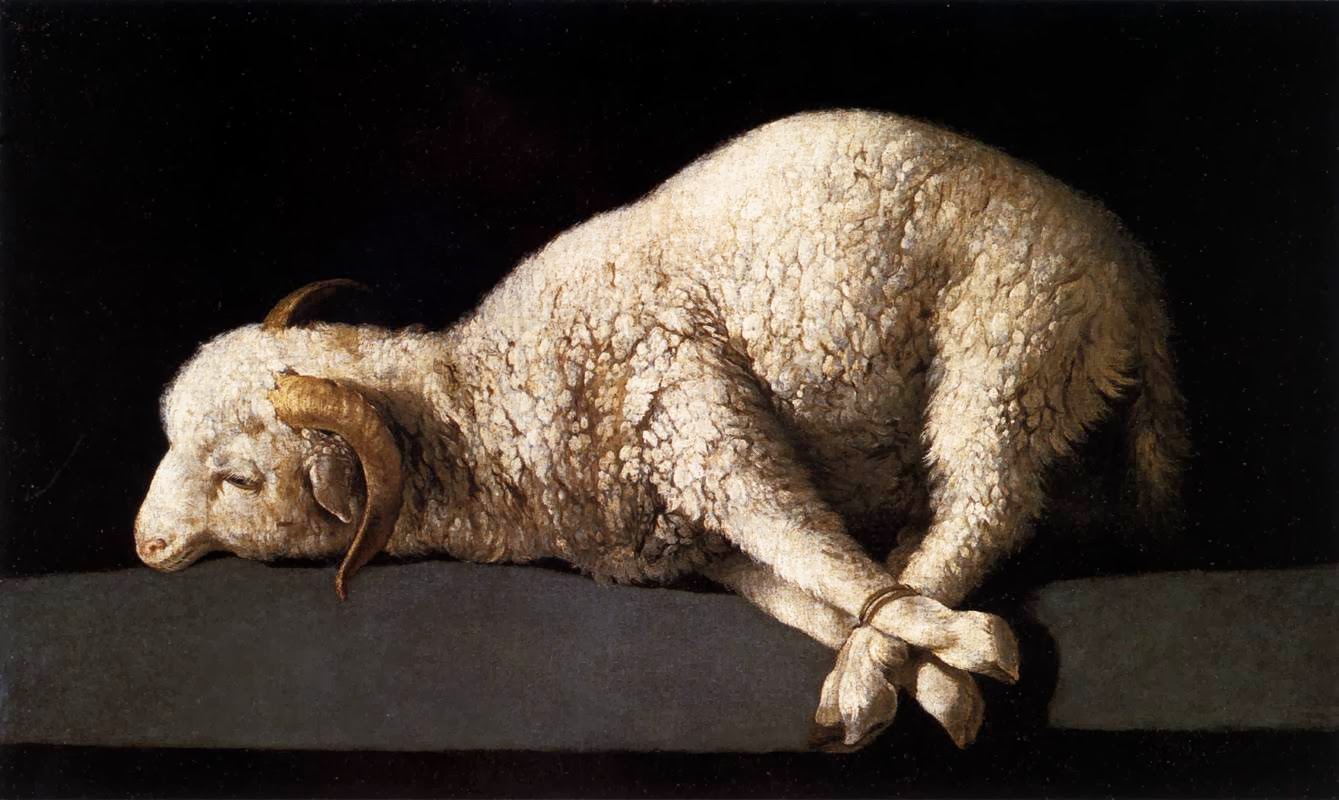
In the OT system, people and things that are clean can be made holy – “sanctified,” a word of titanic theological importance – by coming into contact with things that are holy. However, if you are unclean, coming into contact with what is holy will not sanctify you, it will destroy you! Systems of cleansing were therefore necessary, so that unclean things could be made clean, and therefore fit to come into contact with the holy. The OT law provided temple rituals for both cleansing and sanctification, centered on animal sacrifice.
These were of course “types” or pictures of our salvation in Christ. To my mind, the typology is obvious: ceremonial cleansing represents justification and adoption, and ceremonial sanctification represents . . . well, sanctification. You cannot be sanctified before you are justified and adopted as a child of God, because the only way to be sanctified is to come into direct contact with God (i.e. with what is already holy) and if you come into direct contact with God while you’re still in your sins, you die. Justification and adoption first, to cleanse us and make us fit to come into contact with God, then sanctification follows as a result of our coming into contact with God.
Now, if we view the NT institutional church as the equivalent of the OT temple, I can see how we might have to view the church building as “sacred” in the dualistic sense. It is the place where the rituals of cleansing and sanctification are performed. At worst, the unspoken assumption takes hold that the world outside the church building (i.e. temple) is profane and unclean, and you come into the church building to get the means of grace (i.e. sacrificial rituals) that can make you clean and holy. Even those who avoid such an extremely crude dualism can never quite avoid secularizing the world outside the church building – if they think of the church building in terms defined by the temple.
This leads us to the obvious question: is the institutional church in fact the NT equivalent of the OT temple? The presence of preaching and sacraments in both might seem to suggest yes, but I think this is too simple.
While there is great continuity between preaching in the OT and NT, the sacraments are dramatically transformed by the coming of Christ. This in turn fundamentally changes the nature of the building where we meet to worship. While the OT and NT sacraments are both sacraments, they are not doing the same thing. Baptism and communion do not make you clean and holy the way the OT sacrificial system did.
This is the whole reason churches are called “churches” and not temples, yes? If they were still places of ritual cleansing in anything like the OT mode, would it not have been much simpler to keep on calling them temples?
Only God is holy, and the only way to get holy is to be cleansed and sanctified by God. The function of the OT temple was to picture this for us. In the NT era, the church proclaims this truth but does not picture it, or at least not in anything like the same way.
The OT temple is a picture of salvation, but it is not a normative standard of social organization. In the NT era, we should not continue to divide our cultural spaces into sacred and profane simply because the picture of salvation provided by the OT temple required this.
The whole tone and tenor of the NT seems to be against such separation. Consider Jesus’ contrast between OT and NT worship when speaking to the Samaritan woman at the well (John 4:20-24) or his terrible pronouncements of judgment on the temple.
Even in the OT, we find this prefigured. The prophets and wisdom literature stress over and over again that the cleansing function of the temple is not its essence. One of the most shocking and baffling things to me when I first began to read the Bible with serious attention was the frequency with which the prophets declare that God hates temple sacrifices. “But isn’t that exactly what God told them to do, bring sacrifices to the temple?” I asked myself. Now I see that God was denouncing people for using the temple sacrifices as a substitute for godliness.
How, then, can we understand the unique role of the institutional church and the means of grace within it? It might help to think in terms of relationships rather than spaces.
Applying the OT ceremonial terms, we can say that unbelievers are unclean while Christians are clean and becoming holy – clean, because they are justified and adopted; becoming holy, because by the power of the Holy Spirit they are constantly in contact with God, the only originally holy thing. Likewise, whatever the unbeliever does is unclean because he is unclean (Isaiah 29:13-14) while whatever believers do in God’s name (alone or with each other) is clean and becoming holy (Hebrews 13:20-21). This is not the same as the distinction between what is inside and outside the institutional church, because believers do a great deal outside the institutional church that is nonetheless distinctively Christian life and service.
The truly distinct thing about the institutional church comes into view when we consider that the greatest volume of cultural activity does not fall into either of the two categories “what believers do” and “what unbelievers do.” Most of what is done in the world falls into a third category: “what people of all types do together.” Christians and unbelievers work on the same assembly line or school council; where does the cultural activity of believers end and that of unbelievers begin?
I am told that “the plowing of the wicked is sin” is actually a mistranslation, but it is still sound doctrine. So let us imagine three situations:
- A plow is operated by two unbelievers cooperating.
- A plow is operated by two believers cooperating.
- A plow is operated by a believer and an unbeliever cooperating.
Is the plowing in case #3 – the plowing of the just and the unjust together – sin?
Perhaps we could think of this mixed and ambiguous cultural space as “clean but not becoming holy,” although of course the Christians who operate in this space are becoming holy. The joint plowing of a believer and an unbeliever is clean and will receive the final benediction in Christ at the last judgment – because Christ himself is doing it, in and through the Christian plower. I expect this plowing will be blessed on the same terms as the plowing of the two Christians.
The institutional church is not distinguished by the fact that holy things happen there, but by the fact that only holy things are supposed to happen there. Whereas in the cultural world outside the walls of the church building, mixed and ambiguous activities can and should occur. They will often predominate, and perhaps they even ought to do so. The institutional church is the special place set apart where that which is not “clean and becoming holy” is supposed to be excluded.
This, at least, is as far as I have come at present in making sense of the matter.