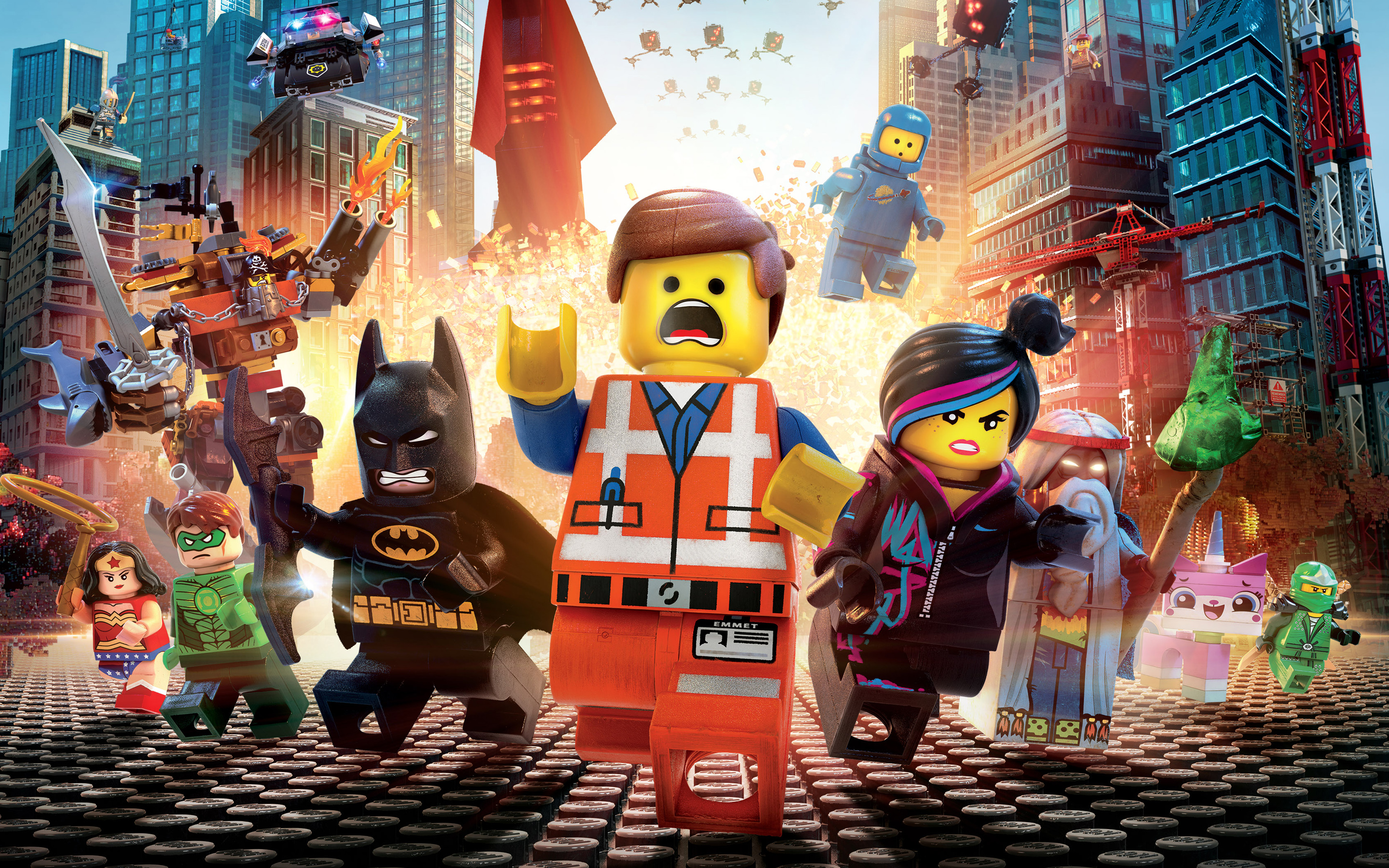
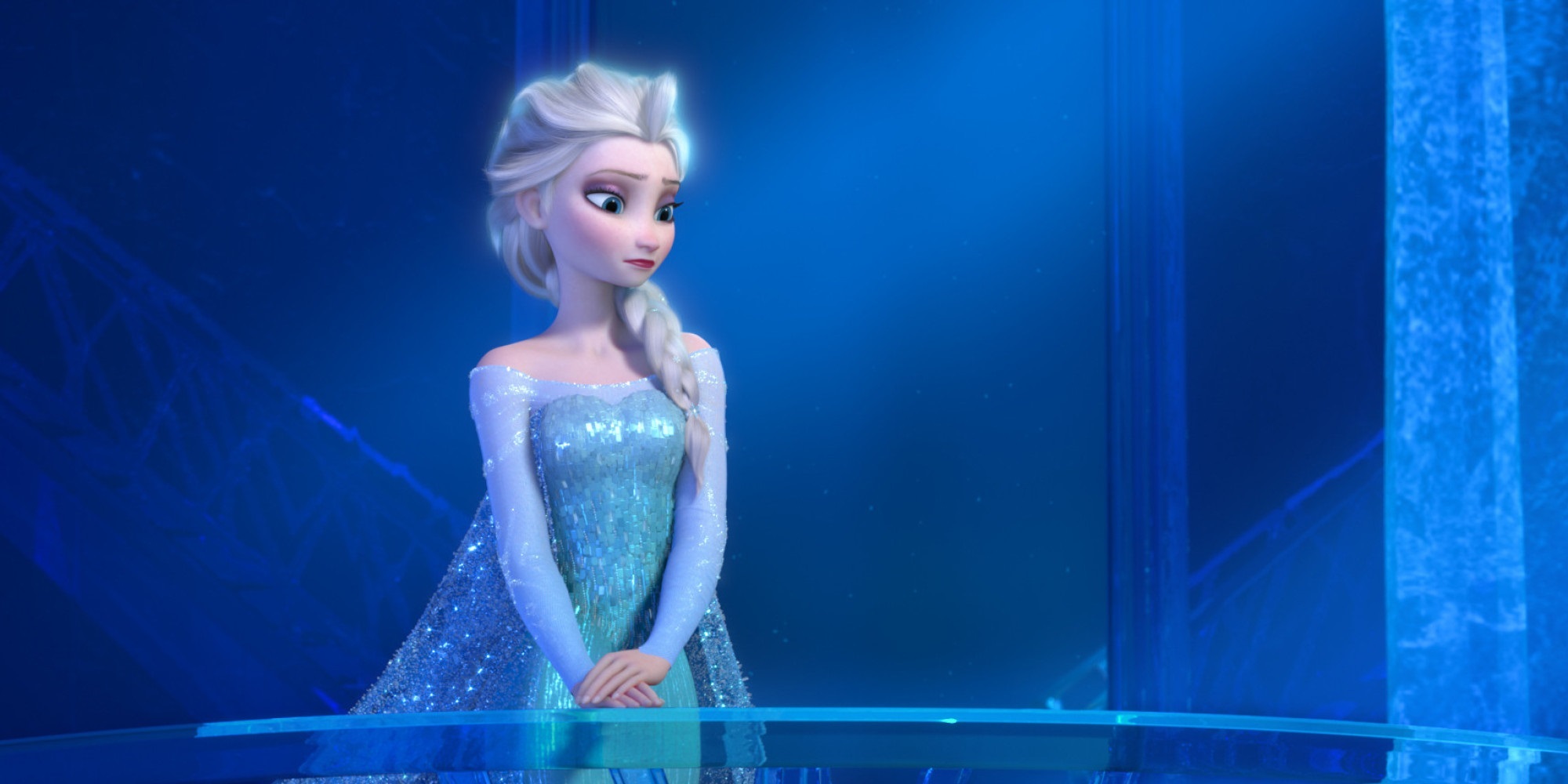
If you haven’t seen The Lego Movie, go see it. It’s hilarious. The entertainment value is well worth your money. I expect that some of the pop culture gags in this movie will be referenced by nerds around their digital water coolers for some time to come. And the gags are almost all visual, so it’s going to be a lot funnier on the big screen than it will be in your living room.
Don’t go expecting deep wisdom, just go expecting a great time, and you’ll have one.
Now, to business. Do NOT read the rest of this article until after you’ve seen both The Lego Movie and Frozen (subject of my most recent Pass the Popcorn article over at JPGB). Major spoilers lie ahead.

I said to him, “Shall I tell you where the men are who believe most in themselves? For I can tell you. I know of men who believe in themselves more colossally than Napoleon or Caesar. I know where flames the fixed star of certainty and success. I can guide you to the thrones of the Super-men. The men who really believe in themselves are all in lunatic asylums.” He said mildly that there were a good many men after all who believed in themselves and who were not in lunatic asylums. “Yes, there are,” I retorted, “and you of all men ought to know them. That drunken poet from whom you would not take a dreary tragedy, he believed in himself. That elderly minister with an epic from whom you were hiding in a back room, he believed in himself. If you consulted your business experience instead of your ugly individualistic philosophy, you would know that believing in himself is one of the commonest signs of a rotter. Actors who can’t act believe in themselves; and debtors who won’t pay. It would be much truer to say that a man will certainly fail, because he believes in himself. Complete self-confidence is not merely a sin; complete self-confidence is a weakness. Believing utterly in one’s self is a hysterical and superstitious belief like believing in Joanna Southcote: the man who has it has ‘Hanwell’ written on his face as plain as it is written on that omnibus.”
And to all this my friend the publisher made this very deep and effective reply, “Well, if a man is not to believe in himself, in what is he to believe?”
After a long pause I replied, “I will go home and write a book in answer to that question.” This is the book that I have written in answer to it.
G.K. Chesterton, Orthodoxy
The thing I liked most about The Lego Movie is not what it triumphantly accomplishes – great comedic entertainment – but what it aspires to accomplish and utterly fails at. The people who made The Lego Movie are smart enough to realize that the central moral teaching of today’s Hollywood culture – “everyone is special if you just believe in yourself!” – has reached a point where it’s corny, stale and pathetic. Nobody buys that stuff anymore. It “sounds like a cat poster.” The makers of The Lego Movie aspire to breathe new life into it, to restore it to vibrant credibility as a source of moral storytelling, to resurrect it from the grave of mockery and irony and place it back upon its throne as the ruling authority of the culture. And after all their efforts, which are very impressive, they are utterly unable to pull it off. The bankruptcy of “everyone is special if you just believe in yourself!” remains, in the end, just as obvious as it was when the movie started. And seeing that made me happier than all the jokes in the movie combined.
The enemy’s armor is starting to buckle. Slowly, inch by bloody inch, the cracks are being pried open – by the intrinsic weakness of the enemy’s ideas as much as by anything we do. The Lego Movie made me feel more strongly than I’ve ever felt before: we can really win this thing.

The Lego Movie and Frozen are both examining what may well be the most important question facing our culture. They are not about the culture war as such, but they are about the core question of the meaning and purpose of human life that lies behind the culture war.
This is a powerful head-to-head match. The Lego Movie and Frozen are two of the most successful movies of recent years. They rank 96% and 89% respectively on Rotten Tomatoes, a level that few arthouse movies achieve, let alone wide-release, big-budget movies made for mass audiences. Frozen already has a respectable rank among the highest-grossing movies of all time (inflation adjusted), and will probably end up tapering off with total box office receipts just shy of $1 billion. The Lego Movie is well on its way to a similar or (probably) even stronger domestic performance, although it remains to be seen whether overseas audiences (which have flocked to Frozen in huge numbers) will resonate with The Lego Movie’s highly specific pop culture references.
Neither of these movies speaks directly to the issues that divide us. The Lego Movie does not talk about gay marriage. Perhaps more important, neither of these movies is speaking from within a clearly identified cultural subgroup, so no one can “claim victory” based on the success of either movie. If you told me the people who made Frozen were Christians I would not be at all surprised, but if you told me they were secular Jews who had been reading a lot of Aristotle I would not be surprised by that either.
However, the deeper rift that causes the culture war – the issue behind the issues – is self-expression versus self-renunciation. The Lego Movie speaks for self-expression – “everyone is special, if you just believe in yourself!” Frozen speaks for self-renunciation – as Olaf says, “love means putting other people’s needs ahead of your own.” Or how about the dialogue in the climactic scene: “You sacrificed yourself for me?” “Of course. I love you.”

What makes the juxtaposition of these movies even more profound is that each of them is aware of the limitations of its own view, and gives important ground to the other side.
One of the most important scenes in Frozen is the power ballad “Let It Go,” in which Queen Elsa declares her independence from the human relationships that have oppressed her. A few of the verses point us back toward to the larger arc of the movie’s theme – alone on the mountain, she sings, there are “no rules,” “no right” and “no wrong.” That’s going to be important later; it’s the first step toward her sister’s death. But the bulk of the song is strongly sympathetic, and rightly so. For the sake of her people, Elsa has been carrying a great burden her whole life – a burden that has divided her deeply and bitterly from her only remaining family. To carry out an act of love for her sister and her people, she has been forced to live in a world that is totally without love of any other kind. And it is totally irrational and unjust that this burden was placed on her. She is right to feel ill-used; she has been ill-used. However wrong her way of dealing with it may be, she is right to feel that she neither could nor should live that way for the rest of her life.
She sings:
Here I stand
In the light of day!
Let the storm rage on!
The cold never bothered me anyway.
Considering the injustices she has suffered, if your spirit is not soaring for her when she sings this, you have a heart of stone.

Frozen’s championing of self-renunciation over self-expression is so successful because it acknowledges the limits of self-renunciation. It upholds, powerfully, the individual’s need for dignity, justice and freedom, and it offers a vision of self-renunciation within which these needs can be met. It can win converts – and if you read what some people are writing about this movie, you’ll see that it is in fact winning converts – because it meets you halfway. You will not be required to renounce individual dignity, justice and freedom if you give your heart to what Frozen is offering you.
The Lego Movie, likewise, sees the limits of self-expression. The silly self-indulgence that tends to prevail among the professional champions of self-expression is mocked just as mercilessly as the culture of conformity against which they are reacting. As in: “Wyldstyle? Hey, are you that student I had once who was so insecure she kept changing her name?” Or how about when Batman turns on his subwoofers (“DARKNESSSSSS!!! NO PARENTS!!!!”) and Wyldstyle lectures Emmet: “This is real music.” Or the fact that the good guys need to learn to follow rules and work together as a team in order to win.
And then of course there’s Cloudcuckooland. It’s a place of no rules, where everyone is happy. But of course there are actually lots of rules (“no negativity!”), there is no consistency, and everyone is repressing the authentic human emotions that are inconsistent with the self-expressionist utopia – pushing them way deep down where no one will ever, EVER FIND THEM!!! (Thanks to the decay of education under the dead hand of the government monopoly, it is my duty to inform you that the name Cloudcuckooland is not original to The Lego Movie.)
But don’t be fooled by any of this. Make no mistake, the heart of The Lego Movie is “everyone is special if you just believe in yourself!” Like Frozen, The Lego Movie is about the relationship between the individual and society. The two diagnostic questions that reveal the fundamental opposition between these movies are:
- What is the function of social conventions?
- What happens to individuals who withdraw from them?
In Frozen, social conventions can be a source of injustice, such as the treatment of Elsa; however, at a more fundamental level they are the necessary context for love, which is what makes our lives meaningful. Consider Elsa telling Anna not to marry the man she’s just met – that’s social convention, too. When Elsa withdraws from the restraint of social conventions, she turns cold and becomes the murderer of her own beloved sister.
In The Lego Movie, social conventions can be a temporary help to accomplishing shared goals, such as the master builders learning to build together; however, at a more fundamental level they are a system of control that inhibits self-expression, which is what makes our lives meaningful. The good guys establish a small set of temporary social conventions in order to accomplish their goal, but their goal is the elimination of the larger role of social conventions as the permanent, taken-for-granted basis of shared life. Those who withdraw from social conventions become (for the most part) free and happy; these liberated individuals make temporary use of social conventions in order to re-enter the world of social conventions so they can liberate others from that world and help them, too, escape from conventions into the freedom and happiness of unlimited self-expression.
Consider two other issues that illuminate the difference. One is the resolution of the villains’ stories. The Lego Movie partakes of one of the most horrible Hollywood cliches: the villain is instantly transformed into a hero once he’s told that he’s special if he just believes in himself. He was never really evil, he was just never told he was a special snowflake. We know this because, astonishingly, he actually says “Nobody ever told me I was a special snowflake!” Well, jeez, buddy, if that was all you wanted, no need to destroy the world over it. All you had to do was ask.
By contrast, the villains in Frozen – even Queen Elsa – are really evil. Elsa is sympathetic, so to make sure we understand, the movie has to have the wise old troll make it explicit that yes, she’s evil. Redemption is possible, but it doesn’t come cheap. “The head can be persuaded, but the heart . . . ” It requires an extremely painful act of self-renunciation. The good guys can help with this – Elsa’s heart changes in response to Anna’s self-sacrificial love for her. But “it is the shedding of blood that makes atonement” (Leviticus 17:11; Hebrews 9:22). And, of course, two out of the three villains in Frozen remain just as evil at the end as they were in the beginning. God bless the makers of this movie for having Anna, not Kristoff, manifest the inevitability of justice. Wham! Right in the kisser! If anybody is ever so foolish as to attempt to murder my daughter, that’s what I want her to do.
A final contrast – small, but worth noting – is the two movies’ view of religion. This is unobtrusive in both movies, but unmistakable.

In Frozen, religious authorities are – naturally, organically, unremarkably and unproblematically – woven into the fabric of the social conventions that provide the necessary context for love. Do not miss the significance of the fact that it is a bishop who puts the crown on the queen’s head. For more than a thousand years that was the central cultural ritual reaffirming that all social conventions (represented by the monarch) exist to facilitate love (represented by the bishop).
Did you catch the view of religion in The Lego Movie? “The prophecy is made up, but it’s also true.” That is precisely the view of religion among the most philosophically advanced advocates of self-expression. It runs right back to the great master and founder of the movement, Rousseau, and since time immemorial it has been the view implicit in all the spontaneous mythological religions (you know, Zeus and Apollo and all that). The whole idea that religion is merely the superstitious holdover of a bygone era, fated to pass away inevitably with progress, was always boob bait. It plays to the prejudices of those who have been wounded by the church – and to our shame, that’s a big crowd of people to play to. But the really great apostles of self-expression have always been pro-religion – as long as it’s religion of a certain kind. Religion in its proper form is “useful narrative.” “These are stories that we find it helpful to tell ourselves,” as I heard one of them describe the Bible. Religion is entirely invented, and yet in spite of the fact that we make it up for ourselves, it still expresses – and uniquely expresses, in ways you can’t get from anything else – a deep truth about the universe. Bad religion is religion that claims to be a real revelation, the actual voice of the divine speaking to man. Good religion is “made up but also true.”
The effort to resuscitate self-expression, as I said, is very impressive. But it fails, and I think the failure is pretty obvious.
It was daring of them to go so far out of their way to make the message so overt and so corny. They see that only this will do. The message really is corny – in real life, enough people have been hurt by “everyone is special if you just believe in yourself!” that the bloom is off the rose. People have seen through it. I don’t mean people are in active rebellion against it; for the most part, they’re not. But they’re also not drawing any spiritual sustenance from it. It’s not inspiring. It’s not uplifting. The “useful narrative” is no longer useful.
This is what The Lego Movie attempts to reverse. They wear the corniness of it on their sleeves in order to disarm us. They get us laughing at it in order to establish that they, too, have “seen through it.” They’re in on the joke. Just as Frozen is not asking you to give up dignity, justice and freedom for the individual, The Lego Movie is not asking you to give up your sense of superior wisdom and ironic detachment from social convention. Don’t worry, The Lego Movie is saying, you can still laugh at cat posters. That’s okay! We do too!
However, especially in the scenes between the two human characters, the movie goes on to say: But do you see why that message was powerful in the first place? After all, there would have been no cat posters to begin with if “believe in yourself!” had not resonated with people at a very deep level. Something real, something deeply important to what it means to be human, was behind all those moronic cat posters that you and I both laugh at. Nobody laughs when a father comes to realize he has valued the integrity of his Lego collection more than he has valued the personality of his son.
And yet . . . and yet . . . the ending is just so obviously unworthy of the aspirations. First of all, the plot resolution is totally unsatisfying. The instant conversion of the villain into a hero when he is simply told he’s a special snowflake is the obvious crux of this. But it is also clear in the outrageously arbitrary transition of Lucy’s girlfriend status from Batman to Emmet. With Batman’s totally unexplained approval! Who would have expected that a movie so reverential toward Batman could so utterly emasculate him? The movie’s inability to give us a satisfying ending reveals, I think, the bankruptcy of the underlying worldview.
(And notice the objectification of women involved in her “girlfriend status” throughout the movie. “It’s totally serious, my boyfriend will beat you up if you make a pass at me!” And in the ending, it is taken for granted by all parties that the guy who saves the world is entitled to the girl. She is, from start to finish, a trophy. The culture of self-expression always ends in the objectification of women, because that is what the natural sexual desires of both men and women produce when they are not channeled by a culture of self-renunciation. But I digress.)
At a deeper level, the movie never really transcends the subordination of belief to irony. Granted, as I said, part of the strategy is assuring us we don’t need to give up irony. However, for The Lego Movie to succeed, we would have to walk out of the theater feeling, in spite of our irony, that we really can believe in ourselves. And this I do not expect to have been the case for very many people.
I expect so not only because of my own experience with this movie. I am too heavily inoculated against “everyone is special if you just believe in yourself!” for my experience to be a safe predictor. I expect it primarily because the movie produces no new language of self-expression. To pull this off they would have had to have given us a new way of saying it, a way of affirming the message that hasn’t been ruined by irony. But they don’t. Right up to the very end, they’re still repeating “everyone is special if you just believe in yourself!” and all the other tired old formulas that they themselves have just spent the whole movie mocking. They have given us nothing to think or say about the meaning of our lives that is not, primarily, an object of ridicule.
In The Everlasting Man, Chesterton wrote that a civilization enters decline not when its bad things get worse, but when its good things lose their power – “its cures do not cure and its blessings refuse to bless.” The Lego Movie proves that the cult of self-expression has become, for us, the cure that will not cure and the blessing that will not bless. Frozen proves that self-renunciation could become – “for the first time in forever!” – the renewed cultural source of a renewed civilization.